

If the mood was grim at IFTM, airline leaders seemed relieved at the idea that the sector would be spared from the PLF 2027.
The carriers are not truly targeted by the measures unveiled by the government, last Thursday.
For reminder, as warning signs multiply around the French debt, the executive seemed to want to reassure financial markets. It planned a 54‑billion‑euro effort and a halving of the Social Security budget deficit.
The government’s aim is to bring the deficit below 5% of GDP, a rate still far from the 3% required by European rules, while the debt stands at 119% of GDP, a first since the end of World War II.
And to achieve this, Sébastien Lecornu and his team decided to put a little more on the airline ecosystem’s shoulders.
Thus, two measures will impact the industry.
The carriers are not truly targeted by the measures unveiled by the government, last Thursday.
For reminder, as warning signs multiply around the French debt, the executive seemed to want to reassure financial markets. It planned a 54‑billion‑euro effort and a halving of the Social Security budget deficit.
The government’s aim is to bring the deficit below 5% of GDP, a rate still far from the 3% required by European rules, while the debt stands at 119% of GDP, a first since the end of World War II.
And to achieve this, Sébastien Lecornu and his team decided to put a little more on the airline ecosystem’s shoulders.
Thus, two measures will impact the industry.
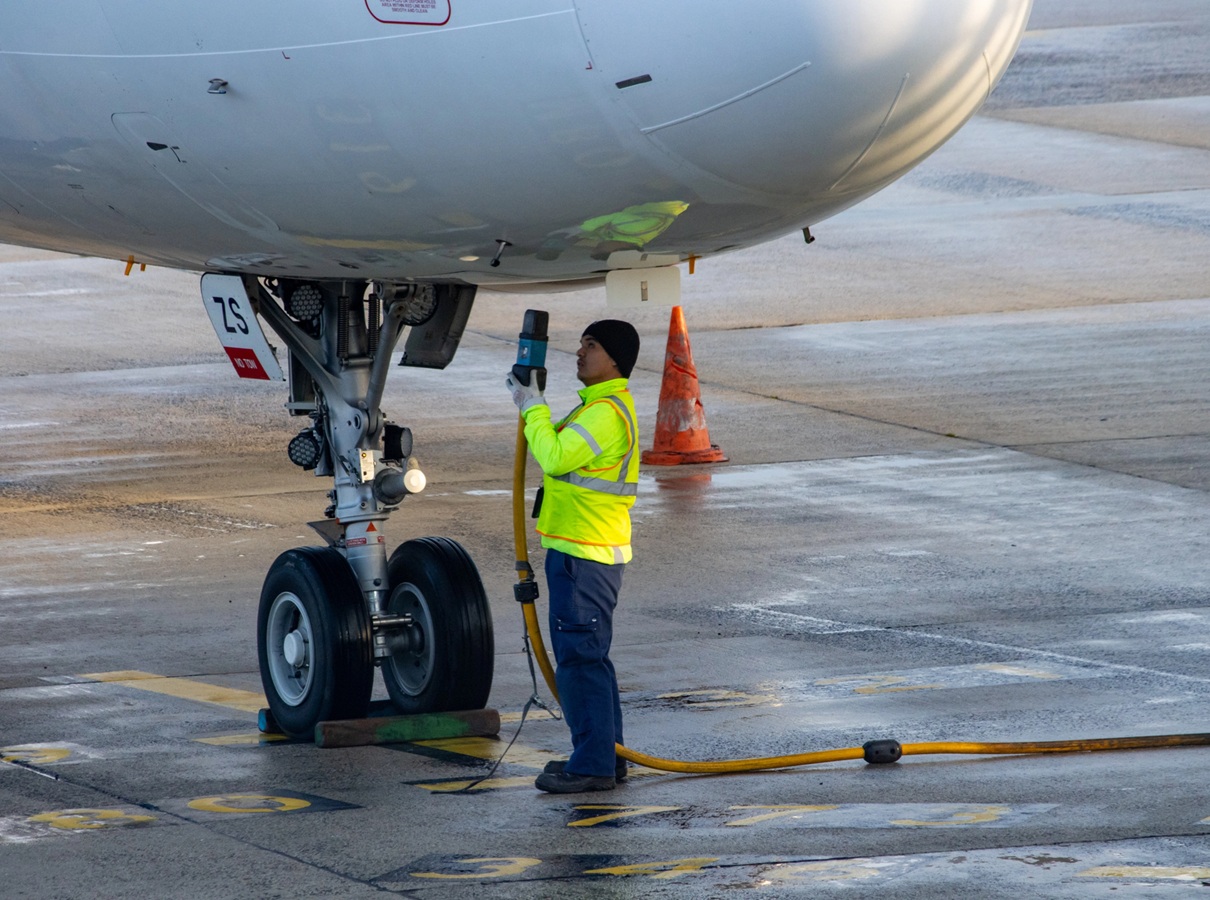
PLF 2027: a kerosene contribution!
The text provides for the creation of a mechanism to enable and support the emergence of a synthetic aviation fuel production chain.
For this, the government thus plans a levy on kerosene consumption, so as not to affect public finances.
Concretely, this tax will apply to suppliers of kerosene derived from petroleum, based in metropolitan France, and will depend on the volumes circulated.
This measure is thus intended to ease the finances of French airlines, as the price of SAF is far higher than that of conventional kerosene.
In addition, an agency created or designated by the State will be responsible for contracting with suppliers of more durable fuels, in order to provide carriers with visibility on the availability of these essential resources to decarbonize aviation.
To read: Train more expensive than plane: “a matter of political will”
As a reminder, Europe requires airlines to carry 2% SAF, a rate that must rise gradually to 6% by 2030, then 70% by 2050. However, this obligation clashes with the availability of these more sustainable fuels and their economic cost.
Note that kerosene is not taxed worldwide as diesel or other everyday fuels are.
Due to the Chicago Convention, adopted in 1944, the convention provides that an aircraft’s fuel cannot be taxed on arrival. Moreover, an amendment filed last autumn by ecologist MPs proposed imposing a tax for domestic flights.
“If the Chicago Convention of 1944 exempts aviation fuel for international flights from any tax, it does not prevent taxation for domestic flights, which is in effect in countries like the United States or Japan.
For this, the government thus plans a levy on kerosene consumption, so as not to affect public finances.
Concretely, this tax will apply to suppliers of kerosene derived from petroleum, based in metropolitan France, and will depend on the volumes circulated.
This measure is thus intended to ease the finances of French airlines, as the price of SAF is far higher than that of conventional kerosene.
In addition, an agency created or designated by the State will be responsible for contracting with suppliers of more durable fuels, in order to provide carriers with visibility on the availability of these essential resources to decarbonize aviation.
To read: Train more expensive than plane: “a matter of political will”
As a reminder, Europe requires airlines to carry 2% SAF, a rate that must rise gradually to 6% by 2030, then 70% by 2050. However, this obligation clashes with the availability of these more sustainable fuels and their economic cost.
Note that kerosene is not taxed worldwide as diesel or other everyday fuels are.
Due to the Chicago Convention, adopted in 1944, the convention provides that an aircraft’s fuel cannot be taxed on arrival. Moreover, an amendment filed last autumn by ecologist MPs proposed imposing a tax for domestic flights.
“If the Chicago Convention of 1944 exempts aviation fuel for international flights from any tax, it does not prevent taxation for domestic flights, which is in effect in countries like the United States or Japan.
Yet kerosene continues to escape any taxation, remaining one of the few fuels benefiting from such an exemption, even as it powers one of the most polluting modes of transport,
” explained the lawmakers.A tax targeting toll concessionaires and airports will triple
That’s not all, because the government wants to triple once again a tax.
Don’t worry, this will not concern the TSBA, the Chirac tax, but the Tax on the Exploitation of Long-Distance Transport Infrastructure, the TEITLD.
This latter targets all long-distance transport infrastructures, whether rail, air, or road transport.
But the main target of this tax is none other than toll concessionaires. To be eligible for this measure, the company must show an average profitability rate above 10%.
We are far from the margins of the tourism industry.
Thus, the bill provides for raising the TEITLD from 4.6% to 12.2%. A rise announced as gradual by the government.
This reform is expected to generate an additional 800 million euros and aims to finance the “Ambition Transports” fund, whose purpose is to “regenerate, modernize and adapt to climate change the current transport networks.”
A decision that sparked uproar, even though infrastructures with profitability below 10% would not be affected.
Moreover, nearly 8 billion euros are planned to be invested to enlarge Roissy-Charles-de-Gaulle, to raise its capacity to nearly 90 million passengers per year.
Don’t worry, this will not concern the TSBA, the Chirac tax, but the Tax on the Exploitation of Long-Distance Transport Infrastructure, the TEITLD.
This latter targets all long-distance transport infrastructures, whether rail, air, or road transport.
But the main target of this tax is none other than toll concessionaires. To be eligible for this measure, the company must show an average profitability rate above 10%.
We are far from the margins of the tourism industry.
Thus, the bill provides for raising the TEITLD from 4.6% to 12.2%. A rise announced as gradual by the government.
This reform is expected to generate an additional 800 million euros and aims to finance the “Ambition Transports” fund, whose purpose is to “regenerate, modernize and adapt to climate change the current transport networks.”
A decision that sparked uproar, even though infrastructures with profitability below 10% would not be affected.
Moreover, nearly 8 billion euros are planned to be invested to enlarge Roissy-Charles-de-Gaulle, to raise its capacity to nearly 90 million passengers per year.