For lunch at one of New York’s newest trendy restaurants, there are colorful salads, grilled prawns, or pasta served in an unusual setting: in the heart of an art museum. Far from the cafeteria-style cuisine traditionally associated with these cultural institutions, a new wave of ambitious dining spots is turning New York’s museums into full-fledged gastronomic destinations.
Ambitious restaurants to transform museums into gastronomic destinations
Oberon is one of the latest to have opened at the New Museum, the only Manhattan museum solely dedicated to contemporary art. The museum director, Massimiliano Gioni, admits that the competition is “dizzying”. “The measure of our success will be our ability to make our mark on the broader market”, he tells AFP. “That gives an idea of our ambition, which might be completely delusional.”
To dine at Oberon—whose opening was described by Condé Nast Traveler as “the most exciting thing to hit Manhattan”—you don’t need a museum ticket.
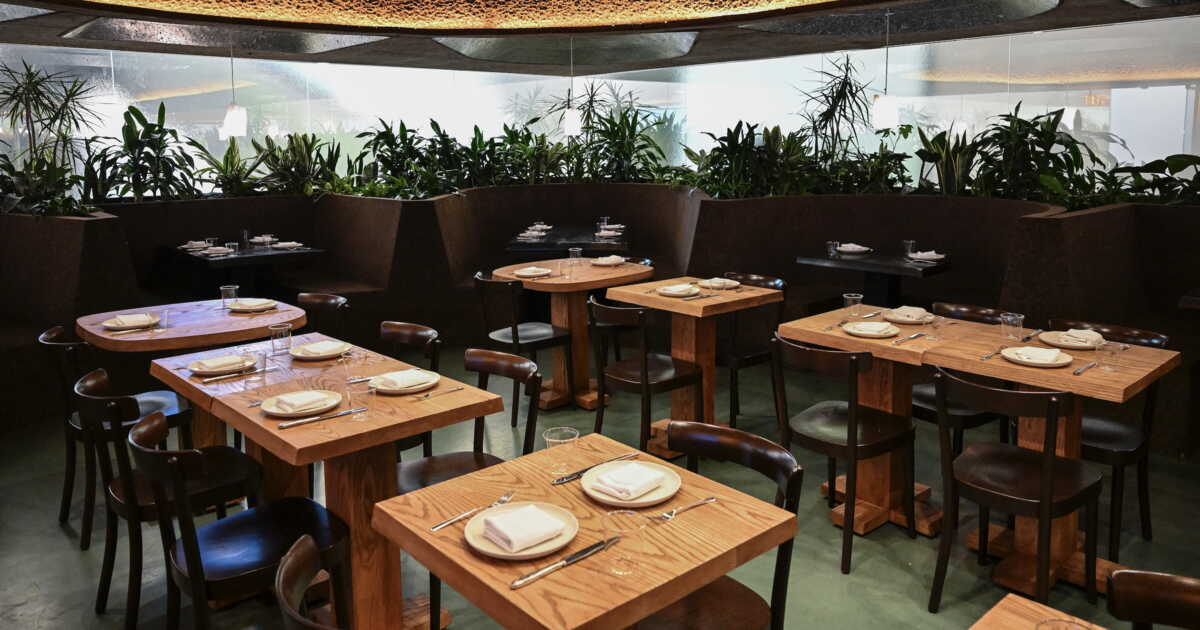
For the evening service, the 90-seat dining room— which Gioni compares to a “spaceship” with its oval shape and frosted-glass windows— is even accessible through a separate entrance at the end of a graffiti-covered alley. The director hopes that in time “people will come for the restaurant without knowing anything about the museum”.
Elizabeth Merritt, of the American Alliance of Museums, notes that many of these establishments rely on renowned chefs “who are an attraction in themselves and can bring in new audiences” before their collections.
The Frick Collection opened Westmoreland last year, Sotheby’s auction house inaugurated the French restaurant Marcel in April, while the MoMA annex in Queens, PS1, is set to unveil the Franco-African café Symone in early 2027.
But the benchmark remains The Modern, at MoMA in Manhattan, which has earned two Michelin stars since its 2005 opening. For Christopher Taylor, a professor specializing in the hospitality sector at the University of Houston, this establishment has upended conventional wisdom.
“I think many people view a museum restaurant, like a hotel restaurant, as less upscale or of lower quality”, he notes. “People won’t stay for just a sandwich and a bottle of San Pellegrino. The gastronomic offering must live up to the museum’s image.”
A financial gamble to attract new audiences and draw donors
Many prestige American cultural venues must cope with a drop in attendance after the Covid-19 pandemic, as well as cuts to federal subsidies under the Trump administration.
But Taylor argues that the opening of a restaurant is a sign of solid finances—restaurant operations often operate at a loss in order to boost a museum’s profile and attract donors. “Most of these high-end restaurants settle in museums that have recently undergone substantial renovations and received enormous endowments or donations”, he explains.
At the New Museum, which reopened in March 2026 after two years of work costing $82 million, it is still too early to say whether the first restaurant in 49 years will be profitable.
“We are betting on the idea, which is far from guaranteed, that it will help improve our financial results. It’s wishful thinking, but for now, everything is fine”, says Gioni, who also counts on the bar. “I don’t want to be a mauvais influence, but there is no history of art without a history of bars in the twentieth century”, he smiles.