In southern Italy, Taranto is a city that reveals itself just as much by wandering its winding streets as by sailing out to sea. Behind its appearance as a tranquil Italian town lies an ancient history, deeply linked to the waters that surround it. Over the centuries, one animal has even become one of its most recognizable symbols. To understand why, one must go back in time… and then set sail.
The second city of Puglia, Taranto stretches along the gulf that bears its name, in that part of the Ionian Sea that forms the “heel” of the Italian boot. Its history goes back to antiquity: the city is said to have been founded by Spartan colonists in the 8th century BCE and became one of Magna Graecia’s principal cities.
Taranto, a Greek city oriented toward the sea
To discover its history, head to Città Vecchia, the historic center, perched on a small island between two arms of the sea and connected to the city by bridges. As you stroll its lanes, visitors encounter notably the remains of the Doric Temple of Poseidon, considered the oldest Greek temple still visible in Apulia, as well as the San Cataldo Cathedral, whose origins go back to the 11th century. Further on, the Aragonese Castle recalls another period of Taranto’s history, when the city held a strategic position on the edge of the Mediterranean.
But one animal is omnipresent in the local heritage: the dolphin. According to legend, Taras, the son of the sea god Poseidon, was saved from a shipwreck by one of these cetaceans, which carried him to the shores of the peninsula. Taras would then found the city, which took his name, later becoming Taranto. Over the centuries, the dolphin has itself become a recurring motif of Taranto, depicted on ancient coins, statues and figurines, as well as on the city’s coat of arms.
Dolphins Still Abundant
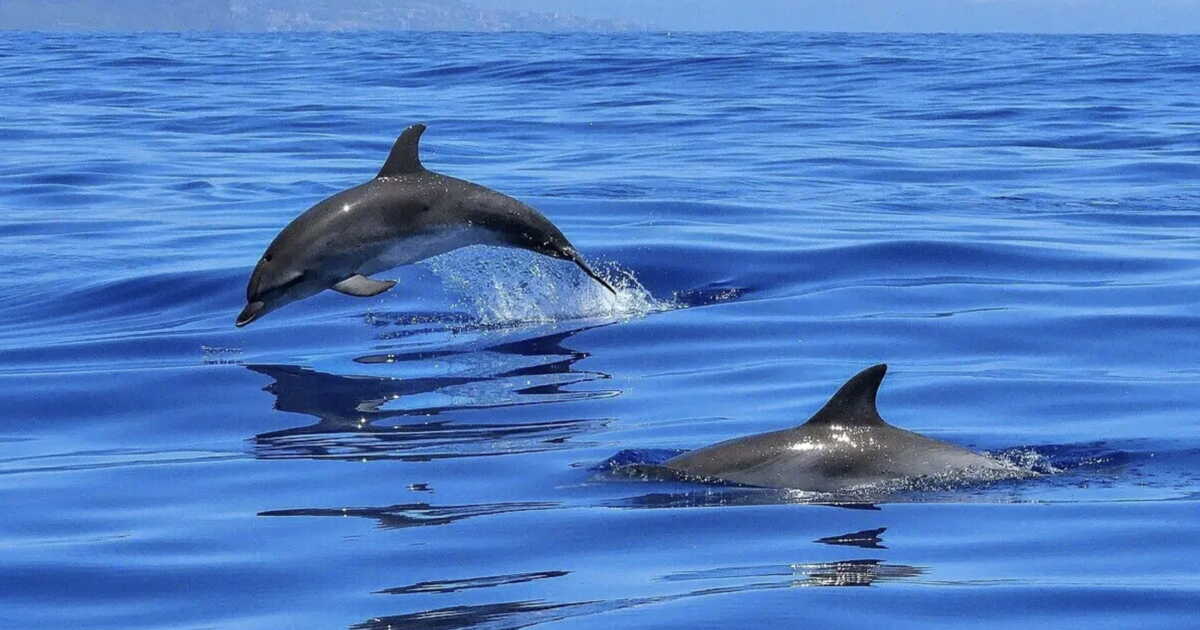
And this presence is far from being merely mythical heritage. In Taranto’s gulf, thousands of dolphins still frequent the warm waters of the Ionian Sea. Several species are observed there, notably bottlenose dolphins, blue-and-white dolphins, and common dolphins. From the ramparts of the old town, luckier visitors can sometimes catch sight of their silhouettes leaping offshore.
For travelers who wish to observe them more closely, boat trips are organized in the gulf. The Jonian Dolphin Conservation association, founded in 2009 by marine biologist Carmelo Fanizza, offers participants the chance to take part in scientific observations. The passengers are not mere spectators; they can help record observations and gather information about the animals encountered.
“Our project is a citizen science project”, explains Carmelo Fanizza to CNN. Participants thus help fund the research conducted on the gulf’s cetaceans, while discovering along the outing a marine environment that is one of Taranto’s great assets.
A Marine Sanctuary for Former Captives
A few kilometers from the city, near San Paolo Island and its former Napoleonic fort, a far more unusual project is taking shape. The San Paolo Dolphin Refuge is set to become the first marine sanctuary in Europe dedicated to dolphins that have lived in captivity. The site covers seven hectares delineated by buoys. It features underwater cameras, sensors that measure water and air quality, as well as a hydrophone intended to monitor underwater noise. An artificial intelligence system will analyze these data and alert biologists in case of anomalies.
The project addresses a problem that has grown particularly concrete in France, where the prohibition of cetacean shows is set to take effect in December 2026. The gradual closure of aquatic parks indeed leaves a pressing question: what to do with the dolphins who have spent their lives in tanks and cannot be released directly into the ocean? “The French government has taken a very important step by closing facilities, or facilitating the closure of certain structures. But the problem is that no one has a solution in mind, because if you close a facility, you must find a solution for the animals that are there”, says Carmelo Fanizza.
The refuge would first welcome a small family group, to observe its adaptation to this new environment and to refine the operation of the site. The dolphins will notably be able to reclaim aspects missing from artificial tanks, such as fish, the seabed, and the sand. The refuge, however, will not be open to visitors. To discover the animals and follow the researchers’ work, tourists can go to Ketos, the center devoted to the sea and to cetaceans located in Taranto’s old town.
An observation area equipped with large screens will allow remote monitoring of the refuge’s dolphins and the on-site research. This initiative also accompanies Taranto’s transformation, long associated with its steel industry. As the city seeks to develop a new tourist image, its dolphins could well become one of the symbols of this metamorphosis.