
TourMaG.com – What assessment would you give for 2026?
Ingrid Mareschal : It has been a financially challenging year for our members.
We had a growth-driven activity since the post-Covid period, but unfortunately geopolitical tensions exposed us to energy difficulties, with sharp increases in fuel costs and challenges in passing them on.
This led to many cancellations. The situation was further worsened by heat waves and wildfires.
TourMaG.com – Why is it so difficult to pass on fuel increases?
Ingrid Mareschal : When prices began to rise in March, many services had already been sold and accepted. There is generally no update to the cost at the time of service delivery.
This is especially true for clients such as the National Education system, subsidized associations, or social and educational trips. Their budgets are tight and, for National Education in particular, budgets are sometimes set six months in advance.
It is therefore difficult for a company to request an adjustment from a client who is known to have little margin. Companies must either keep the service at the price planned before the crisis or face cancellations.
TourMaG.com – What impact does this have on order books?
Ingrid Mareschal : We sense a slowdown, with services that are no longer being booked compared to the previous year.
The heat waves also had a very strong impact. Many events were canceled, as well as the activities connected to them. The end of the school year was particularly difficult, as many outings and school trips are concentrated in this period.
Wildfires also had a significant impact on tourism in the Southwest.
Ingrid Mareschal : It has been a financially challenging year for our members.
We had a growth-driven activity since the post-Covid period, but unfortunately geopolitical tensions exposed us to energy difficulties, with sharp increases in fuel costs and challenges in passing them on.
This led to many cancellations. The situation was further worsened by heat waves and wildfires.
TourMaG.com – Why is it so difficult to pass on fuel increases?
Ingrid Mareschal : When prices began to rise in March, many services had already been sold and accepted. There is generally no update to the cost at the time of service delivery.
This is especially true for clients such as the National Education system, subsidized associations, or social and educational trips. Their budgets are tight and, for National Education in particular, budgets are sometimes set six months in advance.
It is therefore difficult for a company to request an adjustment from a client who is known to have little margin. Companies must either keep the service at the price planned before the crisis or face cancellations.
TourMaG.com – What impact does this have on order books?
Ingrid Mareschal : We sense a slowdown, with services that are no longer being booked compared to the previous year.
The heat waves also had a very strong impact. Many events were canceled, as well as the activities connected to them. The end of the school year was particularly difficult, as many outings and school trips are concentrated in this period.
Wildfires also had a significant impact on tourism in the Southwest.
“Avoid Operating at a Loss”
 TourMaG.com – What solutions exist to support businesses?
Ingrid Mareschal : We do a lot of education with clients to explain our costs and the increases we are facing. It is not an extra step for businesses: the goal is simply to avoid operating at a loss.
When fuel costs rise sharply, the transporter can lose all of their margin on a service.
We also want to work with the National Education system on school trips. A convention on children’s schedules recommended at least one school trip per level and per class each year.
This is an important educational measure, but we fear it will remain only good intentions unless it is accompanied by concrete decisions and means.
Energy transition: “You can’t put an electric coach to do 600 km”
TourMaG.com – Decarbonization is another major challenge. Where does the industry stand?
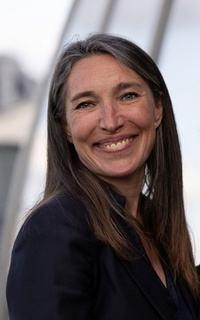
Ingrid Mareschal : We are even more behind in tourism because we cover longer distances than in school transport or regular routes. Today, we do not necessarily have a suitable technological solution.
A electric coach cannot cover 600 kilometers. Coach operators are therefore trying to use biofuels in diesel vehicles, but they are not recognized by regulations as a real greening of the fleet.
TourMaG.com – Do the costs of these alternatives also act as a barrier?
Ingrid Mareschal : Yes. Biofuels such as B100 or HVO are already more expensive than diesel and they have also been affected by energy cost increases.
For HVO, there are supply tensions as well. European regulations require the incorporation of biofuels into fossil fuels, which increases demand and reduces the volumes available for pure use.
TourMaG.com – What would be needed to accelerate the transition?
Ingrid Mareschal : We need to increase the autonomy of electric vehicles. Technology will evolve, but we are not there yet.
And autonomy alone is not enough: we will also need very fast charging systems. If a coach has to stop for three hours on the highway to recharge, that is not compatible with client expectations and travel times.
We must therefore work both on technology and on the network of charging infrastructures.
The FNTV also requests a review clause regarding the objectives for phasing out thermal propulsion, so that biofuels can be taken into account. For long-distance tourist transport, electric “zero emission” does not seem applicable to all activities today.
Ingrid Mareschal : We are even more behind in tourism because we cover longer distances than in school transport or regular routes. Today, we do not necessarily have a suitable technological solution.
A electric coach cannot cover 600 kilometers. Coach operators are therefore trying to use biofuels in diesel vehicles, but they are not recognized by regulations as a real greening of the fleet.
TourMaG.com – Do the costs of these alternatives also act as a barrier?
Ingrid Mareschal : Yes. Biofuels such as B100 or HVO are already more expensive than diesel and they have also been affected by energy cost increases.
For HVO, there are supply tensions as well. European regulations require the incorporation of biofuels into fossil fuels, which increases demand and reduces the volumes available for pure use.
TourMaG.com – What would be needed to accelerate the transition?
Ingrid Mareschal : We need to increase the autonomy of electric vehicles. Technology will evolve, but we are not there yet.
And autonomy alone is not enough: we will also need very fast charging systems. If a coach has to stop for three hours on the highway to recharge, that is not compatible with client expectations and travel times.
We must therefore work both on technology and on the network of charging infrastructures.
The FNTV also requests a review clause regarding the objectives for phasing out thermal propulsion, so that biofuels can be taken into account. For long-distance tourist transport, electric “zero emission” does not seem applicable to all activities today.
Macron Coaches: “An Extremely Positive Review”
TourMaG.com – Macron Coaches celebrated their tenth year in 2025. What assessment do you make of that?
Ingrid Mareschal : The verdict is extremely positive. The program has enabled an additional mode of travel for customers, one that did not exist before and that is cheaper than some other options, notably the train.
The coach is complementary. The customer decides based on the time they are willing to devote to travel and the price.
However, we face a capacity shortfall under good conditions, with bus stations that do not exist or are not suitable.
TourMaG.com – The problem is particularly visible in Paris…
Ingrid Mareschal : Yes. The closure of Paris-Bercy has been postponed and a bus station has been temporarily reopened at Porte-Maillot. In the longer term, the goal is to create a new hub at Saint-Denis-Pleyel.
Today, the conditions at Bercy are not satisfactory: issues with toilets, safety, but also difficulties related to coexistence with residents.
More broadly, the issue of bus stations concerns the whole of France. A framework bill plans to require municipalities with more than 200,000 inhabitants to have a welcoming infrastructure. But with the current budget constraints of local authorities, nothing is yet guaranteed.
Ingrid Mareschal : The verdict is extremely positive. The program has enabled an additional mode of travel for customers, one that did not exist before and that is cheaper than some other options, notably the train.
The coach is complementary. The customer decides based on the time they are willing to devote to travel and the price.
However, we face a capacity shortfall under good conditions, with bus stations that do not exist or are not suitable.
TourMaG.com – The problem is particularly visible in Paris…
Ingrid Mareschal : Yes. The closure of Paris-Bercy has been postponed and a bus station has been temporarily reopened at Porte-Maillot. In the longer term, the goal is to create a new hub at Saint-Denis-Pleyel.
Today, the conditions at Bercy are not satisfactory: issues with toilets, safety, but also difficulties related to coexistence with residents.
More broadly, the issue of bus stations concerns the whole of France. A framework bill plans to require municipalities with more than 200,000 inhabitants to have a welcoming infrastructure. But with the current budget constraints of local authorities, nothing is yet guaranteed.
Employment: “The situation has improved a lot”
2027: “We can feel economic difficulties arriving”
TourMaG.com – What are the other issues worrying coach operators?
Ingrid Mareschal : Administrative complexity is a real issue, especially for trips abroad. Companies have to manage VAT declarations in different countries and regulations that can vary from one state to another.
We will undertake substantial support to help businesses understand these regulations. But we should also consider simplifying them, notably with harmonized VAT declarations at the European level for companies that traverse several countries.
Another tension: the parking conditions for tourist coaches in Paris. The city intends to significantly reduce, or even eliminate, the presence of coaches in the capital.
The Federation intends to continue discussions with the new municipal administration, even if initial positions remain unfavorable to the sector.
TourMaG.com – What are the prospects for 2027?
Ingrid Mareschal : We are rather worried. The year is expected to follow the pattern of 2026. Today, we feel economic difficulties arriving.
According to our latest barometer, 78% of companies are dissatisfied with the modalities for passing through costs, notably those related to fuels. About forty companies also say they are particularly worried about their future and cash flow in six months.
Ingrid Mareschal : Administrative complexity is a real issue, especially for trips abroad. Companies have to manage VAT declarations in different countries and regulations that can vary from one state to another.
We will undertake substantial support to help businesses understand these regulations. But we should also consider simplifying them, notably with harmonized VAT declarations at the European level for companies that traverse several countries.
Another tension: the parking conditions for tourist coaches in Paris. The city intends to significantly reduce, or even eliminate, the presence of coaches in the capital.
The Federation intends to continue discussions with the new municipal administration, even if initial positions remain unfavorable to the sector.
TourMaG.com – What are the prospects for 2027?
Ingrid Mareschal : We are rather worried. The year is expected to follow the pattern of 2026. Today, we feel economic difficulties arriving.
According to our latest barometer, 78% of companies are dissatisfied with the modalities for passing through costs, notably those related to fuels. About forty companies also say they are particularly worried about their future and cash flow in six months.
The FNTV in figures:
– 1 900 member companies
– 45 000 coaches
– 90 000 employees
– 45 000 coaches
– 90 000 employees
 Published by Caroline Lelievre Journalist – TourMaG.com
 See all articles by Caroline Lelievre


Add TourMaG to your Google News feed