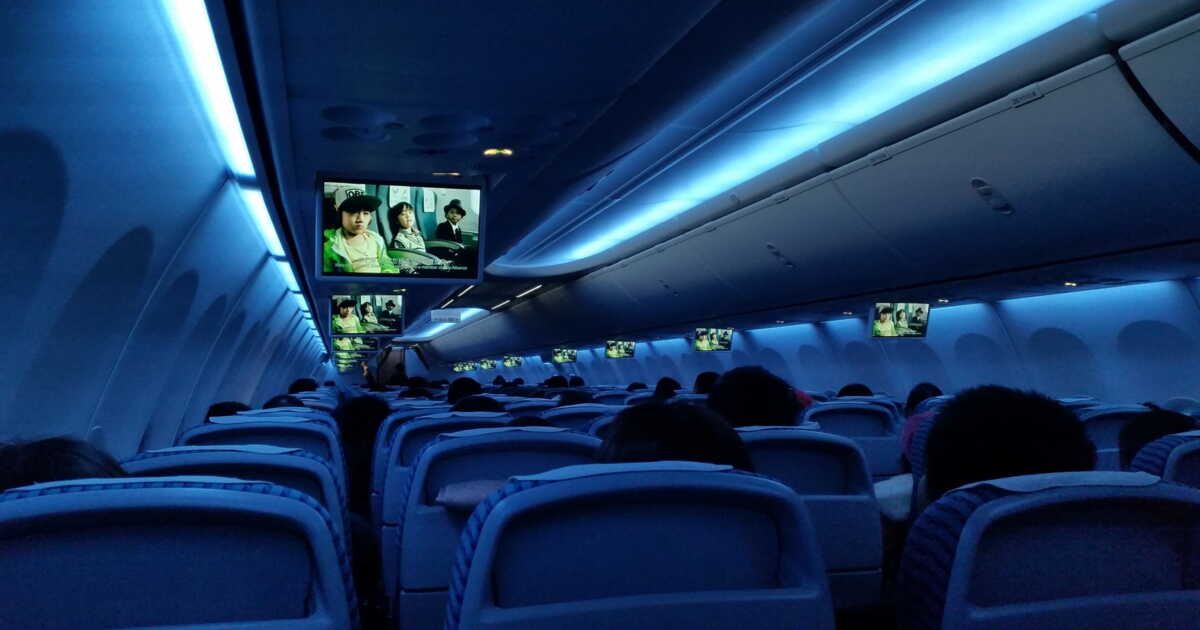
You are stuck on the window seat and need to wake your neighbor to go to the bathroom? Before you hold back or feel guilty with every trip, know that flight attendants have some tips to prevent these movements from turning into a source of tension. Because while getting up several times during a flight isn’t necessarily rude, some situations lend themselves less to constant going and coming. So, when should you wait, and how can you avoid exasperating your seatmates?
Several getting up during a flight, a situation that can be managed with a few precautions
Whether you need to visit the restroom, want to stretch your legs, must retrieve an item from the overhead bin, or need to attend to a child, there are many reasons to leave your seat mid-flight. And they are not necessarily predictable at boarding. There is therefore no defined maximum number of get-ups that aviation professionals would deem acceptable.
“No, I wouldn’t automatically call that rude, because people may need to go to the bathroom, stretch, handle a health issue, take care of a child, or access something important”, explains Aura E. Martinez, a flight attendant for nearly twenty years, to Travel + Leisure magazine.
However, the situation can become tiresome when these trips multiply to the point of constantly disturbing other passengers. The discomfort is especially pronounced on short flights, where rest time is limited, when neighbors are trying to sleep—particularly on red-eye journeys or during meals. The key is not so much the number of times a person stands up as the circumstances under which it occurs. It’s better to consider the situation before asking your neighbor again, perhaps waiting a few minutes if the need isn’t urgent.
For travelers who know they will need to move around regularly, Aura E. Martinez recommends booking a seat directly on the aisle. This seat allows you to exit without asking your neighbors to stand, and it provides more freedom during the journey.
If the ticket is already booked on the window or middle, another solution is to ask a passenger seated on the aisle if they would be willing to swap seats. The flight attendant known on social media as CiCi in the Sky suggests this possibility. But it is best not to press if refused: an aisle seat can be particularly sought after, and its occupant is under no obligation to cede their seat.
It is also better to warn your neighbors from the start of the flight if you know you will need to get up frequently. This transparency prevents repeated surprises and helps set reasonable expectations right away.
Meals, Sleep, and the Seat Belt Sign: Times When Waiting is Best
If the need isn’t urgent, the moment you choose to leave your seat matters a lot. Aura E. Martinez specifically advises avoiding excursions during meal and drink service, and while your neighbor is sleeping.
The service trolley’s passage indeed makes movements more challenging. In the narrow aisle, crew members must be able to move with trays and hot beverages. Getting up at that moment risks inconveniencing flight attendants as well as other passengers. Waiting a few minutes, when possible, helps ease on-board circulation.
Another tip is to take advantage of the moment when your neighbor stands up on their own. CiCi recommends this approach to minimize interruptions. If both passengers need to leave their seats, they can then avoid multiplying requests for passage.
However, one must distinguish between simple movements and actions driven by a pressing need. Even if the toilets were used before boarding, it is still possible to need to return there several times during the journey. The flight duration, health status, and individual needs can explain these back-and-forth trips.
“I would never want a passenger to feel guilty about needing to go to the bathroom twice during a five-hour flight”, CiCi notes in Travel + Leisure. A useful reminder for travelers who hesitate to wake their neighbor for fear of appearing rude.
Finally, when the seat belt sign is on, passengers must remain seated and buckled. In that case, safety takes precedence over comfort and travel habits. Outside of those periods, the simple rule on the plane remains: everyone may need to stand up, provided they consider others when the situation allows.