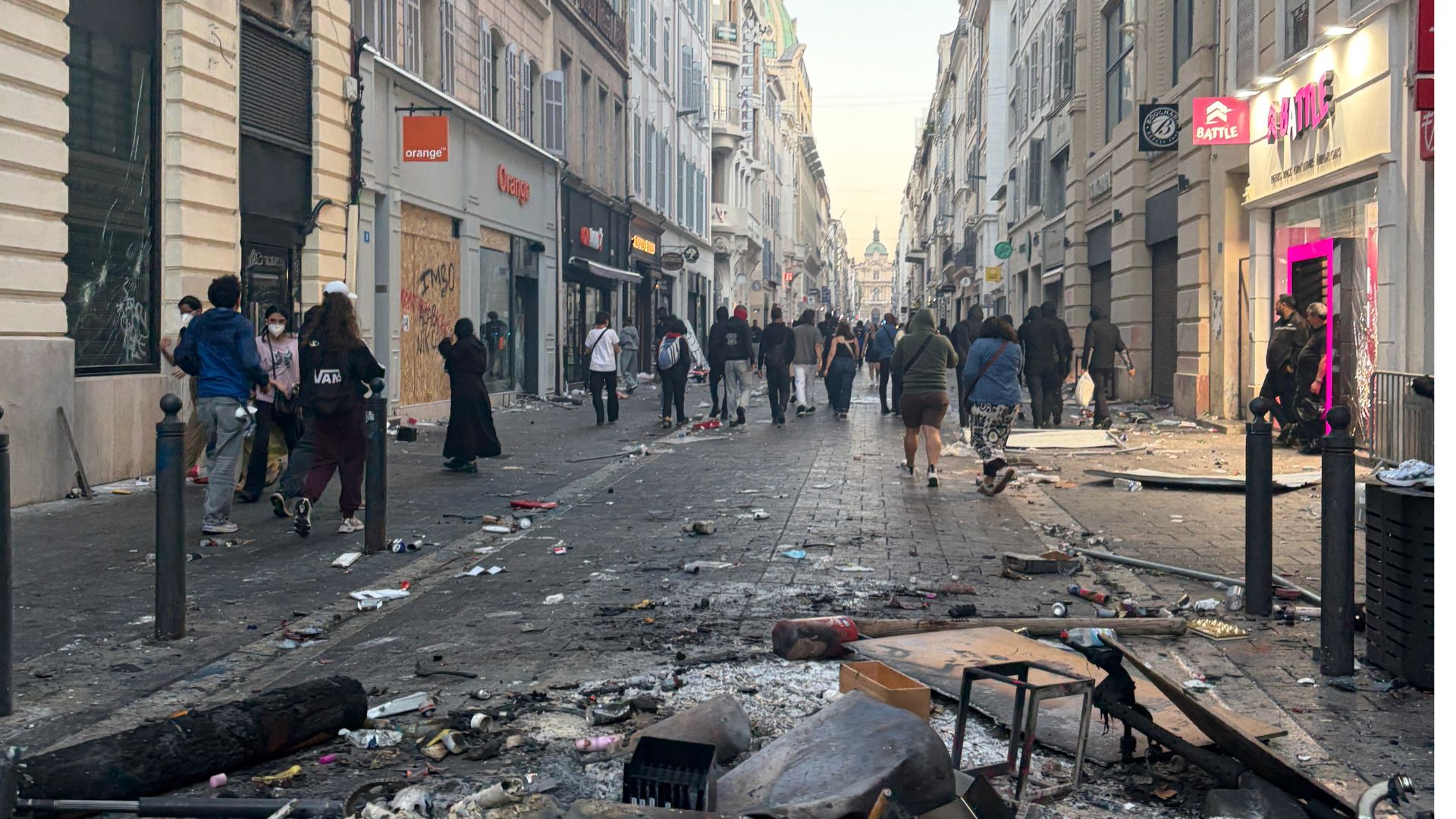
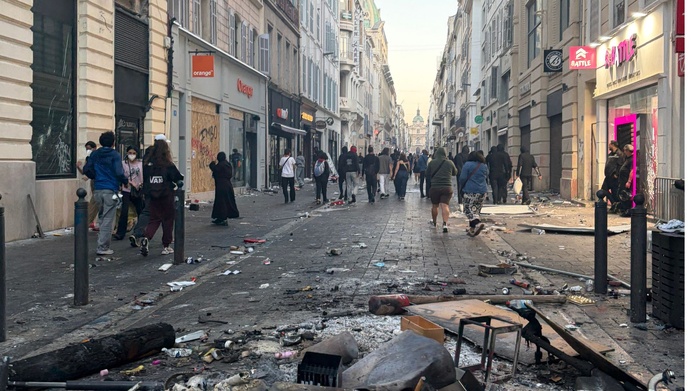


The demonstrations of October 17, 2026 gave rise to scenes of violence and vandalism in several French cities.
Fires, looted shops, shattered storefronts, clashes with law enforcement… The images quickly circulated on social media and in the international press.
With the year-end holidays approaching, a crucial period for urban stays and travel, this media coverage raises a question: could these images affect the perception of France among foreign visitors and, ultimately, their travel decisions?
In France, a Tourism Landmark in Flames
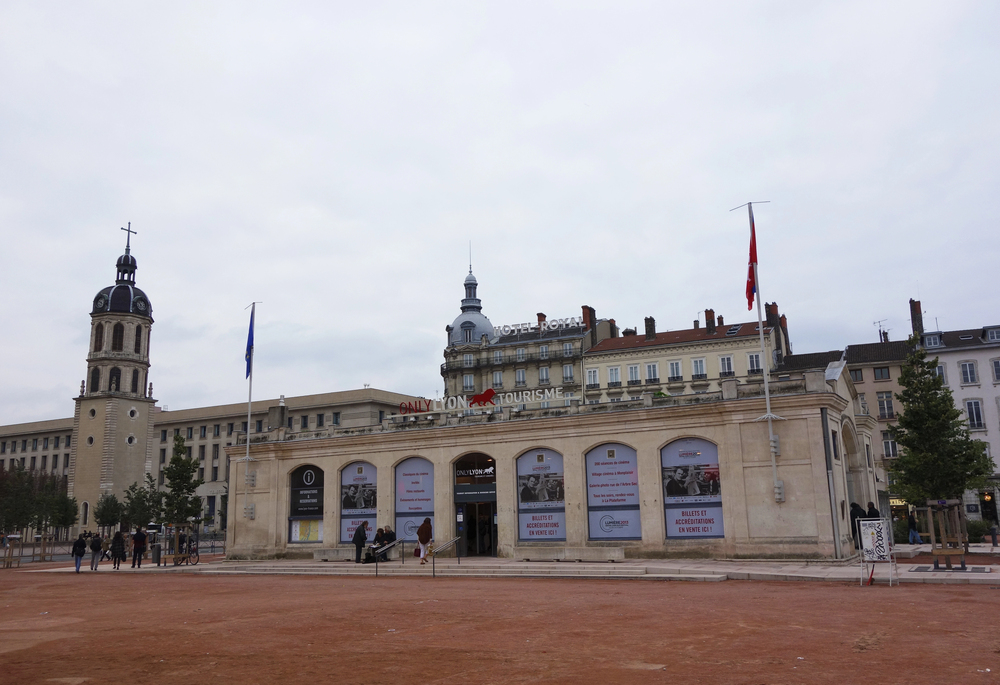
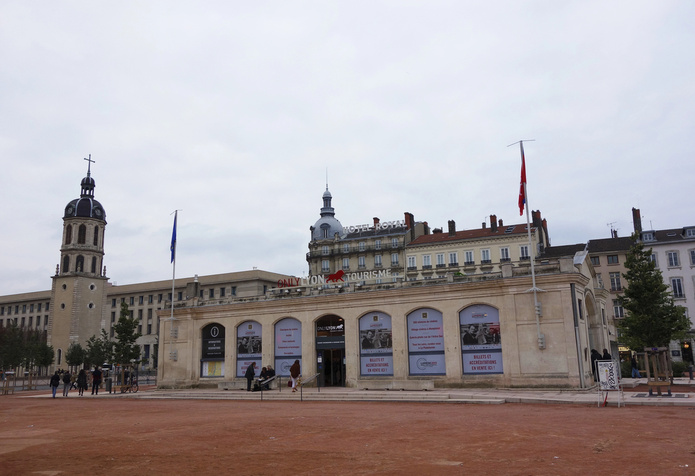
 In the French press, the fire at the Lyon Tourism Office became one of the day’s defining images on October 17. The building, dedicated to welcoming and guiding visitors, was vandalized and then burned outside of the violence.
The symbol is particularly powerful for the tourism sector.
Le Monde thus placed the blaze within the narrative of a day described as “chaotic,” while Euronews aired a video of the flames on the facade, and TF1 Info emphasized an antenna “vandalized and burned.”
Le Temps also returns to these scenes in an article focused on “a France facing its own chaos.”
Des angles, des mots différents, mais des images qui montrent la même chose : not only clashes between protesters and police, but damages affecting shops, urban spaces… and facilities linked to welcoming tourists.
In a Parisien article that gives voice to foreign tourists confronted with weekend violence in the capital, the testimony of these visitors reveals another dimension of the events. Beyond material damage, it is the very experience of the stay that can be affected, with disrupted itineraries, compromised visits and concern about what was witnessed.
On social networks, another narrative circulates with a trend titled: “What the media won’t show.”
Alongside videos of violence and vandalism, there are images of mutual aid, solidarity, and peaceful demonstrations. These contents offer a more nuanced portrayal and remind us that events are not limited to chaotic scenes.
This diversity of images could help preserve the confidence of travelers to France, a country whose appeal heavily rests on its heritage, city centers, shops and its image as a cultural destination. According to INSEE, in 2025, resident visitors accounted for about 65% of overnight stays in hotels and campsites in metropolitan France.
Yet there remains a limit… These images of mutual aid and peaceful mobilizations, though widely circulated on platforms, do not necessarily enjoy the same visibility with foreign audiences.
Abroad, the Language of Violence Dominates
To discuss these riots, the international press has opted for harsher headlines.
In Germany, the public broadcaster Tagesschau headlines “Schwere Ausschreitungen – Rathaus in Flammen”, i.e. “Serious violence – a town hall in flames”. The wording underscores the severity of the clashes and the buildings affected.
The flames and damage place the question of keeping order at the forefront.
In the same vein, in the United Kingdom, The Guardian speaks of a “weekend of chaos”.
In Spain, El País chose to head with “Francia prende fuego al macronismo”, literally “France sets Macronism on fire”. The article goes beyond describing the damage; it assigns a political meaning to it.
In Italy, Corriere della Sera focuses on clashes, fires and vandalism. The paper notably links student protests to the return of the Yellow Vests. This framing places the events in a “broader period of social unrest in France.”
In the United States, the Associated Press highlights the President’s address, the scale of the unrest and its economic consequences.
But it also emphasizes photography. Here, the power of the images lies in their immediacy. Facades ablaze, dark smoke, shopfronts torn apart and streets littered with debris are understandable without prior knowledge of the context. Images, without the necessary details about exact locations, the duration of the incidents, and the true extent of the affected areas…
For a destination like France, whose appeal rests in large part on its heritage, its city centers, its shops, and its image as a cultural destination, this media treatment represents a risk.
“Since this weekend and since this morning, cancellations are being observed”
Reactions did not take long to surface. Beyond international headlines and images, tourism professionals report rising anxiety and early cancellations.
Pierre-Jean Romatet, president of Great France, says he has received numerous messages, notably from American operators. “They worry first about us—the team, the staff—then about our business and about safety in France,” he notes.
“All the messages I’ve received start by asking for news about our families, about ourselves, to know if we are safe.” For him, these reactions reveal how the violence is perceived from afar. “It really feels like civil war, like urban guerrilla warfare,” he adds.
The concerns are already translating into commercial consequences. “Since this weekend and since this morning (Monday, October 19), we are seeing cancellations.” He mentions stays planned in Paris, as well as in Champagne and Provence. He also notes Louvre visits canceled, in the context of the museum’s blockage.
Romatet also points to “a paradox between what tourists and visitors feel on the ground and the image conveyed by the media, which triggers cancellations and worry.”
This gap between sentiment and reality is also at the heart of ADN Tourisme president Christelle Chassagne’s concerns, who warns about the consequences of this media coverage on France’s international image. “Today, we are in a state of astonishment, but we also understand that international media coverage will be catastrophic.”
For her, the priority is a response from public authorities: “We must act now. First the State must protect its residents, its tourists,” she insists. “Without these conditions, we cannot operate under the best conditions, whether as hoteliers, restaurateurs, souvenir sellers, a destination, or a destination promoter…”
Foreign authorities, for their part, have reacted to the events.
The German Foreign Office updated its travel advice to flag the October 17 violence and to warn that new outbreaks could not be ruled out. Italy also issued a specific advisory urging its nationals to avoid gatherings and to exercise caution.
Meanwhile, the Chinese Embassy in France urged Chinese nationals on the territory to “follow closely the evolution of the local situation, strengthen security measures and avoid demonstration zones”, according to the state broadcaster CCTV.