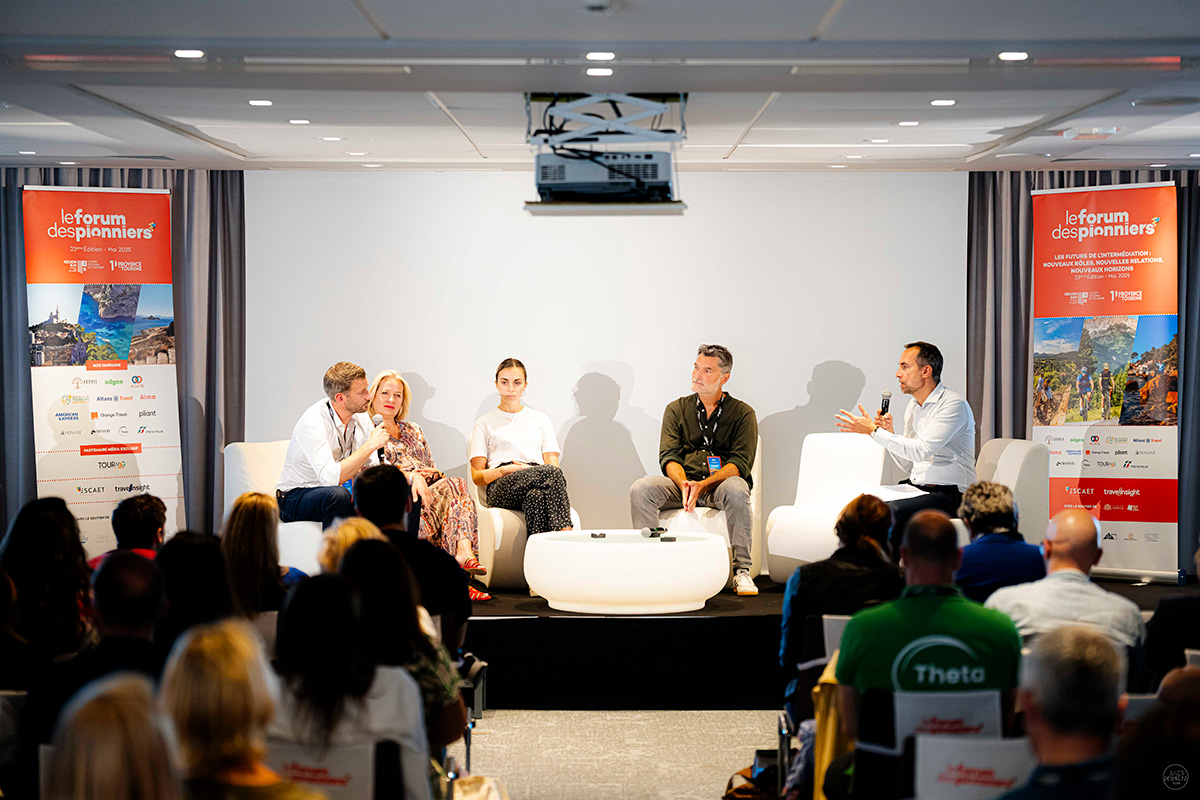


From reaction to anticipation: a shift in posture
Travel has always been a sector exposed to vulnerability. And the profession has always known how to adapt—it’s even one of its strengths. But in recent years, the very nature of uncertainty has evolved. Disruptions have become more frequent, more simultaneous, and above all more structural. Reacting quickly is no longer enough. Most players have managed to cope, sometimes at a high cost to their teams and their margins. The real question now lies elsewhere: how to build organizations capable of foreseeing, modelling, and preparing themselves?
This shift is at the heart of the Forum des Pionniers 2026’s exchanges: moving from a reactive logic to a genuine culture of anticipation. The 24th edition is designed to explore together the terrains where this posture today makes a difference: geopolitics, climate, the economy, and the concentration of the sector.
Geopolitics: knowing your threshold before the next shake
But beyond the decision itself, what distinguishes actors today is what they have prepared in advance. Knowing one’s breaking point, modelling the impact of a shock according to its duration (six weeks, three months, six months…) on margins, supplier contracts and teams: these exercises, long seen as theoretical, are becoming a real leadership skill. Anticipating means giving yourself the means to decide lucidly rather than improvise under pressure. And it also means knowing, in advance, at what moment an adaptation strategy becomes a survival strategy.
Climate: integrating a new geography into strategic decisions
Anticipating here means being willing to revisit parameters long considered stable. Reexamining the place of certain Mediterranean zones in midsummer, watching the rise of shoulder seasons, adjusting dialogues with local hosts who, too, see their trade evolving. It also means anticipating the forthcoming repercussions on travel insurance, on airlines’ investment policies, on the very value of certain destinations over a five- to ten-year horizon. For a few players, this work is already well advanced. For many, it is just beginning.
Economy: capturing value where it moves
Yet riding a trend and seizing it are not the same thing. Some players overinvested in long-haul in the post-Covid years, and today find themselves rebuilding positions on proximity destinations they had long considered less profitable. Others, more ahead in market reading, have already repositioned their product mix, adjusted pricing for customers who book later, and are crafting new narratives around territories we thought we knew.
Anticipating the movement of value is not about following the trend a year late; it is about staying ahead of it. Betting, sometimes uncomfortable, that what seems marginal today will be central tomorrow. And above all, accepting that tomorrow’s strategy will not resemble yesterday’s.
Concentration: positioning yourself before the landscape changes
The question is no longer whether consolidation will occur. It is how each player wishes to participate. A desirable target, consolidator, strategic partner: these are positions prepared in advance, in market reading, in the robustness of the business model, in the clarity of the vision. Those who anticipate these moves today, who face them head-on rather than with worry, gain a head start over those who will discover the landscape only once it has been recomposed.
In every segment, one model survives and strengthens. Identifying that model, knowing whether we fit into it, outlining our trajectory for the years to come: these are decisions that cannot be made in the heat of the moment, and certainly not alone.