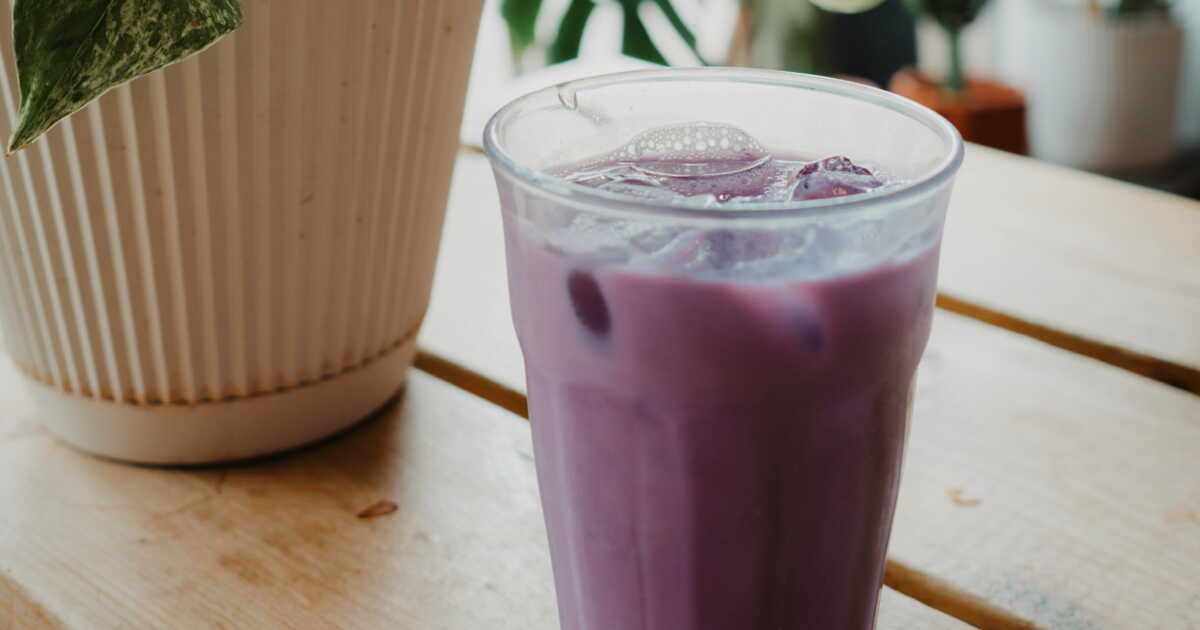
In the Philippines, ube, the country’s emblematic yam, has become a highly strategic product. Highly valued for its softly vanilla-sweet flavor, its beautiful purple color, and its myriad virtues, it enchants consumers around the world, even supplanting the trend for matcha. In 2025, exports surpassed three million euros, more than twice the previous year, yet this clear success hides a serious problem. Production no longer keeps pace with demand as enthusiasm continues to rise.
“Our harvest is no longer enough. We are asked for two tons per month. How could we supply such volumes?”, summarizes producer Esmeraldo Maligsa to the South China Morning Post, Tuesday, June 30.
A lack of resources and development assistance
Rich in fiber and antioxidants, this root is found in smoothies, coffees, jams, pastries, or even ice creams in many countries. The main export markets are Canada, the Middle East and several Asian countries, but the United States, South Korea and Europe are accelerating orders. Starbucks, among others, has launched its own ube drink in several outlets across the Atlantic as well as in the Old Continent. Gradually, this local specialty is turning into a high value-added agricultural product, while Philippine producers are not oblivious to the difficulties on the ground.
There, farming remains largely manual and processing infrastructure is still insufficient. “We need machines, backhoes”, explains Esmeraldo Maligsa, who notes that the hilly lands of the island of Bohol complicate their work. “We were given a motor cultivator, but it cannot climb the steep terrains… We turn the soil by hand, which takes time”, he adds, exhausted.
On Saturday, June 27, the Philippine government announced a plan to structure the sector, with common standards, investments and tools adapted to exports. “Supply and organization struggle to keep pace”, concedes Undersecretary for Agriculture, Philip Young.
A food product soon to be protected
The authorities also want to better protect the origin of ube from Bohol. This month, Manila filed a request for registration of a geographical indication (GI) for its production. This measure would allow to “officially recognize the qualities, the reputation and the cultural heritage of the ube ubi kinampay of Bohol, intrinsically linked to the geography, the soil, the climate and the province’s traditional agricultural practices”, according to the Philippine Intellectual Property Office, which notes a “purple gold rush”.
This recognition would also help protect this variety against imitations from abroad. Esmeraldo Maligsa asserts that “many try to imitate our ube, but no one manages to reproduce its aroma”.
Researchers, however, remind that the future of the sector will also depend on its ability to sustainably boost production. Ube remains vulnerable to diseases, to climate fluctuations and cannot be harvested year-round. For expert Marlon Tambis, it will be essential to develop other varieties and new cultivation methods. “Relying solely on kinampay will not be enough to solve shortages”, he says.