

This reflection stems from an op-ed published last week in “La Tribune” by Valérie Boned, president of the Confederation of Tourism Stakeholders, and Thomas Juin, president of the Union of French Airports.
Their starting point is obvious: a destination is valuable only if it can be reached.
They remind us that visitors arriving by plane in France would have generated 23 billion euros of tourist expenditure in France in 2023. A direct air link can open an emitting market, extend the season, support accommodations and shops, facilitate conferences and allow territories distant from major hubs to access an international clientele.
Their argument deserves to be put to the test and discussed. For one question remains: does an airline route automatically create value for the territory it serves?
Behind aircraft and traffic statistics lies a business model largely sustained by public funding.
Regional airports must absorb high fixed costs, security and safety obligations, competition from rail, and the retreat of certain domestic customers (bans on flights to Paris in some cases).
When revenues are not enough, local authorities step in to finance infrastructure, balance operations or support the opening of new routes. Such support can be legitimate.
A regional airport can fulfill a mission of clearing isolation, shaping the territory, or giving access to an international tourist clientele. It remains essential that this mission be explicit, its cost known, and its results measured.
A Full Plane Does Not Guarantee an Enriched Territory
 A regional airport does not produce value by existing alone. It becomes a tool of attractiveness when it enables a territory to access audiences it could not capture under rail or road conditions.
A direct route from London, Dublin, Milan or Amsterdam can render a destination marketable. It can promote an underrated destination, support off-season travel, reinforce short stays and spread flows beyond Paris, the Côte d’Azur or the major metropolises.
But the route is only a link in the chain. To turn passengers into economic benefits, you need accommodations, a robust ground transport network, targeted marketing for the emitting market, and a tourism offer capable of retaining visitors.
A full plane does not automatically mean a territory has become wealthier. We must also know how many passengers are truly incremental, how many nights they stay, what spending they generate, and what share of that value remains in the region. This distinction is essential.
Some of these travelers might have reached the destination by another airport or by another mode of transport. Others use the hub as a mere entry point before heading on to a metropolis or another territory.
Profitable? And for whom: the airport or the territory?
It is necessary to distinguish financial profitability of the platform from the economic value produced for the territory.
An airport can be financially loss-making yet be useful. This is possible for a connectivity link that allows an isolated population to quickly reach Paris or another major economic hub. The local authority does not fund ordinary commercial activity: it funds a public service mission.
Conversely, an airport can show high traffic without proven local returns. The number of passengers is not enough. One must consider simultaneously the performance of the platform, the route, and the territory.
The relevant question is therefore the net territorial value: how many additional visitors are generated, what spending stays in the region, which jobs or investments are tied to the service, and what public cost is required to achieve these results?
Impact studies should also be read with caution. The Regional Chamber of Accounts of Occitanie noted that some methods did not account for all public costs, environmental externalities, or whether passengers would have come otherwise.
Who Really Pays for Connectivity?
The funding of an airport rests on several layers: aviation charges, revenues from parking, retail, real estate activities, security-related income, borrowings, and public subsidies.
Assistance to a public-interest infrastructure is not the same as a marketing contract intended to keep a carrier, financed by reduced charges or per-passenger bonuses. Yet, these mechanisms can accumulate and make the real cost of a route difficult to establish.
The parliamentary report on airport support expenditures highlighted this opacity. Aids can be paid by the owner to the operator, then by the operator to the airline.
Marketing contracts can be presented as tourism promotion while they are closely tied to opening or maintaining a route.
The question should be simple: what is the full public cost of the link, including subsidies, investments, incentives granted to airlines to come or stay?
Metz-Nancy-Lorraine: when subsidies no longer create attractiveness
The same report provides a counterexample. Between 2016 and 2023, Metz-Nancy-Lorraine received 18.1 million euros in public funding, roughly 15 euros per passenger.
Despite this support, the hub is not financially autonomous and its economic impact on the Grand Est is judged limited.
The difficulty lies notably in its competitive environment. The region’s air mobility needs are already covered by Strasbourg, Luxembourg, Frankfurt, Basel-Mulhouse, neighboring German airports, and, depending on destinations, Paris platforms.
In this case, the subsidy may maintain the infrastructure without creating new attractiveness. It delays a decision on specialization, pooling, or resizing.
The Regional Chamber of Accounts considers that, without significant evolution within five years, the continuation of Metz-Nancy-Lorraine’s commercial activity should be questioned. This recommendation recalls that an infrastructure can have been useful at one time and may no longer offer the same comparative advantage today.
Toulouse-Blagnac: critical mass changes everything
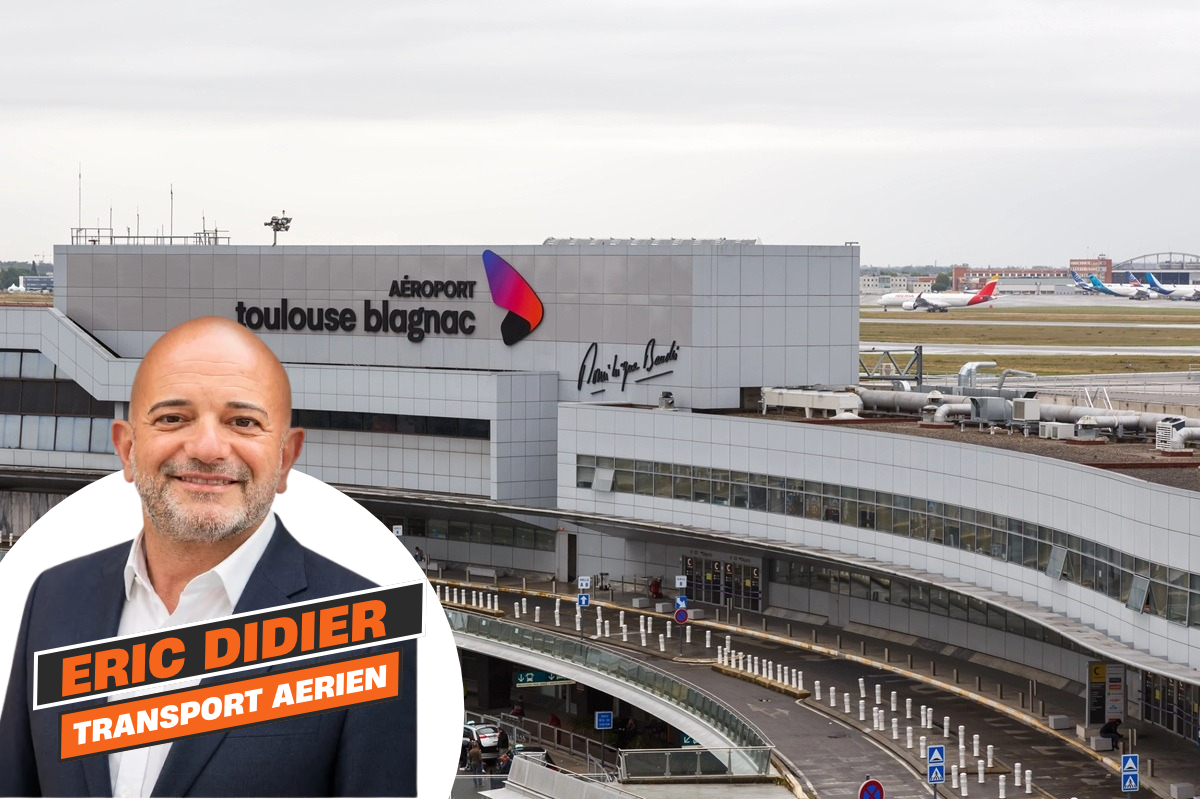
Toulouse-Blagnac offers another lesson. In 2025, the hub welcomed 7.62 million passengers, recorded 161.9 million euros in activity revenue, and posted a net result of 16.8 million euros. Its EBITDA stood at 51.4 million euros.
The hub benefits from a critical mass, a large economic catchment, strong international activity, and solid non-aviation revenues.
With such volume, fixed costs are better absorbed and the diversification of airlines reduces dependence on a single operator.
This model cannot be mechanically transplanted to hubs ten or twenty times smaller. It simply shows that a regional airport can reach economic self-sufficiency when the market is sufficiently deep.
When the airline becomes greater than the airport
The low-cost model has helped many regional airports regain traffic. It also creates a dependency when the carrier accounts for most or all of the commercial activity, as recently seen with Ryanair.
In Carcassonne, the European Commission approved 11.7 million euros in state aid to the airport between 2001 and 2011, while demanding the recovery of 1.8 million euros from Ryanair under contracts deemed incompatible with EU rules.
In Montpellier, the Commission had requested in 2019 the recovery of 8.5 million euros paid to Ryanair under marketing contracts concluded with a local tourism and economic promotion body.
These decisions do not mean that every promotional campaign is illegitimate. They show, however, that the real beneficiary of the expenditure must be identified and the contract evaluated as a private operator would.
The risk is twofold: the public authority funds a route that would not be profitable without support, then becomes dependent on an airline that could decide to leave. The day the route disappears, the territory retains the fixed costs of the infrastructure, but loses the traffic that justified the funding.
We must fund missions, not perpetuate habits
France does not necessarily have too many regional airports, although the question deserves consideration.
It has mainly too many platforms that perform the same function, with the same model of dependence on public aid and low-cost carriers.
Each airport should have a clearly defined mission: a gateway for tourism, a transfer hub, a tool to reduce isolation, a seasonal airport, a freight base, a maintenance site, or civil security infrastructure.
Subsidies should be time-limited, disclosed, and conditioned on measurable and quantifiable objectives. Their full cost should include subsidies, investments, fee reductions, and marketing contracts.
There should also be a better alignment between air and rail. It is not about replacing air travel with trains in every case, but about avoiding duplication and organizing complementarities.
The question then becomes: which airports do we want for which tourism, economic and territorial strategy, and what level of public funding are we willing to devote to each?
Air connectivity will remain a major lever of French attractiveness. But a regional airport should not be kept simply because it exists; it should be supported because it fulfills a demonstrated mission, in service of a clearly assumed strategy.
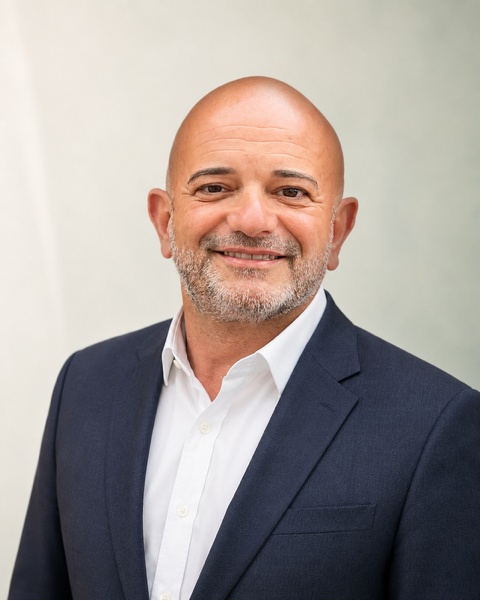
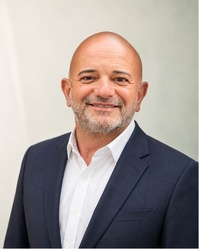
A passionate entrepreneur and aviation expert with more than three decades of experience, Eric Didier coordinated the launch of the Oneworld alliance before creating and developing Qatar Airways in France and on several European markets, where he held key leadership roles, ensuring the airline’s growth and success.
An expert in team management and in commercial strategies, alliances and distribution, he has worked with several major airlines, contributing to their international expansion.
He now heads the consulting firm TED Advisory Services.
An expert in team management and in commercial strategies, alliances and distribution, he has worked with several major airlines, contributing to their international expansion.
He now heads the consulting firm TED Advisory Services.