

Slovenia continues its tourism momentum in 2026.
Nearly 3 million arrivals were recorded in the first half of the year, up by 5 % year on year, while overnight stays grew by 5.7 %, surpassing 7 million, according to data from the Statistical Office of the Republic of Slovenia (SURS).
The international clientele now accounts for 71 % of overnight stays, with more than 5.2 million overnights between January and June, up 6.8 % compared with the same period in 2025.
The Germany, Italy and Austria are the main sending markets. Ljubljana, Piran and Bled, for their part, are among the country’s most visited towns.
Nearly 3 million arrivals were recorded in the first half of the year, up by 5 % year on year, while overnight stays grew by 5.7 %, surpassing 7 million, according to data from the Statistical Office of the Republic of Slovenia (SURS).
The international clientele now accounts for 71 % of overnight stays, with more than 5.2 million overnights between January and June, up 6.8 % compared with the same period in 2025.
The Germany, Italy and Austria are the main sending markets. Ljubljana, Piran and Bled, for their part, are among the country’s most visited towns.
Slovenia: June, record month for the destination
The growth notably accelerated in the spring. June 2026 became the best month ever recorded in Slovenia, with for the first time more than 2 million overnight stays in a single month.
This performance fits into a broader trend of extending the tourist season. After an increase in overnight stays of 12 % in May–June, 11 % in September and 10 % in October last year, the momentum continues in 2026.
The May and June months thus show a cumulative rise of 5.4 % in overnight stays year on year.
The structure of demand is also shifting. While the domestic market accounted for 44.4 % of overnight stays in February, its share fell to 21.4 % in May and 22.7 % in June.
Meanwhile, the international markets advanced throughout the period, up to representing 47.3 % of overnight stays in June.
This performance fits into a broader trend of extending the tourist season. After an increase in overnight stays of 12 % in May–June, 11 % in September and 10 % in October last year, the momentum continues in 2026.
The May and June months thus show a cumulative rise of 5.4 % in overnight stays year on year.
The structure of demand is also shifting. While the domestic market accounted for 44.4 % of overnight stays in February, its share fell to 21.4 % in May and 22.7 % in June.
Meanwhile, the international markets advanced throughout the period, up to representing 47.3 % of overnight stays in June.
The mountains record the strongest growth
Among the various categories of Slovenian destinations, mountain municipalities show the largest growth.
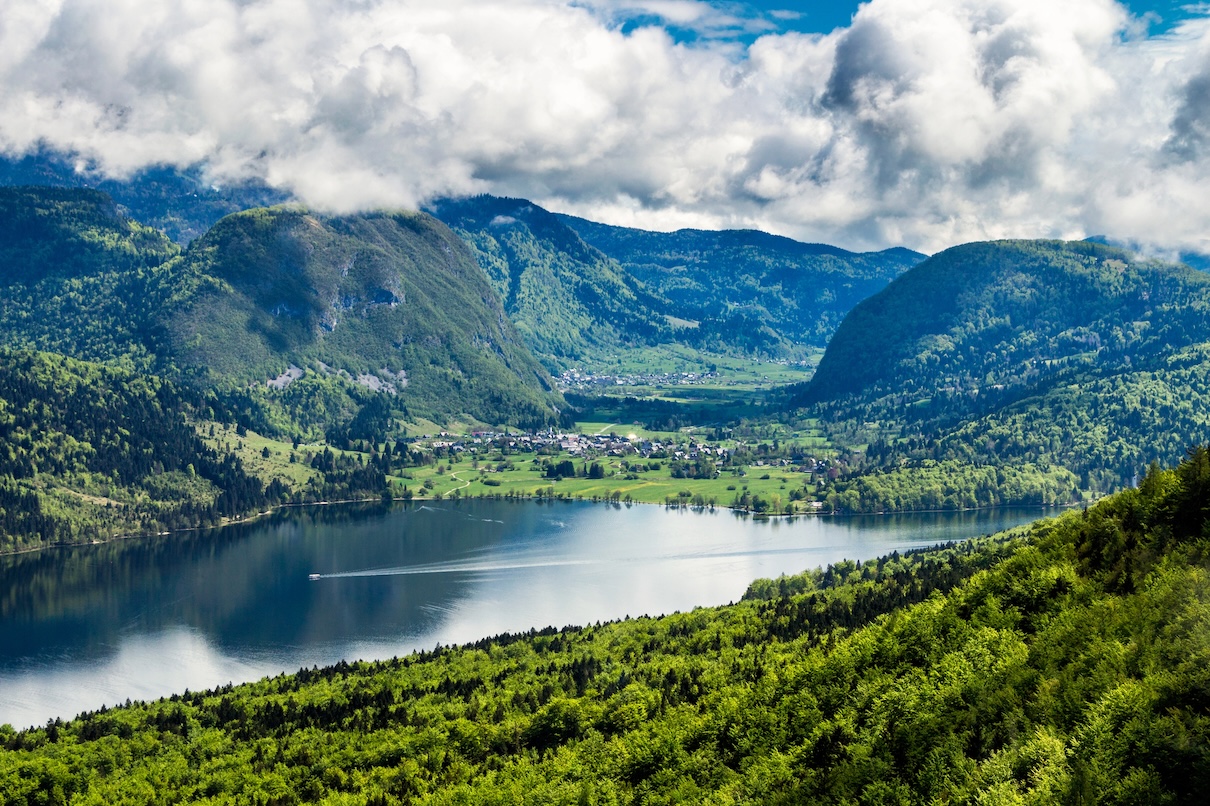
They registered 2.1 million overnight stays in the first half of the year, representing 29 % of the national total and a rise of 11 % compared to the first half of 2025. Bled, Bohinj and Kranjska Gora rank among the most visited destinations.
The trend was particularly confirmed in June, with nearly 731,000 overnight stays in mountain municipalities, i.e., 37 % of all overnight stays recorded in the country during the month.
The other destination categories also posted positive results. Spa towns generated 1.6 million overnight stays in the first six months of the year (+3.4 %), ahead of Ljubljana (1.2 million, +5.7 %) and the coast (1.2 million, +1.4 %). Urban municipalities recorded 500,000 overnight stays (+4.5 %).
The rise of the mountains comes as these areas already accounted for 31 % of national overnight stays in 2025, with 5.5 million overnight stays across the year.
They registered 2.1 million overnight stays in the first half of the year, representing 29 % of the national total and a rise of 11 % compared to the first half of 2025. Bled, Bohinj and Kranjska Gora rank among the most visited destinations.
The trend was particularly confirmed in June, with nearly 731,000 overnight stays in mountain municipalities, i.e., 37 % of all overnight stays recorded in the country during the month.
The other destination categories also posted positive results. Spa towns generated 1.6 million overnight stays in the first six months of the year (+3.4 %), ahead of Ljubljana (1.2 million, +5.7 %) and the coast (1.2 million, +1.4 %). Urban municipalities recorded 500,000 overnight stays (+4.5 %).
The rise of the mountains comes as these areas already accounted for 31 % of national overnight stays in 2025, with 5.5 million overnight stays across the year.
Stable French visitation
On the French market, the momentum appears more stable. Between January and August 2026, Slovenia welcomed 187,532 French tourists, for a total of 449,190 overnight stays. These results remain relatively close to those recorded the previous year.
The Slovenian domestic market, for its part, generated more than 2.1 million overnight stays in the first half, up 2.8 %. Piran, Kranjska Gora and Brežice appear among its preferred destinations.
In terms of profiles, the 35–44 years age group constitutes the main bracket among tourists, while visitors aged 65 and over generate the largest number of overnight stays.
The Slovenian domestic market, for its part, generated more than 2.1 million overnight stays in the first half, up 2.8 %. Piran, Kranjska Gora and Brežice appear among its preferred destinations.
In terms of profiles, the 35–44 years age group constitutes the main bracket among tourists, while visitors aged 65 and over generate the largest number of overnight stays.
1.17 billion euros in tourism receipts
The solid attendance is also reflected in revenues. Between January and May 2026, the value of Slovenian tourism exports reached 1.17 billion euros, according to data from the Bank of Slovenia, up 6.2 % year on year.
These results reinforce the country’s strategy to better distribute tourist flows across space and over the year, while developing a model described as more sustainable.
The rise of mountain destinations occurs within a context of travel habit transformation, notably under the influence of climate change.
Like other European destinations, Slovenia aims to capitalize on the growing interest in the ‘coolcation’, which involves preferring destinations offering greater coolness in the summer period, as well as experiences oriented towards nature.
On a relatively small territory, the destination concentrates several types of landscapes and activities: the Alps, lakes, rivers, forests, thermal waters, karst landscapes, countryside and coastline.
These results reinforce the country’s strategy to better distribute tourist flows across space and over the year, while developing a model described as more sustainable.
The rise of mountain destinations occurs within a context of travel habit transformation, notably under the influence of climate change.
Like other European destinations, Slovenia aims to capitalize on the growing interest in the ‘coolcation’, which involves preferring destinations offering greater coolness in the summer period, as well as experiences oriented towards nature.
On a relatively small territory, the destination concentrates several types of landscapes and activities: the Alps, lakes, rivers, forests, thermal waters, karst landscapes, countryside and coastline.