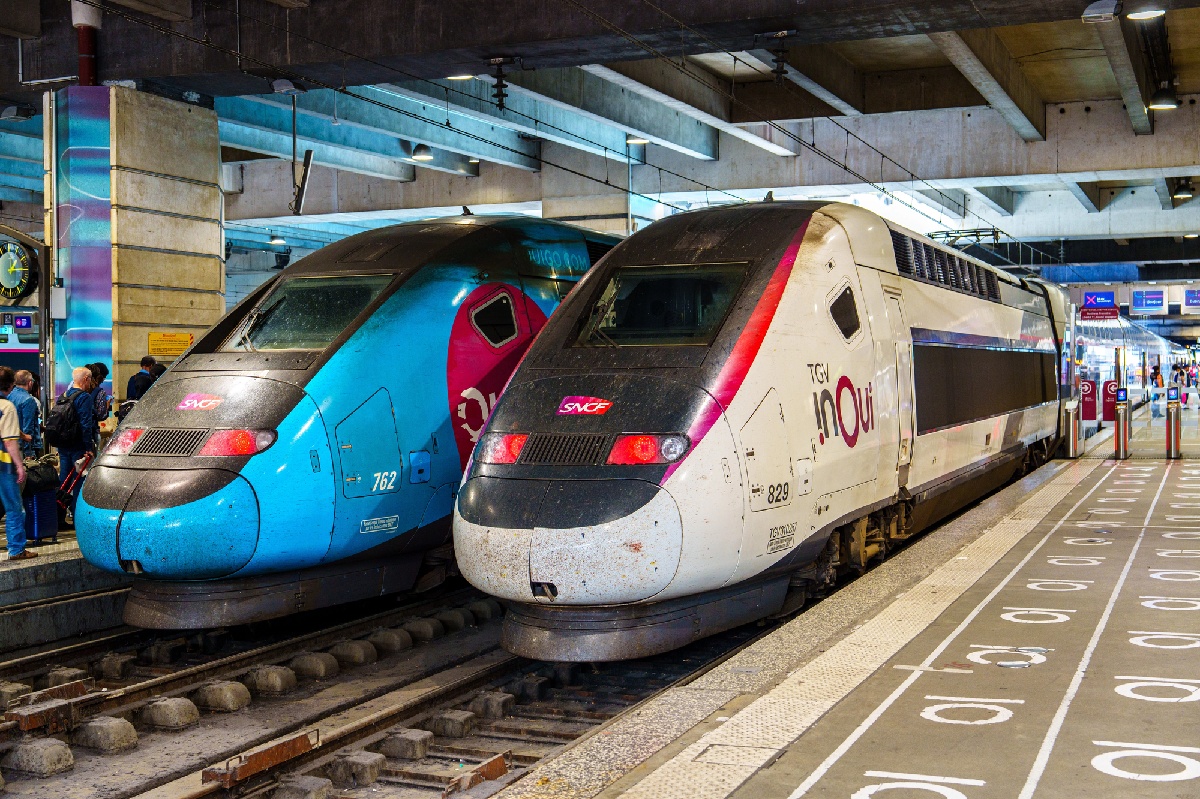


While SNCF has recently confirmed a modest increase in TGV INOUI and OUIGO fares for 2026, the National Federation of User Associations for Transport (FNAUT) has published a comparative study on how TGV prices and offerings have evolved from 2017 to 2024.
It had already unveiled, at the end of 2025, an initial report covering figures from 2017 to 2023. It now updates the data with 2024 figures.
According to FNAUT data based on the open data from the Transport Regulation Authority:
It had already unveiled, at the end of 2025, an initial report covering figures from 2017 to 2023. It now updates the data with 2024 figures.
According to FNAUT data based on the open data from the Transport Regulation Authority:
- Between 2017 and 2024, OUIGO’s seat-kilometre offering surged by +185%, while TGV INOUI’s declined by around -13%.
- This trend translates into a traffic split where OUIGO trains now account for a substantial share, at the expense of the traditional INOUI offering, criticized for its gradual decline.
“More OUIGO, less INOUI: the French TGV is changing its face… but not necessarily to the benefit of regular travelers.” states FNAUT.
Key figures of the #TGV: updated evolution from 2017 to 2024 and the same conclusion remains: fewer #Inoui 📉 more @OUIGO 📈 the great downgrading of the TGV offer! 🚆🛑
Source: @ART_transports 🙏 @franceinter @OuestFrance
Press release :… pic.twitter.com/WfMnp7etsS— Fnaut (@FNAUT_fr) February 13, 2026
Marked rise in OUIGO prices vs relatively stable INOUI
The FNAUT argues that this evolution reduces travel options for holders of discount cards (such as Avantage or Liberté), who often find fewer seats available on reserved quotas for TGV INOUI, the more traditional option.
The federation also analyzes price developments.
The federation also analyzes price developments.
- The average price of an OUIGO ticket rose by 75% between 2017 and 2024, and the price per kilometer climbed by 71% over the same period.
- By contrast, INOUI TGV tickets saw their average price rise by only 8%, with a price-per-kilometer increase limited to 11%, well below overall inflation.
response from Alain Krakovitch: context, evolution and customers
On LinkedIn, Alain Krakovitch, director of TGV-Intercités and head of the TGV INOUI and OUIGO brands, replied to these criticisms by emphasizing several contextual elements:
According to him, a large portion of OUIGO price increases can be explained by changes in the offering: at launch, the brand served only secondary stations and short-haul routes. Today, it operates from major Paris stations and on much longer connections (up to Hendaye, Brest, Perpignan…), which, he says, accounts for about 80% of the observed price rise.
He suggests that the remaining rise reflects higher operating costs, but notes that, overall, the prices of TGVs (INOUI + OUIGO) have risen more slowly than inflation in recent years.
For Krakovitch, the two brands are not competitors but complementary: OUIGO generally remains about 30% cheaper than TGV INOUI on average and helps attract travelers who would not have taken the train otherwise. He also notes that more than 180 million customers have used OUIGO since its inception, with more than half of tickets sold for less than €30.
According to him, a large portion of OUIGO price increases can be explained by changes in the offering: at launch, the brand served only secondary stations and short-haul routes. Today, it operates from major Paris stations and on much longer connections (up to Hendaye, Brest, Perpignan…), which, he says, accounts for about 80% of the observed price rise.
He suggests that the remaining rise reflects higher operating costs, but notes that, overall, the prices of TGVs (INOUI + OUIGO) have risen more slowly than inflation in recent years.
For Krakovitch, the two brands are not competitors but complementary: OUIGO generally remains about 30% cheaper than TGV INOUI on average and helps attract travelers who would not have taken the train otherwise. He also notes that more than 180 million customers have used OUIGO since its inception, with more than half of tickets sold for less than €30.