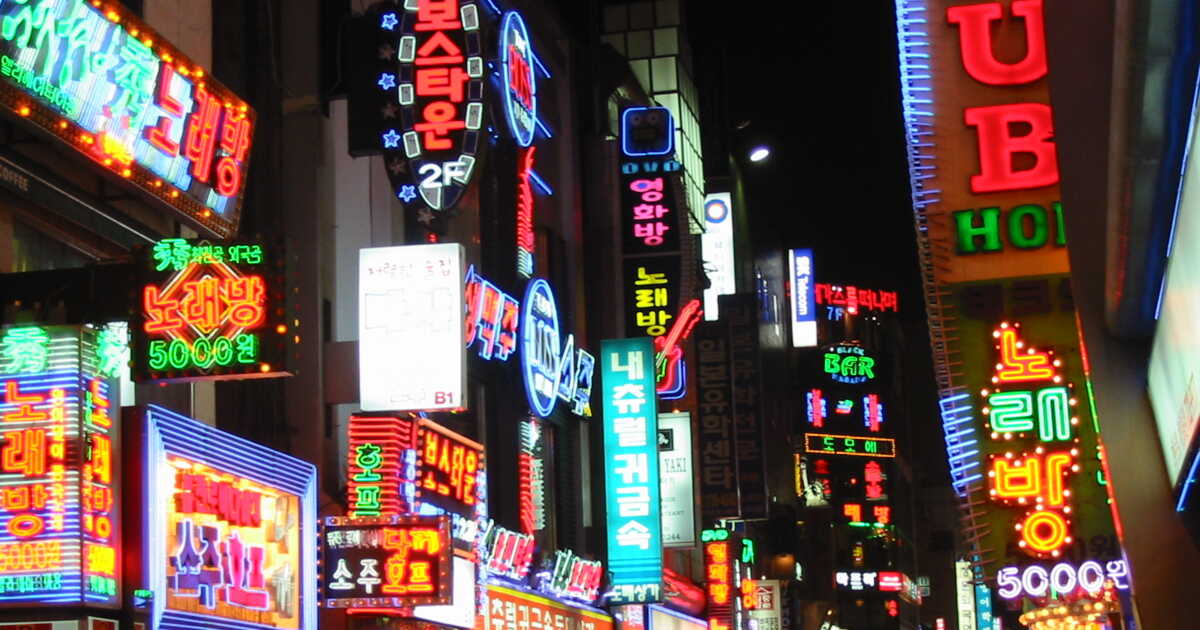
No dancing allowed! In South Korea, a few steps on the dance floor can indeed cost bar and live-music venues their owners. For years, a regulation has required establishments that serve both drinks and live music to prevent their customers from dancing. A paradox in a country that export its musical culture around the world. But a recent case, which sparked strong mobilization, could finally shift the lines.
In Busan, a bar shut for two months for letting its customers dance
To understand this ban, one must look at South Korean legislation. It distinguishes restaurants from night bars and nightclubs. The former can serve meals and alcohol, but are not allowed to let their patrons dance. To offer this activity, a venue must obtain a specific license, which brings additional constraints, including tax obligations, and it bans minors from entering. This regulation was designed in particular to prevent nightclubs from declaring themselves mere restaurants to evade these obligations. But it also penalizes small independent concert venues. Registered as restaurants to be able to sell food and drinks, they legally do not have the right to allow their audience to dance, even during a concert.
This ban stems from a fairly conservative view of nightlife venues in the country. Places where people drink and dance have long been associated, in both mentality and regulation, with activities deemed morally questionable. In 2016, authorities tightened the rules to prevent certain nightclubs from presenting themselves as simple restaurants in order to dodge heavier taxation.
Some localities, however, have eased this rule. This is notably the case of Mapo-gu, a district in Seoul where Hongdae, a neighborhood renowned for its numerous clubs, lies. Special authorizations can be issued there, but they remain limited to certain areas and granted on a case-by-case basis.
The Ovantgarde venue, located in Busan in the southeast of the country, was among those hit by this prohibition. This pub and concert hall regularly hosts artists from various regions of South Korea, with a program ranging from blues to rock and ballads. In August last year, authorities reproached it for allowing its patrons to dance. The sanction followed: two months of suspension of activities.
But the case quickly went beyond this particular venue. More than 22,000 people signed a petition addressed to Parliament demanding a modification of the law. A show of support that ultimately drew the attention of the government.
The government wants to create a specific status for concert venues
The South Korean Minister of Culture, Sports and Tourism, Chae Hwi-young, announced a plan to tackle the issue. In an Instagram post, he referred back to the closure of Ovantgarde and acknowledged the need to revise the current rules. “At the time of Ovantgarde’s suspension, I expressed my regret that such outdated and restrictive regulations were still in force, and I promised to find a solution as soon as possible”, he wrote.
His ministry now plans to create a new category of establishments that would officially recognize independent concert venues. The aim is to give them a legal framework suited to their operation, somewhere between a traditional restaurant and a nightclub. They would thus be able to continue serving meals and drinks while permitting their audience to dance freely.
The minister also explained that he had met with the owner of Ovantgarde, as well as several representatives from the independent music scene, to present the potential paths. He defends particularly the role of these venues in the emergence of new talents. “Live music clubs are incubators for emerging artists, as well as dynamic creative spaces where musicians can freely experiment with new ideas and exchange among themselves”, he stated in his Instagram post. He believes that these establishments must be protected for “the next generation of musicians who will shape the future of Korean culture”.
The prospect of change was warmly welcomed on social media. Some users emphasized the paradox of a country that relies heavily on the international popularity of K-pop, TV series, and Korean beauty while imposing restrictions on small venues that keep its music scene alive.
Nothing is however yet secured. The ministry must draft a proposal, consult the other relevant administrations, and then submit the text to Parliament. The public will also be able to provide their opinion before the reform is adopted. Several months could therefore pass before the new rules come into effect.
Ovantgarde, for its part, reopened its doors at the end of October. Visitors still see concert posters, an elevated stage, and, above all, signs with large letters making the message unmistakable: “NO DANCE” (no dancing). For now, the music can resume. The dancing, not yet.