

The issue is no longer marginal: it has become a booking criterion in its own right, almost on par with price or the level of comfort. But between what travelers say and what they actually buy, the gap remains vast.
85 % of travelers say they are willing to choose accommodation committed to sustainable development. In practice, only 8 % actually do. This is not a lack of desire. It is a lack of readable, credible, and easy-to-sell options. (source: CSA / Prisma Media Solution, Tourism Observatory)
This paradox is not a fatality. In French Polynesia, there exists an answer to this gap, and to date it has almost never been told to French tour operators. It does not come from an imported label or a voluntary charter. It comes from a practice aged several centuries, now reactivated by law, by science, and by the communities themselves: rāhui.
85 % of travelers say they are willing to choose accommodation committed to sustainable development. In practice, only 8 % actually do. This is not a lack of desire. It is a lack of readable, credible, and easy-to-sell options. (source: CSA / Prisma Media Solution, Tourism Observatory)
This paradox is not a fatality. In French Polynesia, there exists an answer to this gap, and to date it has almost never been told to French tour operators. It does not come from an imported label or a voluntary charter. It comes from a practice aged several centuries, now reactivated by law, by science, and by the communities themselves: rāhui.
Le rāhui : quand authenticité et écologie deviennent un seul geste
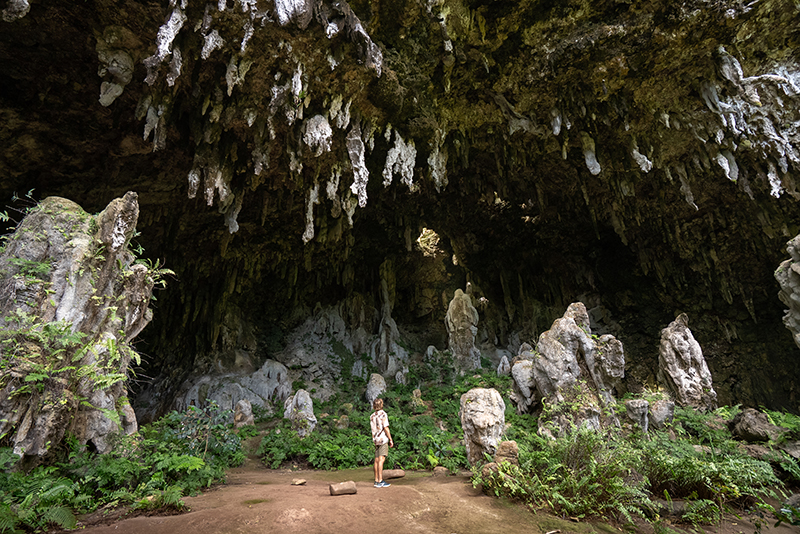
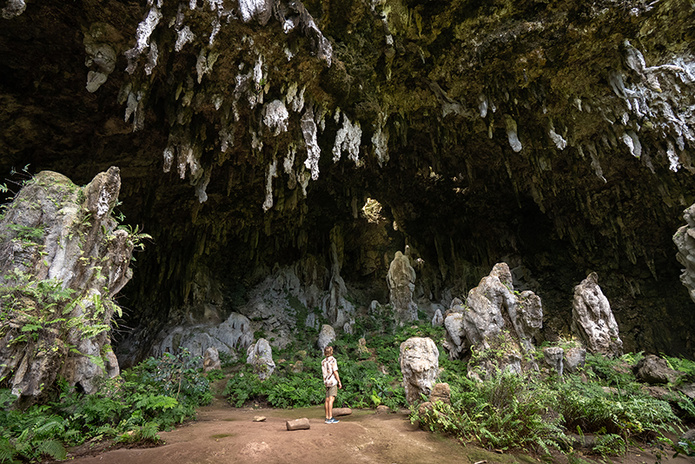
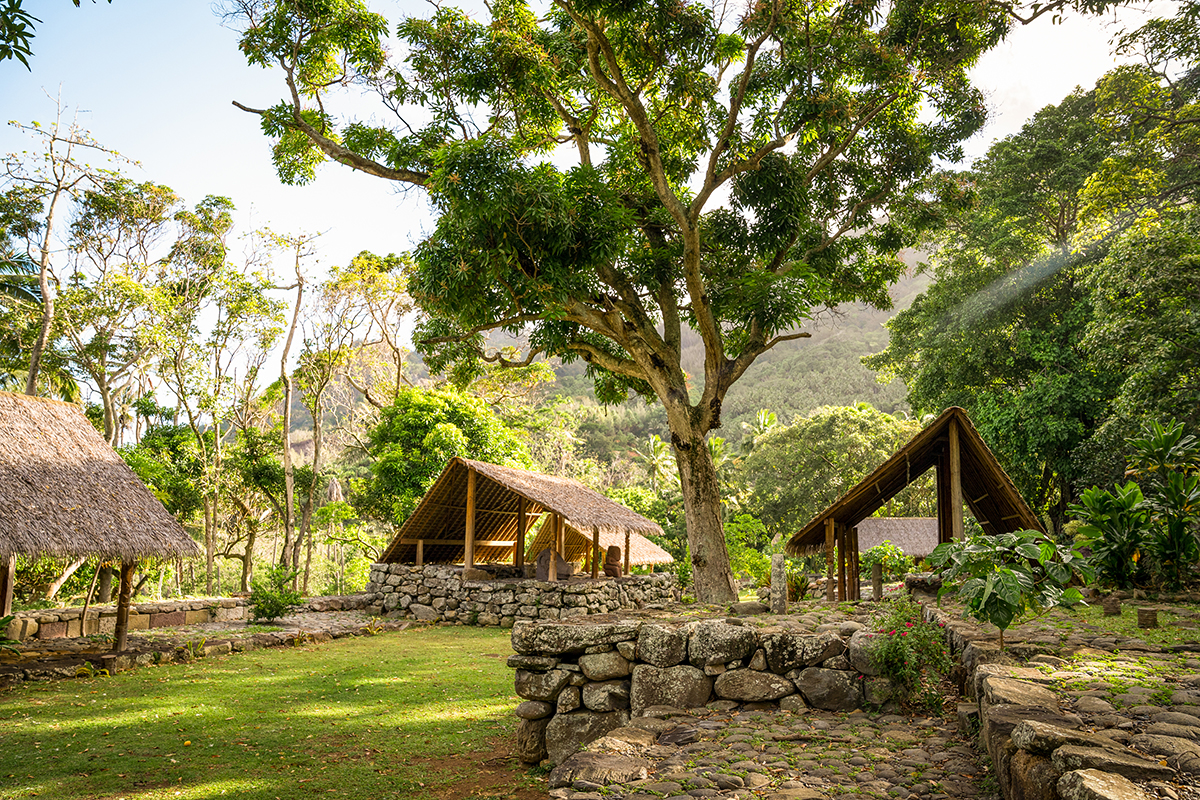
The rāhui is an ancestral management tool, practiced throughout the Polynesian triangle for centuries. Its principle is simple: temporarily ban access to a lagoon, a bay, a species, or a resource, to give it time to regenerate, for the benefit of the entire community. Formerly ordered by village chiefs, the rāhui has seen renewed interest since the 2000s, now carried by municipalities themselves, often in connection with NGOs such as Pew Bertarelli Ocean Legacy.
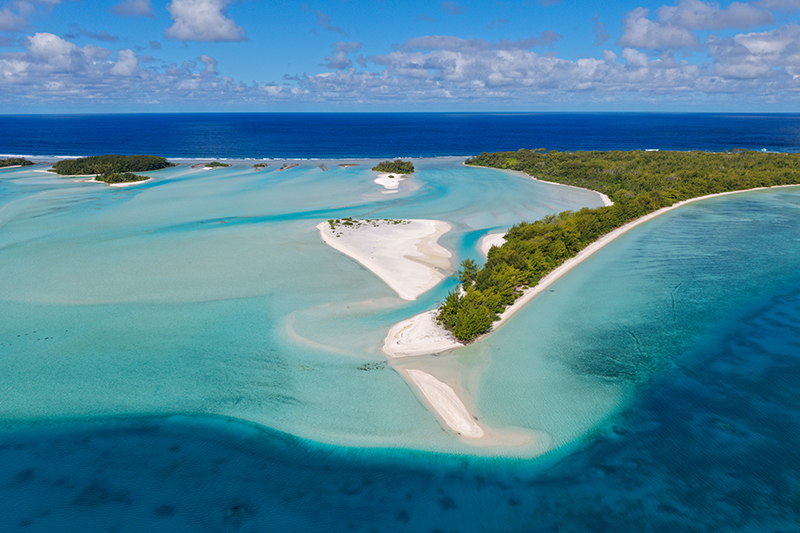
The most spectacular example is Bora Bora. Facing the gradual disappearance of sea urchins, bay scallops, and sea cucumbers, the municipality created in 2025 a rāhui covering 700 hectares at the heart of the lagoon, in front of the iconic Matira Beach: no boats, no jet-skis, no fishing. The decision was made after extensive consultation with fishermen, churches, neighborhoods, and tourism stakeholders. The first affected, fishermen who now face fines, accepted it themselves.
This level of buy-in is far from trivial: a study by the Biodiversity Research Foundation shows that 90% of the Polynesian population wants to see a rāhui established in every commune. The country nevertheless marked a major milestone in 2025 by making French Polynesia the largest marine protected area in the world, with 1.1 million km² already covered and 500,000 km² of additional strict protection planned for 2026. A rāhui project call, now supported by the Polynesian Ministry of Agriculture, Marine Resources and Environment, is already in its 9th edition.
This is the angle few programs still exploit: elsewhere in the world, “respect for local culture” and “environmental protection” are two separate approaches, which tour operators must build and justify separately. In Polynesia, it is the same. Enforcing a rāhui on your clients, in the same move, honors a legitimate cultural practice in the eyes of an entire community and very concretely protects a reef or a species. There are not two checkboxes. There is only one.
The most spectacular example is Bora Bora. Facing the gradual disappearance of sea urchins, bay scallops, and sea cucumbers, the municipality created in 2025 a rāhui covering 700 hectares at the heart of the lagoon, in front of the iconic Matira Beach: no boats, no jet-skis, no fishing. The decision was made after extensive consultation with fishermen, churches, neighborhoods, and tourism stakeholders. The first affected, fishermen who now face fines, accepted it themselves.
This level of buy-in is far from trivial: a study by the Biodiversity Research Foundation shows that 90% of the Polynesian population wants to see a rāhui established in every commune. The country nevertheless marked a major milestone in 2025 by making French Polynesia the largest marine protected area in the world, with 1.1 million km² already covered and 500,000 km² of additional strict protection planned for 2026. A rāhui project call, now supported by the Polynesian Ministry of Agriculture, Marine Resources and Environment, is already in its 9th edition.
This is the angle few programs still exploit: elsewhere in the world, “respect for local culture” and “environmental protection” are two separate approaches, which tour operators must build and justify separately. In Polynesia, it is the same. Enforcing a rāhui on your clients, in the same move, honors a legitimate cultural practice in the eyes of an entire community and very concretely protects a reef or a species. There are not two checkboxes. There is only one.
Une destination qui structure sa durabilité au plus haut niveau
This local dynamic is embedded in an overarching territorial strategy. Tahiti Tourisme built its Sustainable Tourism Plan, which lays out 110 concrete actions through 2030, and had the destination Tahiti and Its Islands evaluated by the Global Sustainable Tourism Council (GSTC) between 2023 and 2025. The FM27 strategy (Fāri’ira’a Manihini) explicitly aims to diversify geographical flows toward less-visited islands, to preserve the most exposed sites without sacrificing the high-end service level expected by the premium clientele.
This ambition is not a mere added-on.
This ambition is not a mere added-on.
GSTC : un langage commun pour rassurer sans greenwasher
The Global Sustainable Tourism Council (GSTC) is a nonprofit organization, born in 2010 from the merger of several initiatives supported by the United Nations Environment Programme (UNEP) and the World Tourism Organization (UNWTO).
Its role is not to issue labels itself: it establishes the global reference criteria for sustainable tourism and accredits organizations that certify hotels, tour operators, and destinations. These criteria revolve around four pillars: sustainable management, local socio-economic impacts, cultural preservation, and environmental protection.
Their relevance to you, as a tour operator, is precise: they provide a common vocabulary, internationally recognized (by groups like TUI or Four Seasons), which allows you to demonstrate real commitment without falling into vague promises or the greenwashing that clients increasingly fear. And because the GSTC criteria are designed to adapt to local cultural realities, a practice like rāhui can fully fit within them, which is not the case for most generic environmental labels.
Its role is not to issue labels itself: it establishes the global reference criteria for sustainable tourism and accredits organizations that certify hotels, tour operators, and destinations. These criteria revolve around four pillars: sustainable management, local socio-economic impacts, cultural preservation, and environmental protection.
Their relevance to you, as a tour operator, is precise: they provide a common vocabulary, internationally recognized (by groups like TUI or Four Seasons), which allows you to demonstrate real commitment without falling into vague promises or the greenwashing that clients increasingly fear. And because the GSTC criteria are designed to adapt to local cultural realities, a practice like rāhui can fully fit within them, which is not the case for most generic environmental labels.
Trois leviers concrets pour vos programmes
Le rôle de Tahiti Travel Services : facilitateur, pas simple exécutant
No tour operator is meant to become, on its own, an expert in rāhui, in GSTC criteria, or in the ecological balances of each archipelago.
This is precisely the role Tahiti Travel Services intends to play: a field partner, capable of translating this Polynesian richness into sale-ready programs, aligned with the destination’s FM27 strategy, credible to a demanding clientele, and faithful to what makes the true authenticity of the fenua.
Sustainable tourism is not, in Polynesia, an extra layer to add to the product. It is a way of telling what already exists, for a very long time, on these islands.
Mauruuru.
Tahiti Travel Services
This is precisely the role Tahiti Travel Services intends to play: a field partner, capable of translating this Polynesian richness into sale-ready programs, aligned with the destination’s FM27 strategy, credible to a demanding clientele, and faithful to what makes the true authenticity of the fenua.
Sustainable tourism is not, in Polynesia, an extra layer to add to the product. It is a way of telling what already exists, for a very long time, on these islands.
Mauruuru.
Tahiti Travel Services