
In 2025, French Polynesia drew almost as many visitors as there are inhabitants. For the third consecutive year, Tahiti and its Islands shattered its attendance record.
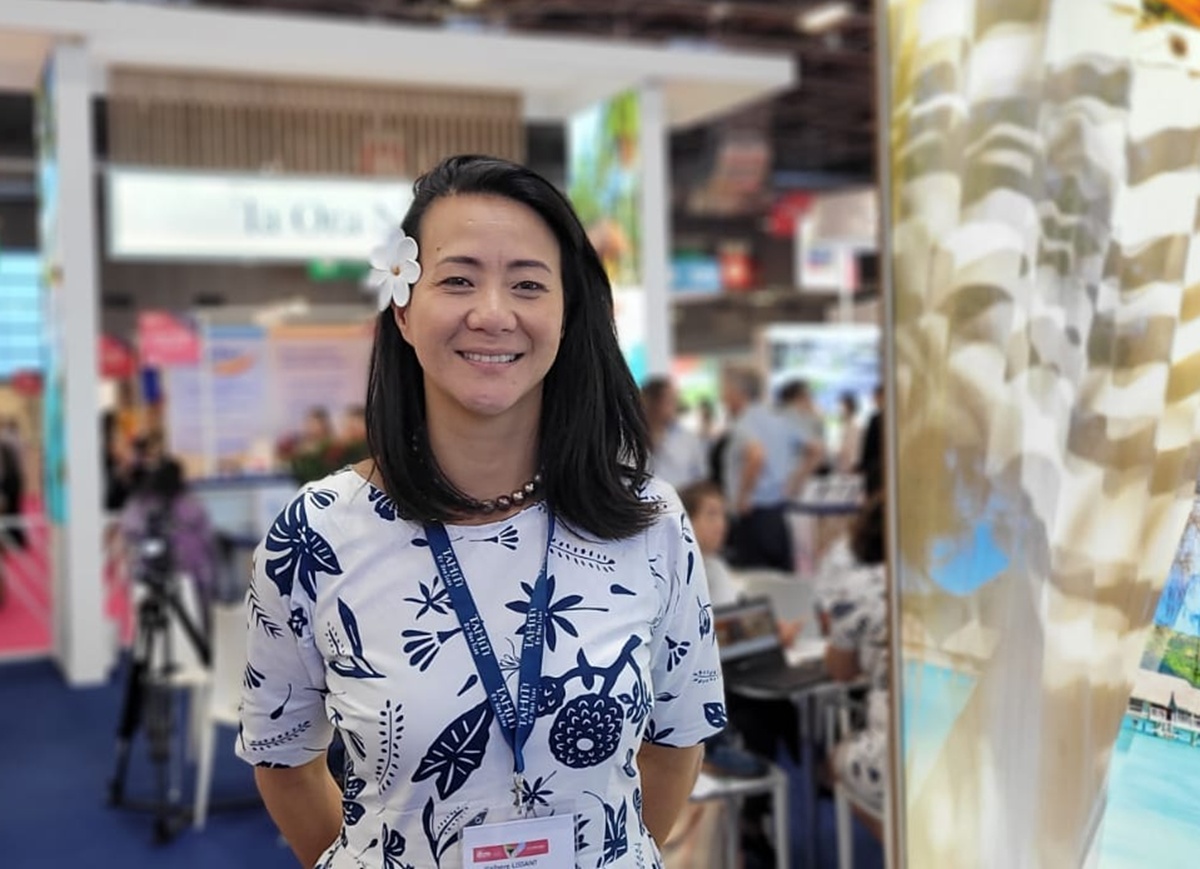
In 2026, the outlook will be a little different. “It is a transitional year with 18% of the hotel stock undergoing major renovations. The figures also show a slight slowdown in visitation at the start of the year, partly linked to the Middle East conflict. We felt this hesitancy as tourism professionals were busy reorganizing Middle East bookings,” explains Vaihere Lissant, Chief Executive Officer of Tahiti Tourisme.
Nevertheless, with a rise in last-minute bookings, the peak season looks “quite good,” the DG cautiously anticipates, underscoring nonetheless “a truly marked return of seasonality.”
Read also: French Polynesia posts its tourism record in 2025
Attracting more visitors from November to March
While Tahiti Tourisme welcomes these encouraging signals, the destination’s marketing body Tahiti et Ses Îles also hopes to turn the tide during the off-season, from November to March.
“We are currently working on our tourism strategy with a horizon of 2035. Our goal is to continue developing a tourism that is more sustainable and more inclusive. And this means a better fill of mid and low seasons,” adds the DG.
Indeed, according to Tahiti Tourisme, on the French market, certain periods today display booking levels such that travelers must plan their trips up to a year in advance. The agency wants to shift the perception of the off-season, presenting it as a “season of abundance”, during which nature shows a different face: lush vegetation, flowering, an abundance of fruits, etc.
A period also marked by major cultural events – Hawaiki Nui Va’a, Hura Tapairu, Festival Tatau, Matari’i i Ni’a – which offer more availability and more favorable rates. “Matari’i i Ni’a, in the Polynesian calendar, is a very important period. It is the season of abundance. The abundance of fruits. The abundance of colors.
Hawaiki Nui Va’a is a major outrigger canoe race, Hura Tapairu is a Polynesian dance competition. There is also the tattoo festival around the same time,” explains Vaihere Lissant.
The destination also intends to encourage travelers to visit a greater number of islands.
Campaigns will be developed around these two objectives, complemented by a new training program for Tahiti specialists aimed at travel agents, key players in shaping the French market (see box below).
“There is real storytelling and marketing work to do around this period. We are working on it.
Of course, the climate is warmer and more humid, but that is where all of nature bursts forth. Matari’i i Ni’a, last year, became a public holiday for the first time, because there is a genuine will to emphasize culture.
Along the seafront in Papeete, a parade of flower-covered floats was organized on November 20. Across the islands, celebrations take place to mark what one could call Polynesian Christmas,” continues Vaihere Lissant.
The Polynesians at the heart of the tourism strategy
But this growth will not come at the expense of the Polynesians. “We want to keep the population at the center of this tourism development,” explains the DG.
For several months now, with our supervising ministry, we have been conducting consultations with the 24 islands, listening to the various stakeholders, municipal leaders, local tourism professionals, the population, environmental and cultural associations, etc.
The idea is truly to collect their vision of tourism for 2035. I repeat, we want the population to be an active driver of its own tourism development, because beyond our magnificent natural heritage, what draws the attention of visitors is the Polynesian hospitality. Hence the importance of ensuring that tourism development benefits residents first, even before visitors.”
2027, the return of capacities
The year 2027 will mark the return to the market of several renovated hotels (Te Moana in Tahiti, Sofitel in Moorea and the Conrad and InterContinental in Bora Bora) and the arrival of new capacity in cruising with the Wind Spirit, Windstar’s second vessel from March, the commissioning of the Aranoa alongside the Aranui, or even the Na Hiro E Pae for the Austral Islands.
“Cruising is often linked to large cruise ships, overtourism, and discharges, etc. In Polynesia, for 15 years we have been seeking ships of a size that fits our infrastructure; 80% of our port calls are on ships with fewer than 600 passengers.
The largest ships – carrying more than 3,600 passengers – that cross the Pacific cannot make technical stops on three islands. The advantage of smaller ships is that they will stay based year-round and implement multi-island itineraries.
They help distribute flows and the economic impact across the different archipelagos. Moreover, the cruise peak season aligns with our base season,” specifies Vaihere Lissant.
As for the air segment, Polynesia is served from France by Air Tahiti Nui, Air France and French Bee. “We have a genuine network that makes our destination accessible,” comments the Tahiti Tourisme DG, who does not forget emerging markets.
“Starting in December, the Sydney – Papeete route opens, operated by Air Tahiti Nui, which will allow us to diversify our markets, especially along the Pacific axis. This is important because we depend heavily on the United States and France, and we would like to seize opportunities in the Pacific, but also in Asia, notably given China and its capacity to evolve.”
These projects and this new momentum will be at the heart of the next Parau Parau Tahiti, a gathering of Polynesian professionals and international tour operators, scheduled for February 2027.
Tahiti Specialist Program gets a makeover
Tahiti Tourisme has redesigned its Tahiti Specialist Program, which now includes a three-tier progression system: Bronze, Silver, and Gold.
This new logic is intended to allow professionals to “progress at their own pace through various learning paths and progressively access benefits such as better visibility, privileged contacts, invitations to familiarization trips (FAM trips) or co-marketing opportunities,” says Tahiti Tourisme.
The new program also includes a dashboard that enables tracking of leads, bookings and performance. “Professionals will benefit from better visibility of their activities, while Tahiti Tourisme will be able to monitor journeys, commitments and market trends to tailor its actions,” explains the OT.
The platform has also been developed with a mobile-first approach, ensuring a smooth and consistent experience on desktop, tablet and smartphone.
Launched on August 10, the platform is gradually enriched with new features and content through the end of the year.
Lu 2966 fois
Notez
Nouveau commentaire :
Dans la même rubrique :
<
>
>
Friday, October 23, 2026 – 11:04 United States: a new sanitary certificate required for all passengers starting in November
|
Friday, October 23, 2026 – 09:10 Kazakhstan: ETA electronic authorization will gradually become mandatory
|