At 72, Wu Feng-chiao, one of the last people in Taiwan who harvests seaweed to transform it into jelly, remains unfazed by the waves crashing over her. “It can be painful and dangerous”, acknowledges the septuagenarian who has spent more than half a century gathering seaweed along the rocky Pacific shoreline.
When this generation of “hainu”, or “sea women”, can no longer continue, this activity risks fading away. Young Taiwanese prefer to live in the city rather than in the island’s remote northeast. A choice that astonishes Wu Feng-chiao. “When you have that in your blood, you naturally want to learn, don’t you?”, she wonders in her Magang village.
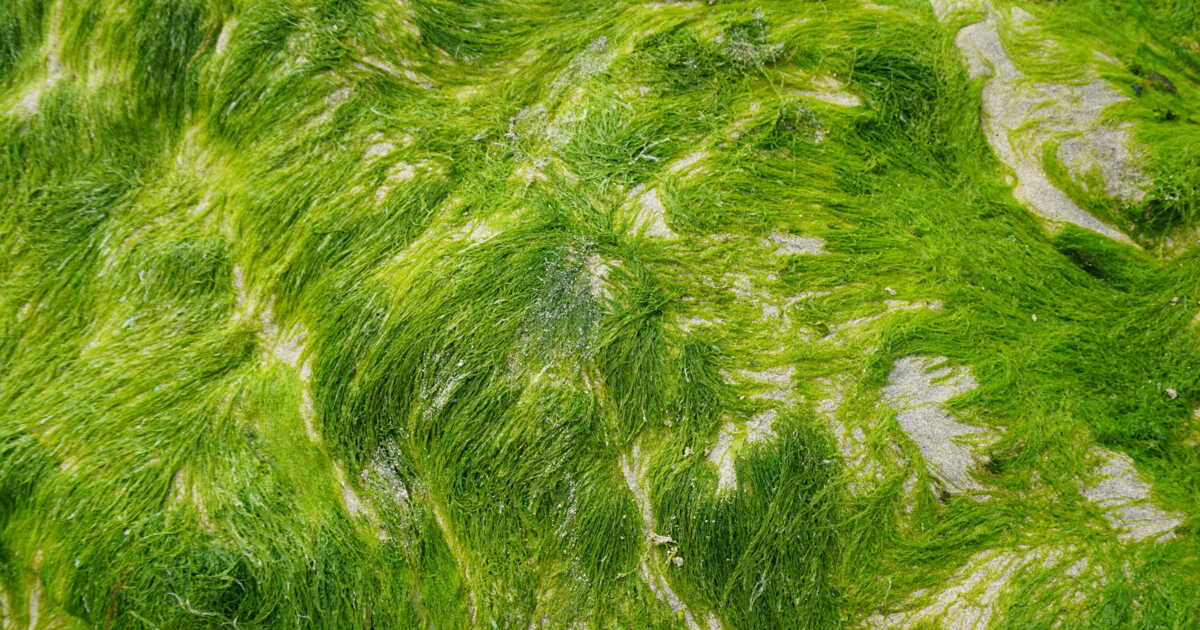
At the eastern edge of the coastline, the “sea women” pile up the “stone flowers” — the name given to this alga in Taiwanese and Mandarin — in nets. They then return home carrying heavy sacks, spread the seaweed on the ground, and remove impurities.
Under the sun, they take nearly four days to dry completely, before being washed several times and boiled to extract the gelled substance known as agar-agar.
Once dried, 300 grams of algae of the Gelidium genus can yield about fifty bottles of a refreshing agar-agar-based drink, sold for around $1.30 (1.14 euros) apiece. Floating near the shore with a mask and a wetsuit, Ms. Wu enthusiastically shares the lessons drawn from decades of practice. Her father passed this knowledge on to her when she was a teenager. “Seaweed grows around the big rocks — when there are big waves, you have to move away quickly” to avoid them, she explains.
Resisting Real Estate Developers
“If a wave hits you, you can be injured”, she warns. She carries her bag of about 20 to 25 kilograms on her narrow shoulders, as she walks on steep and slippery rocks. “It’s a hard job (…) the toughest part is bringing the seaweed back. They’re very heavy and the shoulders hurt afterward”.
Their activity, a relic of Japanese colonial rule, is similar to that of the “haenyeo,” free divers from South Korea, though Taiwanese women do not venture as far underwater. Today, only four women still regularly harvest the “stone flowers” in Magang village, according to Ms. Wu, and all are over 70 years old.
“How many more years can we go on? We really hope that young people will return and take up the torch”, she worries. “We do not want this tradition to disappear”.
Beyond social shifts, the seaweed itself is becoming scarce, “especially this year”, notes Ms. Wu without offering a cause. Real estate developers have begun to build in this peaceful coastal village, but “we continue to resist them”, she asserts. “If we are all forced to leave, there will be only a handful of people left”.
In 2018, the inhabitants founded the Sandiaojiao Cultural Development Association to preserve Magang’s stone houses and keep the hainu tradition alive. Despite the obstacles, Ms. Wu is far from giving up. “Sometimes, I simply can’t resist. Like yesterday, I hadn’t planned to go, but when I saw how calm the sea was, I couldn’t help myself”.