

Before venturing into accessible tourism, Tharith Tep witnessed the early days of online travel, the ambitions of late-1990s startups, and the growth of business travel. In 1997, he founded jadore.com, a travel portal that enabled, among other things, online hotel and ticket bookings.
“At the time, the Internet was starting to take off. We wanted to become the AltaVista of tourism,” explains Tharith Tep. The project attracted investors and the company raised 22 million francs. The team reached up to 80 employees. However, the planned initial public offering at the start of 2000 was postponed. The dot-com bubble burst. Another event would challenge the company: the attacks of September 11, 2001.
“After September 11, 2001, we went from 100,000 customers to zero,” recalls Tharith Tep, co-founder of Le Monde en Fauteuil, describing a period that was particularly difficult for the industry.
After this initial venture, Tharith Tep turned to business travel. In 2003, he founded Conferencia Travel, a company specializing in housing participants for conferences and professional events.
The activity grew notably in Monaco, where the company increased from 500 to 2,200 rooms, before expanding to Nice, Menton, and Cap-d’Agde. In total, it managed up to 3,000 rooms to accommodate around 10,000 doctors and conference participants.
But, once again, events would disrupt the entrepreneur’s trajectory.
“I Was Trapped in My Body”
In 2017, a double stroke upended his personal life. Tharith Tep found himself in a wheelchair and had to suspend his professional activities. A long rehabilitation period began, lasting 1,170 days, more than three years.
“For almost three months, I was trapped in my body. I could hear and feel things, but I could neither move nor speak,” confides Tharith Tep.
In addition to this trial, everyday life presented concrete difficulties, notably finding suitable housing. Travel, too, seemed difficult to imagine. Yet it was during this period that the idea for a new professional project began to germinate.
“At the hospital, I met many people with disabilities. They told me they no longer vacationed, they no longer traveled,” says the co-founder of Le Monde en Fauteuil. A situation that marked him, given that he had devoted a large portion of his career to tourism.
A stay in London, organized with his physiotherapist, helped him realize how travel can contribute to well-being and reconstruction. He also observed the adaptations and solutions that facilitate the movement of wheelchair users.
His rehabilitation ended in August 2020; the following month he attended the IFTM trade show. Reconnecting with industry professionals reinforced his desire to return to activity. “I was very moved by the welcome from my colleagues. A lot of them supported me.” One of them then gave him a phrase that stayed with him: “Tourism for people with disabilities, I think it’s a highway.”
Small-Group Stays to Overcome Obstacles
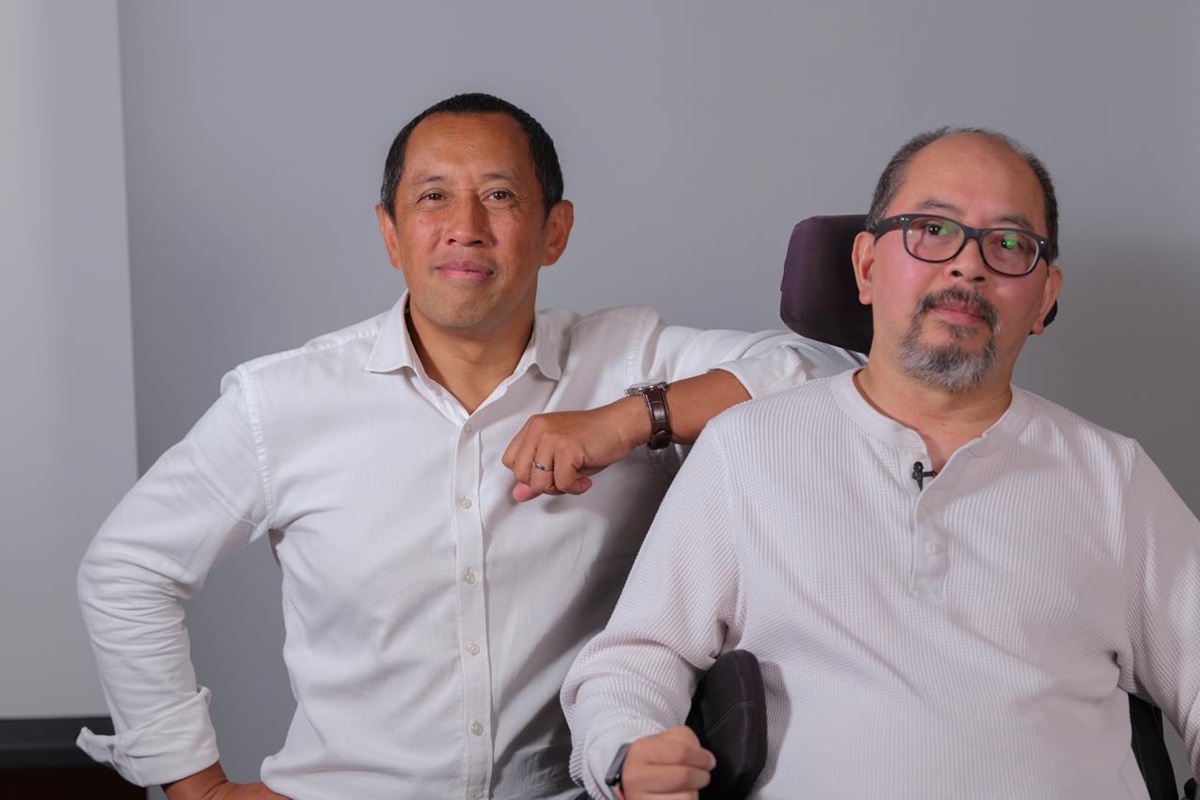
With his brother, Rithy Tep, who comes from a consulting background, Tharith Tep creates Le Monde en Fauteuil in 2024. The concept: stays designed for people in wheelchairs, taking into account their mobility needs, pace, and comfort.
“The problem isn’t just finding an accessible room. You have to think about the whole stay, explains Tharith Tep. Access to the restaurant, the bar, activities, and transportation must be anticipated.”
Transport is also one of the main obstacles. To begin with, the tour operator prioritizes France to limit airline-related difficulties and the risk of damage or loss of a wheelchair. It works with AMC Transport Express, a specialized provider capable of transporting several people in electric wheelchairs.
This constraint directly influences group size, limited to four travelers. “We cannot take fifteen people if we don’t have the means to transport them and welcome them properly”, notes Tharith Tep. The availability of accessible rooms also requires keeping the numbers small.
The offer includes three days and three nights or five days and five nights stays, with several French destinations, notably Normandy, Morbihan, Beaujolais, Lyon, Champagne, the Côte d’Azur, and Corsica. Other projects are under study.
The program is designed to avoid piling up activities and travel. Sensory workshops, cooking, tastings, walks, shows or concerts can be offered, usually with one activity in the morning and another in the afternoon.
“We must respect everyone’s rhythm. Fatigue can arrive sooner, so we cannot fill days as in a classic trip,” explains the co-founder of Le Monde en Fauteuil. The aim is to allow participants to enjoy their stay without turning every outing into a challenge.
Depending on needs, the accompaniment can also involve healthcare professionals or personal aides. “The challenge is to plan the necessary assistance without imposing the same arrangement on all travelers.”, explains Rithy Tep, co-founder of Le Monde en Fauteuil.
Growing Sales and Making Stays More Accessible
Le Monde en Fauteuil organized the first stay in Reims, around the Flâneries musicales festival and a picnic-concert in the Champagne park. A first step to test the concept and fine-tune the organization.
In 2026, the company aims to expand its client base, notably by addressing Social and Economic Committees (CSEs) and local authorities. These actors can reference the stays and, depending on their social policies, help fund them.
Rithy Tep says he has contacted about 500 CSEs. He notes, however, that aid mechanisms vary greatly from one organization to another: some do not have a disability-specific envelope, while others offer vacation vouchers or cover a large portion of the stay.
To facilitate departures for people with modest incomes, a endowment fund was created in 2025. It is intended to mobilize donations to finance part of the cost of stays, with an additional coverage objective of around 20 to 25%, depending on the funds raised and the eligibility criteria.
“The idea is that price should not be an additional obstacle,” explains the co-founder of Le Monde en Fauteuil. The fund is also meant to sustain broader initiatives in favor of accessible tourism, notably through awareness-raising and training of professionals in welcoming people with disabilities. ”
In the longer term, the duo plans to expand abroad, notably to Spain and Portugal, as well as river cruises.
After having long contributed to the development of online tourism and business travel, Tharith Tep now intends to put his experience to work for an audience that still confronts obstacles far too often. “Tourism is a pleasure I want to share,” concludes Tharith Tep. Also, a way to give back to a sector that supported him when he had to relearn how to live.
 Publié par Caroline Lelievre Journaliste – TourMaG.com
Voir tous les articles de Caroline Lelievre


Ajoutez TourMaG à votre flux Google Actualités