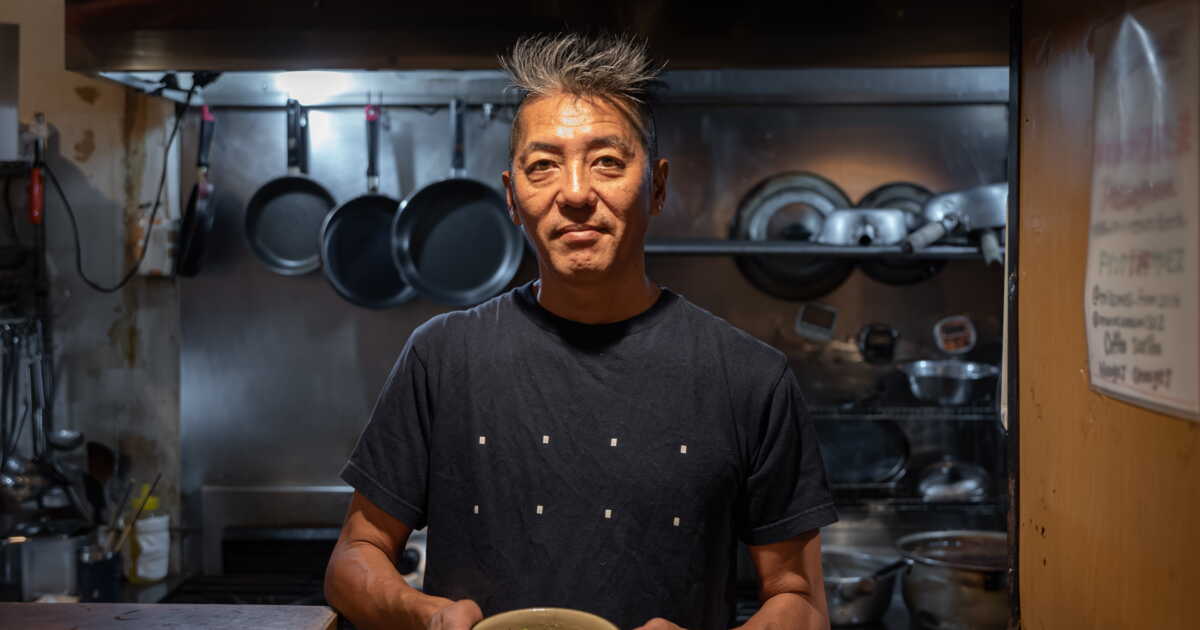
The air is thick with the dense, malted aroma of fermented barley. The miso from this factory in Naha, the capital of Okinawa, was once served at the Ryukyu royal court. Japan is home to about 3,300 companies aged over 100 years, known as shinise, literally “old shops.” Tamanaha is one of them. Nothing here suggests reinvention. Everything points to continuity, starting with the grand wooden barrels patinated by time. Takehisa Nakanishi, 55, stands out a bit, his mohawk evoking experimentation more than preservation. “The family workshop has 170 years of history and it has recently been handed down to the third generation”, he notes with a hint of pride, as he passes by the vats. “With new machines, we still produce traditional miso.”
The secret of a living miso
At the heart of the process lies the kōji, a mold (Aspergillus oryzae) cultivated on rice, barley, or soybeans, which drives a large portion of the fermentation to produce a crucial condiment of Japanese cuisine such as miso, but also soy sauce, mirin (a sweet rice wine), and sake. The kōji is monitored and turned to regulate temperature and humidity as it develops, then it is mixed with sea salt and cooked soybeans before being pressed into wooden barrels to ferment for months, gradually transforming into a dense and complex paste.
While most commercially produced misos are stabilized with additives like alcohol to halt fermentation and extend shelf life, the Nakanishi family’s miso remains additive-free. In that sense, it “stays alive”, says Takehisa. He means that it has character: fermentation is allowed to run its course, preserving depth and complexity in the product.
“A delicious product”
For Takehisa, tradition is simply a working base. In his restaurant, Miso-meshiya Marutama, miso is reinterpreted. Dishes arrive bearing familiar foods in unusual forms. “As a child, I dipped cucumbers in it and ate them that way”, recalls the self-taught 55-year-old chef. Since then, he has come a long way. He who originally wanted only to introduce miso to a broad audience – which often knows this ingredient only in soup – has set himself the goal of expanding its uses: “There is no need to focus on making a healthy miso – miso is already a healthy food in itself. So what matters is to make it a product perceived as delicious.” A challenge for a family-run operation given how tight margins are. But through cooking, adapting, and rethinking, Takehisa Nakanishi presses forward.
Portraits
Isshin Urasoe, a grower of brown seaweed and a rarity
Emiko Kinjō, eyes on her pots and the rest
Etsuko Kinjō, a warm tofu, made that very morning
Takehisa Nakanishi, traditional miso… living and flavorful
Munehiro Machida, “Ojii”, a master in his dojo and in his kitchen
➤ Article published in GEO magazine no. 572, “The Azores, nine islands, nine worlds to explore”, October 2026.
➤ Do you love GEO? Then to make sure you don’t miss anything, discover our subscription plans to receive GEO at your home every month with ease.