The Faroe Islands, a little-known Nordic archipelago, offer breathtaking landscapes and an immersion in pristine nature. Between raging seas and steep mountains, this destination captivates with its isolation and unique culture. If you’re wondering what to do in the Faroe Islands, here is a selection of activities that will make your stay a memorable experience.
1. Discover Gásadalur and the Múlafossur waterfall
The village of Gásadalur, on Vágar island, is a must-see highlight when traveling to the Faroe Islands, especially for the Múlafossur waterfall, which plunges powerfully into the North Atlantic, creating an impressive natural spectacle. Access was eased from 2004 thanks to a road tunnel, increasing the appeal of this isolated site. This ideal starting point for a full day of exploration is distinguished by a wild landscape, framed by cliffs and dotted with wandering sheep.
Not far away, the village of Bøur, or bour in the Faroe Islands, completes this excursion by offering a favorable vantage for photography and contemplation. If the weather in the Faroe Islands remains variable, particularly in October, it can occasionally give way to sunshine on the island, elevating the beauty of the place. A visit here fits neatly into a well-planned Faroe Islands budget, despite the high costs tied to driving on the islands and the price of fuel.
2. Explore the historic village of Saksun
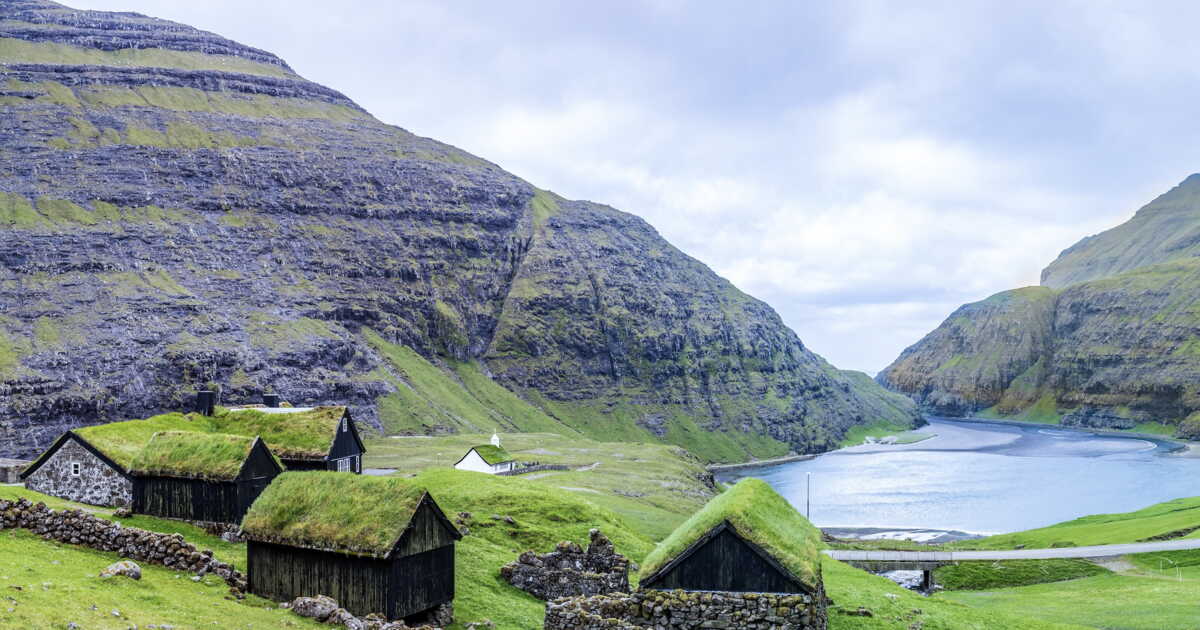
The village of Saksun, situated on Streymoy, stands out for its colorful turf-roofed houses and its 19th-century church, nestled in a setting of raw, breathtaking landscapes. Accessible by a narrow winding road, this place offers a unique experience of returning to origins, between nature and culture.
The landscape, especially at low tide, invites a walk to the lagoon and reveals a palette of colors that contrast with the North Atlantic sky. The time in this suspended village invites contemplation, and despite the weather some days, the visit is a strong moment of travel in the Faroe Islands. Integrated into a budget for a reasonable trip, this detour is recommended for travelers seeking preserved places off the beaten path.
3. Hike to the Kallur Lighthouse on Kalsoy
The island of Kalsoy, often nicknamed the “flute of the Faroe Islands” for its elongated shape, houses the Kallur Lighthouse, accessible by a ferry crossing to Syðradalur and then a panoramic hike from the village of Trøllanes. This excursion offers a spectacular view of the neighboring islands, up to the Drangarnir arch, visible on a clear day.
Seabirds, notably puffins, nest along the cliffs, making the hike even more rewarding. Due to isolation, the site is sparsely visited, and the weather in this village can feel motionless. The budget for this activity on the Faroe Islands includes car rental, the ferry passage, and weather-appropriate gear for Kalsoy’s climate, which can be harsh at times. The effort is well rewarded by the beauty of the place, making it a perfect destination for nature lovers and wild landscapes.
4. Admire Sørvágsvatn Lake and its optical illusions
The Sørvágsvatn Lake, also known as Trælanípa, is one of the most astonishing sites in the Faroe Islands. From certain viewpoints, an optical illusion makes the lake appear to float above the ocean. This geological curiosity is accessible after a moderately challenging hike, offering a dramatic backdrop of sea, cliffs and changing light.
The road to the starting village traverses maritime zones ripe for observing seabirds. The water, seemingly suspended, recalls the icy waters of Lapland or the April waters in the Nordic fjords. Including this excursion in a Faroe Islands budget remains reasonable, despite fuel costs and the need for a vehicle. On clear days, sunset turns the scene into a living painting, reinforcing its reputation as a true visual paradise.
5. Puffin watching at Mykines
The island of Mykines, to the west of the archipelago, is a major destination for watching Atlantic puffins. These iconic seabirds nest on the steep cliffs during the summer. Accessible by boat, and depending on the Faroe Islands weather, the island also offers a hike to an isolated lighthouse overlooking the North Atlantic.
A full day is required for this visit, demanding good organization, including ferry rates, again fuel prices, and sometimes midday sandwiches to avoid costly options. The unique experience Mykines offers justifies its inclusion in any trip to the Faroe Islands. The sea crossing, the sheep, and the wild landscape complete the picture of a nature encounter in its most original form.
6. Boat excursion to Vestmanna
The Vestmanna site, on the west coast of Streymoy, offers a boat trip to discover cliffs and sea caves in a highly immersive setting. This unique experience includes passages close to cavities where seabirds nest, as well as natural arches shaped by centuries.
Against the backdrop, the beauty of the place remains constant, reinforced by the frequent presence of wandering sheep visible from the road to the harbor. The activity, albeit subject to high prices, can be incorporated into a balanced travel budget. The contrasts between the water at bøsdalafossur, the black cliffs, and the bright sun on a clear day give this sea outing a distinctive relief within the broader context of a trip to the Faroe Islands.
7. Immerse yourself in history at Kirkjubour
Kirkjubøur, on the southern coast of Streymoy, represents one of the oldest historic centers of the Faroe Islands, with exceptional patrimonial richness. The site houses the ancient village of Kirkjubøur, the Roykstovan farm, continuously occupied since the Viking era, as well as the ruins of the St. Magnus Cathedral.
Accessible via a small road from Tórshavn, the visit fits easily into a full day of cultural discovery. The presence of local products and the authenticity of the place offer a strong contrast with the vibrancy of Tórshavn. The prices for this visit remain moderate and compatible with a measured budget in the Faroe Islands. The richness of the surrounding landscape and the view of the North Atlantic give Kirkjubøur a major cultural and geographical value.
8. Stroll through the streets of Tórshavn
Tórshavn, the capital of the Faroe Islands, is a mid-sized city with a distinct charm, balancing modernity and tradition. The Tinganes district, with its red wooden houses, forms the heart of the old town of Tórshavn. The heights of Tórshavn offer a view over the port and the island of Streymoy, while the Tórshavn Hilton Garden Inn represents an attractive accommodation option for travelers seeking comfort.
The city is best discovered on foot, exploring its museums, its restaurants where you can taste local products, and its cafes where you can have a midday sandwich. Driving in the Faroe Islands makes Tórshavn easily accessible from Vágar Airport, despite the relatively notable price of fuel. For those seeking an urban rendezvous in a natural setting, this discreet capital is a strategic starting point.
9. Venture to Gjógv
Located on Eysturoy island, the village of Gjógv derives its name from the natural gorge that forms its harbor. This singular geological site, known as the “Cleft of Gjógv”, is part of a network of hikes offering spectacular landscapes on neighboring islands and the North Atlantic. Gjógv’s isolation and the small road leading there make it an ideal spot for travelers seeking calm.
Despite high overall prices across the territory, the village remains accessible with careful budgeting for a trip. Wandering sheep, seabirds, and weather that is sometimes sunny or foggy shape the unique atmosphere of this place. The gorge, windswept, provides an ideal backdrop for photographing the wild landscape of this part of the Faroe Islands.
The Faroe Islands offer a varied range of activities for travelers seeking authenticity and preserved nature. Whether through hikes, maritime explorations, or cultural encounters, this archipelago manages to surprise at every turn. To maximize your experience, consider a multi-day trip to fully live each facet of Faroese life.
How many days does it take to visit the Faroe Islands?
For a truly enriching trip to the Faroe Islands, a duration of 5 to 7 days is ideal. This period allows you to explore the spectacular landscapes of Streymoy, to head to Mykines to observe the Atlantic puffins, and to wander the heights of Tórshavn, the capital, with its colored houses and its perfectly preserved old town.
This format also offers the opportunity to reach iconic places like the Drangarnir arch or the Múlafossur waterfall, visible from the village of Bøur. A full day can be dedicated to Kalsoy, famous for its wild atmosphere and steep trails. With a rental car, you can organize each starting point flexibly, enjoying the beauty of the place, the sun on the island when the weather allows, and the road to the villages that outline a true natural paradise.
Is life expensive in the Faroe Islands?
Budgeting for a trip to the Faroe Islands deserves careful consideration. High costs are a reality, especially for accommodation, food, and fuel. The Tórshavn Hilton Garden Inn or accommodations around the village of Bøur offer good value for money depending on the season, but overall costs remain significant.
A midday sandwich can cost the price of a full meal elsewhere in Europe, and driving in the Faroe Islands, while convenient, involves tolls on certain bridges or ferries. Plan a Faroe Islands budget adjusted to these constraints, without neglecting the countless sheep and landscapes of raw beauty that give this territory its unique character. Budget-conscious travelers can optimize by cooking locally with local products or choosing off-season itineraries, where prices may be more favorable.
What is the best time to visit the Faroe Islands?
The weather in the Faroe Islands, known for its variability, plays a central role in planning a stay. The period from May to September is generally considered the most favorable. Sunny days with clear skies offer an incomparable light on the landscapes, revealing the full majesty of the North Atlantic, from the village of Trøllanes to the heights of Tórshavn.
On the other hand, traveling in October exposes you to capricious weather, with frequent showers and reduced visibility. Yet, some autumn days can reveal a raw beauty, heightened by the solitude on the roads and the endless time spent indoors warming up. It’s also the season when seabirds remain prominent, and wandering sheep freely cross the roadside.
What to bring back from a trip to the Faroe Islands? The choice of lasting souvenirs
Bringing back a souvenir from the Faroe Islands means extending the experience of this journey to the far reaches of the North Atlantic. Local products take a prime place: sheep wool — outnumbering the inhabitants —, Viking-inspired crafts, or canned fish, typical of the region.
In Tórshavn, the mid-sized city retains traditional shops where time seems to stand still. In this context, the ideal gift is often modest but meaningful: a handmade scarf, a book on traveling in the Faroe Islands, or a framed photograph of the Múlafossur waterfall seen from Bøur. Each object then becomes a backdrop for telling the perfect place discovered between sea, rock and sky.
This article was written with the help of artificial intelligence, then corrected, expanded and validated by the editors of the desk.