Foreign visitors planning a stay in Kenya could soon have to contend with a new requirement before departure. The Kenyan government’s proposal aims to strengthen the medical coverage of people coming from abroad, as travel to the country remains particularly popular for safaris and expansive natural landscapes. But the measure is already stirring debate even before any potential implementation. The judiciary must now examine several points that could determine its future.
A medical coverage with very specific guarantees
The project applies to foreign nationals coming to Kenya for less than twelve months. It provides that they hold a travel health insurance with a minimum coverage of $50,000, or about €42,900. But the total amount is not the only feature of the scheme. The text details the various expenses that should be covered. The coverage would thus include up to $20,000 for medical costs, $25,000 for emergency medical transport, and $5,000 for the repatriation of remains. The scheme also provides $1,000 for mental health care and $300 for prescribed medications.
Travelers could subscribe to their policy before departing, from their country of origin. Another possibility would be to obtain insurance upon arrival, at certain designated entry points in Kenya. In both cases, the text governs the companies that may offer these policies: the insurances “must be provided by insurers licensed and authorized under the Insurance Act” , reports the Daily Nation.
This obligation would have a different scope from the optional insurances usually offered to travelers. High-end bank cards can, for instance, include medical guarantees or cover emergency evacuation, but the terms and ceilings depend on the contract. Some travel insurances, meanwhile, offer much broader international coverage. However, it remains to be seen whether these usual insurances, whether purchased separately or included with a bank card, will meet Kenya’s new requirements.
A measure suspended prior to its entry into force
However, the project has not (yet) become an obligation for visitors. Before its implementation, the Kenyan judiciary decided to temporarily suspend the arrangement. A hearing is scheduled for September 16 to examine more precisely the challenges raised against this new policy. Opponents of the project highlight in particular the lack of a sufficiently clear framework to govern its application. Questions also arise regarding the handling of travelers’ personal information and the protection of their data. These points will need to be reviewed before determining whether the obligation can actually be enforced.
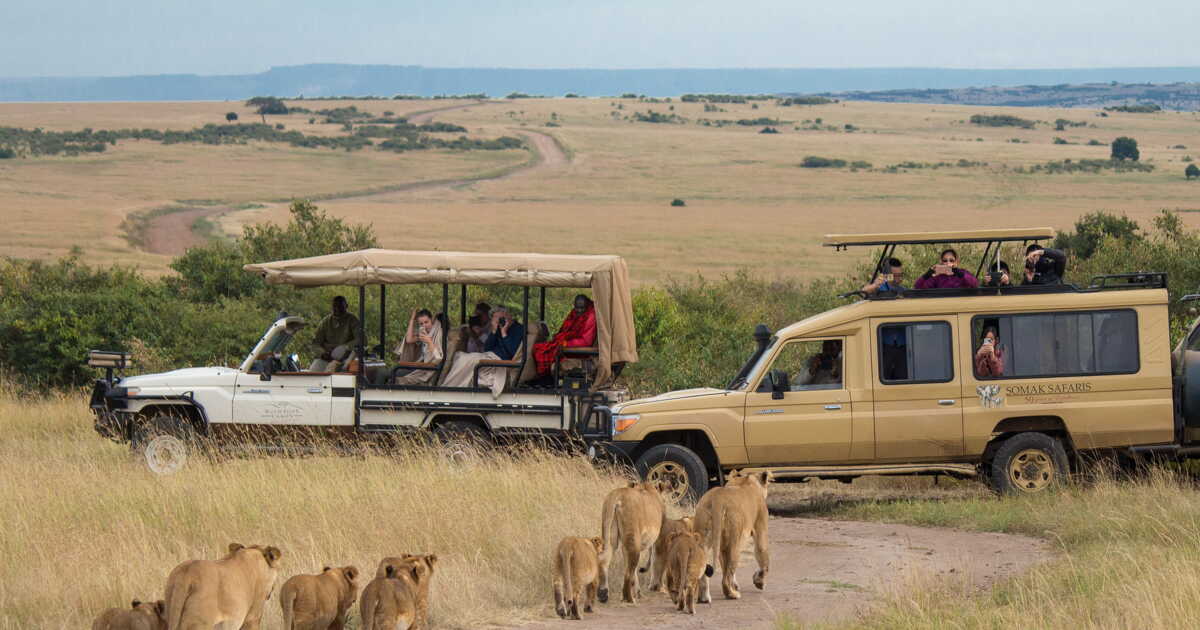
The stakes are far from trivial for a country that attracts visitors every year mainly for its wildlife and landscapes. The current period corresponds notably to one of the most sought-after times for safari enthusiasts: the great migration. In Masai Mara, wildebeest, zebras and gazelles traverse the plains as they move seasonally, with river crossings that are especially spectacular. The phenomenon typically unfolds from mid-July to mid-September, sometimes into October.
Other regions offer the possibility to discover different wildlife. In Samburu National Reserve in northern Kenya, visitors can notably look for the five species grouped under the name “Special Five”: the reticulated giraffe, Grévy’s zebra, Somali ostrich, Beisa oryx and gerenuk. Nairobi rounds out this panorama with an urban stop that also grants access to several sites devoted to wildlife. For travelers planning a stay in Kenya, the situation remains to be watched. As long as the suspension is in effect and until the court renders its decision, the final terms of this potential mandatory insurance are not yet set.