What if, to truly discover a city, you had to start by forgetting the places everyone wants to see? This is the idea behind “Tiny Tourism,” a new way of traveling that prioritizes neighborhood shops, local habits, and the small details of daily life. In Dublin, this approach invites, for example, to do your grocery shopping at the supermarket, rummage through second-hand shops, or take the suburban train, rather than chaining together the must-see attractions. But by trying to flee the tourists, do we risk missing what gives a destination its identity?
Travel Often Hides in the Details of Everyday Life
“Tiny Tourism” starts from a simple principle: to discover a destination differently, it is better to observe what its inhabitants actually do, rather than reproduce the typical tourist route offered to visitors. The concept was developed by the British creative platform It’s Nice That, which looked into this growing desire to break away from classic itineraries.
The idea isn’t necessarily to seek secret or spectacular places. On the contrary, it consists of focusing on ordinary activities: buying products in a supermarket, entering a pharmacy, taking a stroll in a residential neighborhood, using public transport, or paying attention to street signs, sidewalks, and gardens. The report dedicated to “Tiny Tourism,” published by It’s Nice That Insights in April 2026, thus recommends to “zoom in on the details rather than showing panoramic landscapes”.
This approach also responds to a weariness with destinations saturated by tourism. Some travelers no longer want necessarily to encounter the same streets, the same restaurants, and the same viewpoints popularized on social networks. The report thus estimates that there exists “a powerful desire to discover the ordinary way of living in a place and to see how it contrasts with ours”.
For Liz Gorny, editor-in-chief of It’s Nice That Insights and the originator of the concept, it’s precisely these ordinary experiences that stay in conversations after a trip. “I had the impression that people were always talking about that café they went to or about what they found in a grocery store,
“That’s what seems exciting.”
In Dublin, this philosophy can thus lead to skipping traditional mementos for a second-hand shop, testing a new flavor of chips in a supermarket, or asking a local for advice. Travel becomes less a succession of monuments than a collection of small discoveries.
Should We, for That Matter, Give Up the Must-See Sights?
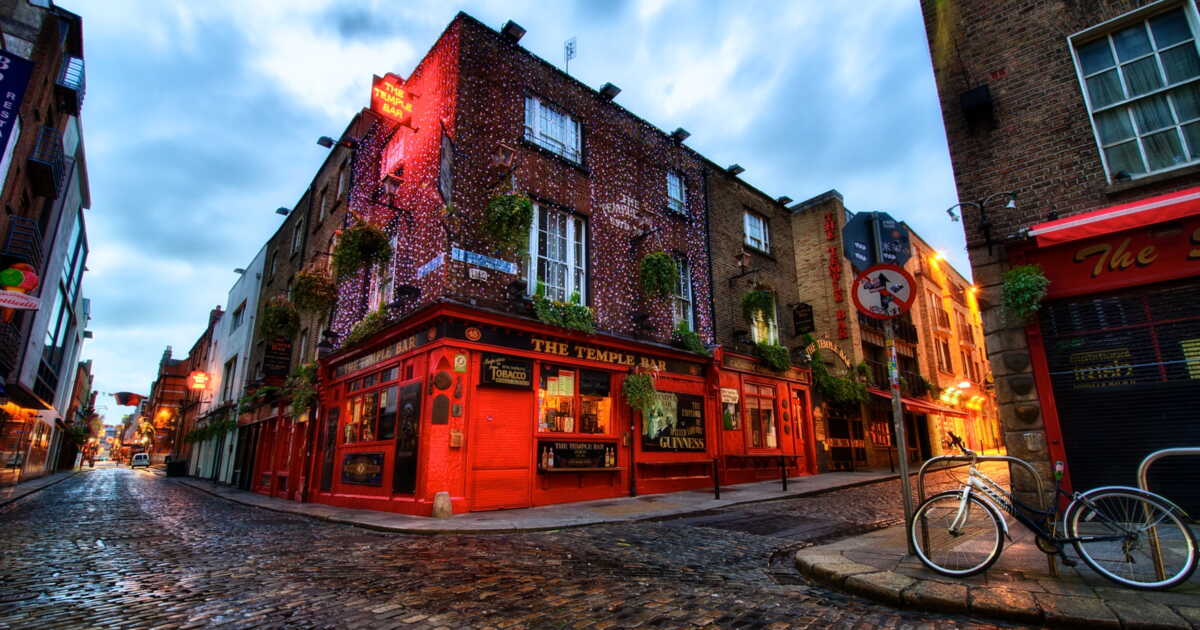
The problem arises when this desire to avoid touristy places becomes an absolute rule. In Dublin, some highly frequented spots remain hard to bypass without losing part of the city’s experience. Temple Bar, for instance, attracts visitors from all over the world, but its pubs and its animation are also part of local life. Trinity College, another major classic, tells a crucial part of Ireland’s cultural history.
“Tiny Tourism” shows above all that it is not necessary to choose between classic tourism and local immersion. Taking the DART to Sandycove, for example, allows one to leave the city center and discover Forty Foot, a swimming spot frequented by locals. A far less conventional experience, but one that can become one of the most memorable memories of the stay.
The concept also has its limits. A pharmacy will not necessarily be very different from the one you frequent at home, while the spontaneously given recommendations by locals can be imprecise or concern places that are closed. More importantly, some activities presented as “local” may already have become tourist attractions.
The value of “Tiny Tourism” may thus lie less in removing monuments than in changing our way of traveling. The report suggests prioritizing “an anti-show approach” which could render a stay more enduring in memory.
Rather than turning completely away from the must-sees, a middle-ground solution seems ultimately more pertinent: visit the major sites that interest us, then take the time to look at what surrounds them. Because discovering a supermarket, chatting with a swimmer, or pushing open the door of a neighborhood shop does not necessarily allow you to know a city better than its monuments. But these detours can give the trip a dimension that checklists of places to tick off do not always manage to provide.