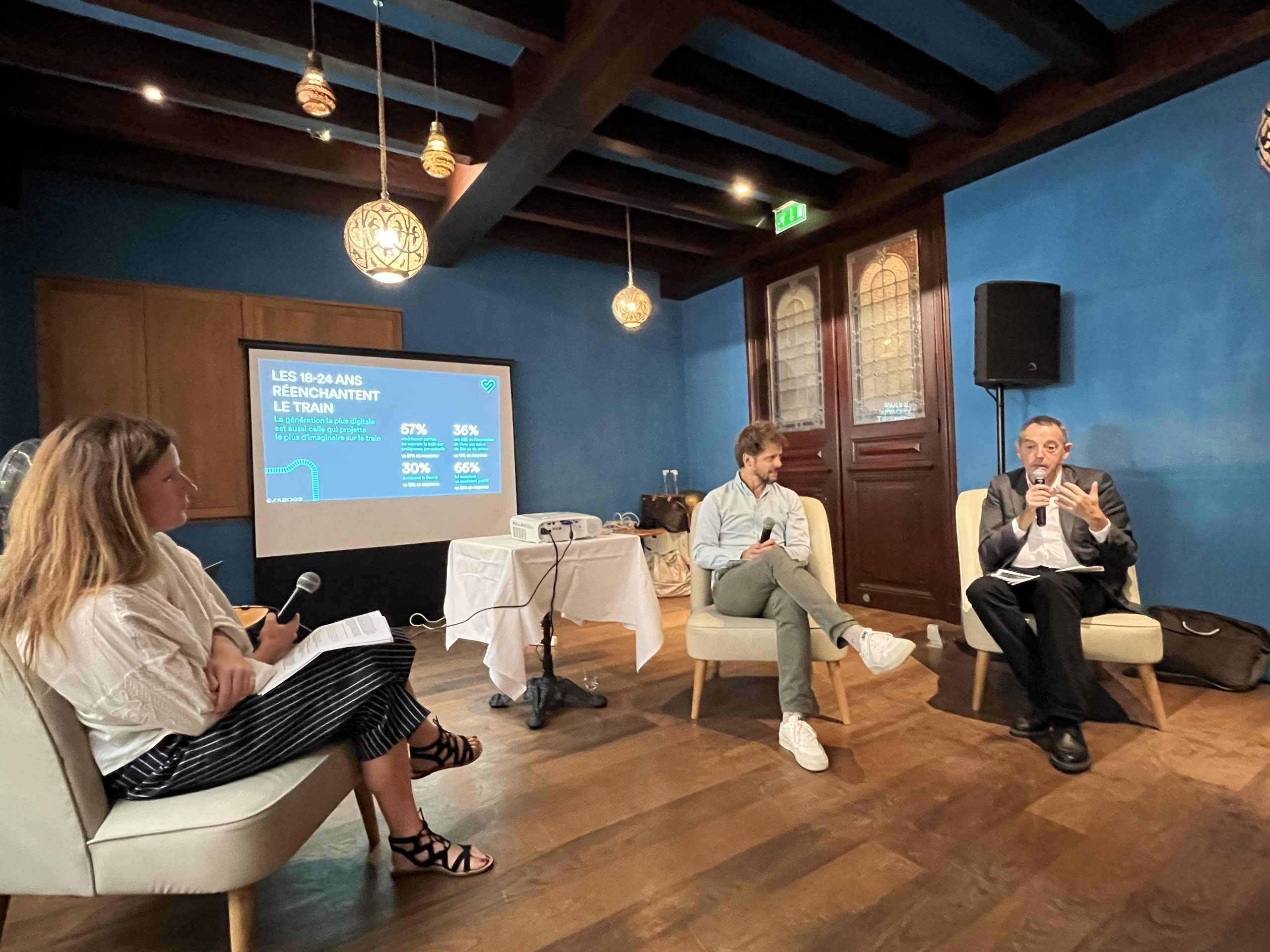


To celebrate its 10 years in France, Trainline—presenting itself as the leading independent platform for booking train and bus tickets in Europe via its website and mobile app—commissioned an IFOP study to identify the major trends shaping rail travel over the past decade.
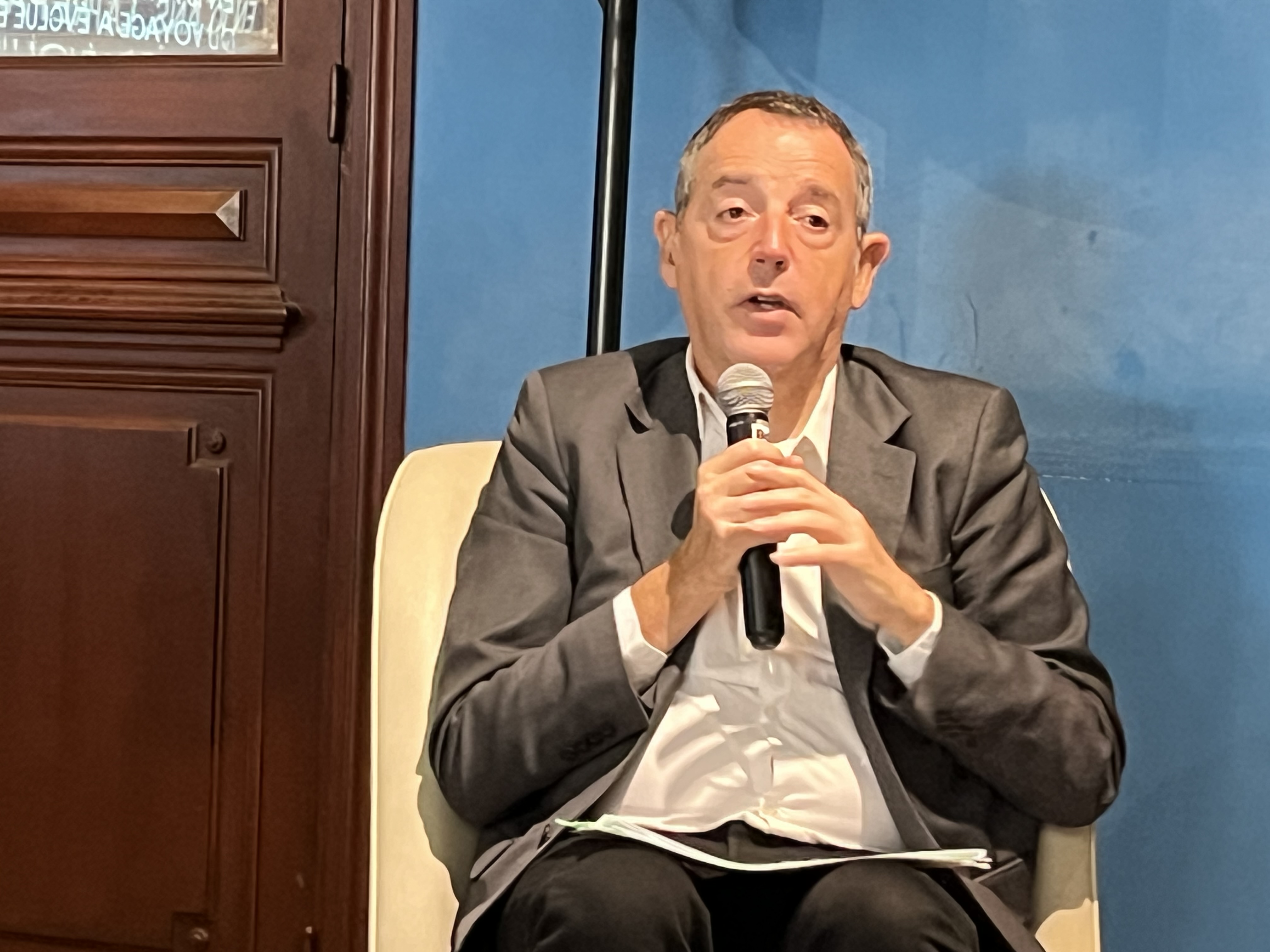
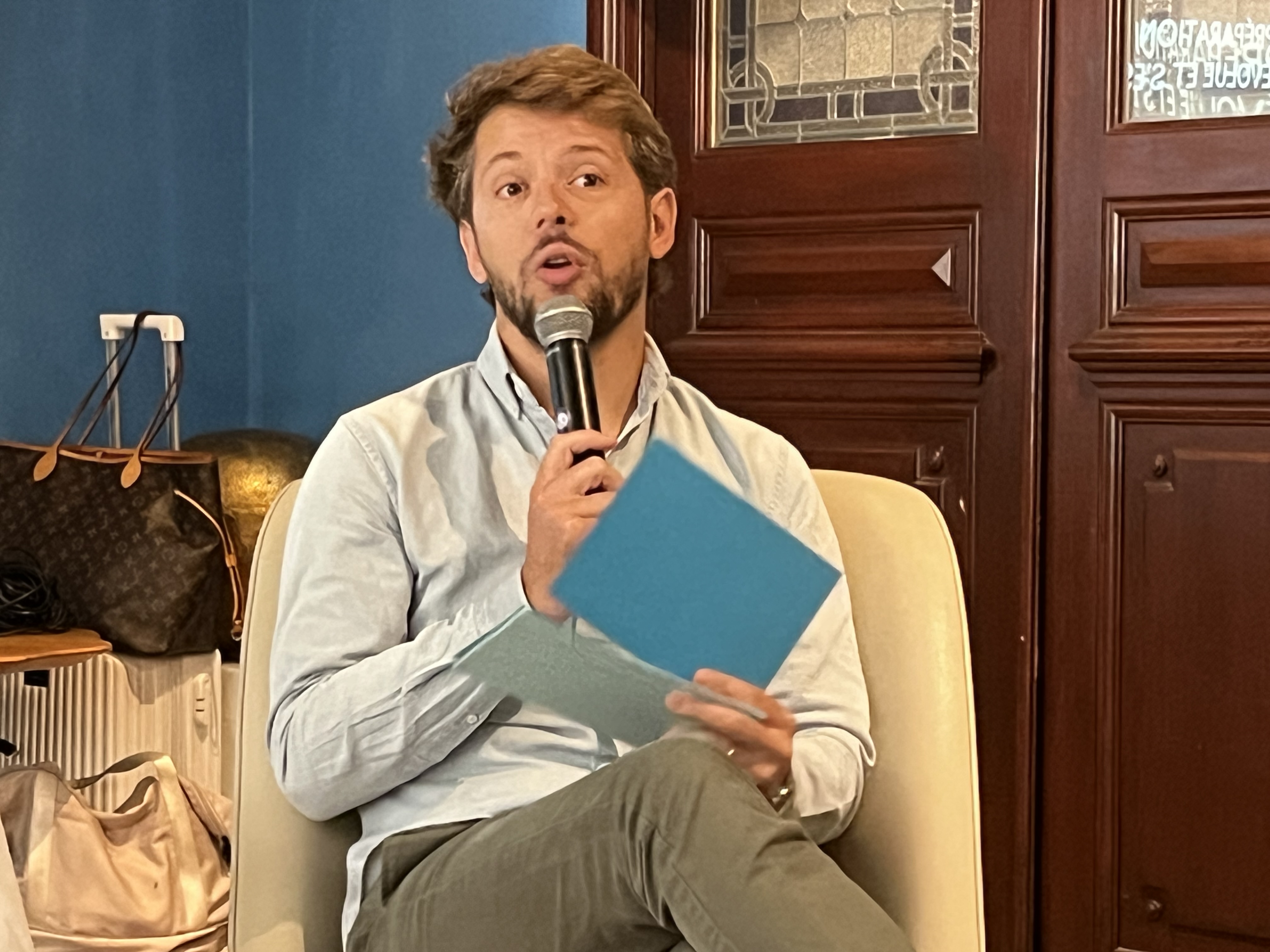
According to this study, conducted in July with a sample of 1,000 people representative of the French population and presented, Thursday morning to the press, by Jérôme Fourquet, head of the IFOP “Opinion” department, and by Clément Bretagnolle, France Country Manager of Trainline, the train has a promising future ahead.
Indeed, so much has changed in ten years! Not only are the French using the train more and more—and increasingly often—but the “train is not a thing for old folks”. Even better, the younger generations are leading the way.
The 18–24 age group, the most digital, is also the one that projects the richest imagery onto the train: 66% associate it with a positive feeling (66% vs. 48% on average across all French generations) and 57% of them prefer the train when choosing among several modes of transport, compared with 37% of the French overall.
According to this study, conducted in July with a sample of 1,000 people representative of the French population and presented, Thursday morning to the press, by Jérôme Fourquet, head of the IFOP “Opinion” department, and by Clément Bretagnolle, France Country Manager of Trainline, the train has a promising future ahead.
Indeed, so much has changed in ten years! Not only are the French using the train more and more—and increasingly often—but the “train is not a thing for old folks”. Even better, the younger generations are leading the way.
The 18–24 age group, the most digital, is also the one that projects the richest imagery onto the train: 66% associate it with a positive feeling (66% vs. 48% on average across all French generations) and 57% of them prefer the train when choosing among several modes of transport, compared with 37% of the French overall.
The Train: The Choice of Disconnecting
Is it out of ecological concern? Or the choice of a way of life? As lives become more rationalized, 73% of the French reckon that the train lets them enjoy the journey itself and decide how to spend that time.
And, 45% prefer to make the most of it without aiming to be productive, compared with only 10% who seek first to work or progress on their tasks.
Among those who have traveled by train this year, this choice of disconnect rises to 53%.
This “pause” is fueled by concrete moments: 60% of the French have already watched the scenery unfold with nostalgia, 39% have interacted with new people in stations or on board, 38% have felt the thrill of knowing that loved ones were waiting for them on the platform.
It is true that “in the French imagination, the train is far more than just a means of communication”, as Jérôme Fourquet reminded. The train holds a place in collective memory because it is closely linked to major chapters in French history, starting with deconfining and regional development, the advent of paid holidays, the arrival of the TGV, etc.
Rooted in our daily lives, the train is also a way to reach major moments of celebration (concerts, sports events), asserted Clément Bretagnolle, noting, in passing, the doubling of bookings driven by Céline Dion’s concerts in Paris next week.
And, 45% prefer to make the most of it without aiming to be productive, compared with only 10% who seek first to work or progress on their tasks.
Among those who have traveled by train this year, this choice of disconnect rises to 53%.
This “pause” is fueled by concrete moments: 60% of the French have already watched the scenery unfold with nostalgia, 39% have interacted with new people in stations or on board, 38% have felt the thrill of knowing that loved ones were waiting for them on the platform.
It is true that “in the French imagination, the train is far more than just a means of communication”, as Jérôme Fourquet reminded. The train holds a place in collective memory because it is closely linked to major chapters in French history, starting with deconfining and regional development, the advent of paid holidays, the arrival of the TGV, etc.
Rooted in our daily lives, the train is also a way to reach major moments of celebration (concerts, sports events), asserted Clément Bretagnolle, noting, in passing, the doubling of bookings driven by Céline Dion’s concerts in Paris next week.
More Autonomous and More Strategic Travelers
Over the past ten years, trip planning has become largely digital, as Jérôme Fourquet noted, “travelers, including the oldest generations, have embraced the new tools.”
Indeed, 91% of travelers report changing at least one booking practice: 49% say they book more online or via an app, 38% say they adjust their schedules and dates more in line with price, 35% say they compare more the departure times or days, 35% say they book further ahead than ten years ago.
With Trainline, the shift is even sharper: the share of the app in the booking channel mix rose from 63% in 2023 to 71% in 2026.
Indeed, 91% of travelers report changing at least one booking practice: 49% say they book more online or via an app, 38% say they adjust their schedules and dates more in line with price, 35% say they compare more the departure times or days, 35% say they book further ahead than ten years ago.
With Trainline, the shift is even sharper: the share of the app in the booking channel mix rose from 63% in 2023 to 71% in 2026.
The Price Is No Longer a Burden
Moreover, price is no longer a constraint to endure; it has become a lever with which to shape one’s trip.
This autonomy expanded further with the entry of new operators, producing tangible effects on fares: the average price on Paris–Lyon dropped by 43% between 2019 and 2023 after Trenitalia’s arrival, and on the Paris–Marseille axis by 29% since the operator began on the southern route last year, highlighted Clément Bretagnolle.
“We are trying to simplify access to rail offerings, giving consumers the choice so they can pick the right train at the right price”, Bretagnolle added, before noting “Spain is our laboratory market because there are now four operators on its high-speed lines. Consumers here thus have as many options for train travel as for air travel”.
In short, according to Trainline, more offers and more departure times translate into greater latitude to balance budget, constraints, and desires. But, “people have understood that you need to act early to get the best fares”.
This autonomy expanded further with the entry of new operators, producing tangible effects on fares: the average price on Paris–Lyon dropped by 43% between 2019 and 2023 after Trenitalia’s arrival, and on the Paris–Marseille axis by 29% since the operator began on the southern route last year, highlighted Clément Bretagnolle.
“We are trying to simplify access to rail offerings, giving consumers the choice so they can pick the right train at the right price”, Bretagnolle added, before noting “Spain is our laboratory market because there are now four operators on its high-speed lines. Consumers here thus have as many options for train travel as for air travel”.
In short, according to Trainline, more offers and more departure times translate into greater latitude to balance budget, constraints, and desires. But, “people have understood that you need to act early to get the best fares”.
“Tomorrow, More Human but No Rocket on Rails”
And tomorrow? “Our trains have already evolved a lot. The French do not expect a fresh technological leap, nor a rocket on rails”, summarized Jérôme Fourquet.
On the contrary, the French seem to be seeking more sobriety, while also wanting innovations to ease the booking journey (and refunds if something goes wrong).
Finally, 63% would also prefer more human presence in stations and on board (versus 20% wanting more automation).
Regarding the network’s future, the French desire “the maintenance of the existing system”. In other words, a modernization of a network that is often aging, particularly on lines where travel times have risen in recent years. A tall order.
This is, as Jérôme Fourquet pointed out, “a set of very heavy investments while France already strains under a public debt above 3.5 trillion euros…”
On the contrary, the French seem to be seeking more sobriety, while also wanting innovations to ease the booking journey (and refunds if something goes wrong).
Finally, 63% would also prefer more human presence in stations and on board (versus 20% wanting more automation).
Regarding the network’s future, the French desire “the maintenance of the existing system”. In other words, a modernization of a network that is often aging, particularly on lines where travel times have risen in recent years. A tall order.
This is, as Jérôme Fourquet pointed out, “a set of very heavy investments while France already strains under a public debt above 3.5 trillion euros…”