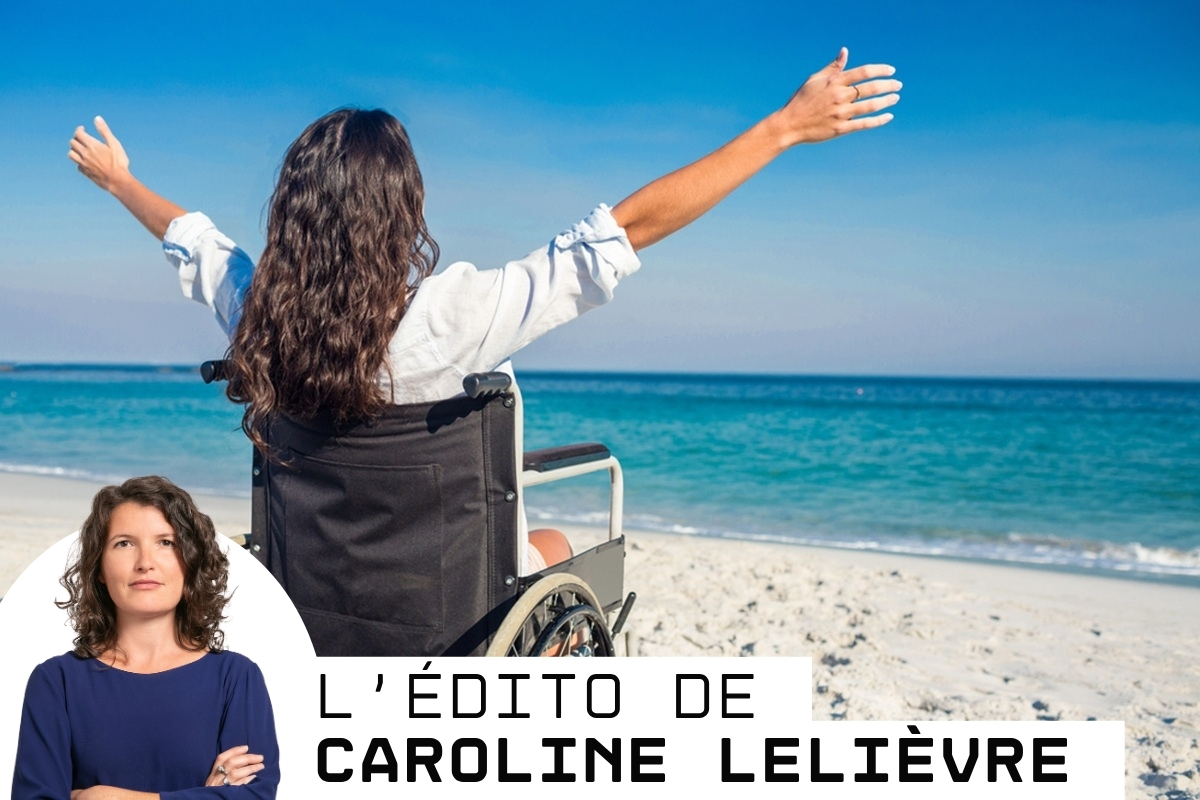


In France, according to a study published in February 2023 by the Directorate for Research, Studies, Evaluation and Statistics (DREES), 7.6 million people aged 15 and over living at home were affected in 2021 by a disability due to a severe sensory, physical, or cognitive limitation, or a significant restriction in activities of daily living.
7.6 million people.
A figure that should be enough to persuade the tourism sector that this is not a marginal clientele, nor a topic reserved for a few specialists.
And yet. For someone in a wheelchair, visually impaired, hard of hearing, or with a cognitive disability, organizing a trip can quickly become a headache.
Finding genuinely adapted accommodation, checking transport conditions, ensuring an excursion will be accessible, anticipating transfers or having reliable information about equipment: each step requires time and additional verifications.
A PMR pictogram on a booking site does not guarantee that a room will meet the traveler’s needs. An advertised accessible service may prove impractical once on site. And when a single link in the chain fails, the entire stay is sometimes compromised.
Even for a able-bodied person, when a service goes off track, it can be a real ordeal; imagine what it would be like for someone with a disability!
A profession where guidance truly matters
 Confronted with these difficulties, tourism professionals have a pivotal role to play.
Because designing an accessible stay is not merely about aligning services on a quote. One must precisely understand the traveler’s needs, verify the real accessibility of accommodations and activities, check transport conditions, identify the right contacts, and anticipate the unexpected.
It is a job of expertise, coordination and support. And above all, reassurance.
For a traveler with a disability, knowing that the services have been checked, the constraints anticipated and that a professional will be present in case of trouble can make all the difference.
That is precisely where a travel agent or tour operator can demonstrate their added value. That is the essence of your trade!
Also read: Travel agent: how to create 100% accessible trips
In the age of AI, an opportunity to prove added value
In the era of artificial intelligence that facilitates destination research, offer comparisons and the construction of standardized itineraries, accessible travel reminds us that more is required than just an AI to design a suitable stay.
Indeed, how can a machine guarantee that a room marketed as accessible will actually allow a traveler to move around in a wheelchair?
How to verify that a transfer will be suitable, that an excursion can be completed, or that a local provider will meet specific needs? Online information does not always suffice. And a mistake can have consequences far greater than a simple disappointment upon arrival. Nothing can be left to chance.
In this context, human guidance appears essential Listening, questioning, verifying, explaining the limits of an offer, finding alternatives and reassuring: all of these are skills that distinguish a professional from a mere booking tool.
It remains for the profession to fully seize the subject. Training, knowledge of disabilities and the development of reliable partnerships must become priorities. It is not a matter of claiming that every agency can meet all requests, nor that every destination is accessible to all.
Accessible travel, a challenge for the entire profession
Tourism loves talking about the customer experience, personalization and tailor-made travel. It is about time these notions truly apply to all travelers.
Accessibility cannot rest on a handful of specialized agencies or the goodwill of convinced professionals. It must be integrated into the entire travel value chain.
And it also represents a real commercial opportunity for companies capable of offering reliable support.