An unprecedented underground national nature reserve, bringing together around thirty caves, is set to be created in the Pyrenean department of Ariège by 2027 to better protect these caverns, showcase them, and facilitate research there.
The project, conceived in the early 2000s, was relaunched in 2019 as part of the national strategy for protected areas, which mainly aims to classify “30% of the national territory under protection,” the prefecture notes.
A reserve to protect and reveal an exceptional underground heritage
The objective of this forthcoming Ariège Underground National Nature Reserve will be to “valorize and protect” the department’s “cavernous wealth”, which is stated to be “not sufficiently showcased”, explains to the AFP the sub-prefect in charge of the file, Sophie Pauzat. The project should also allow the public to gain a better understanding of these 29 caves, spread across 32 communes and “which are known only to specialists, particularly scientists and speleologists”, she says, adding that “If used well, it could have an attraction effect to make Ariège known.”
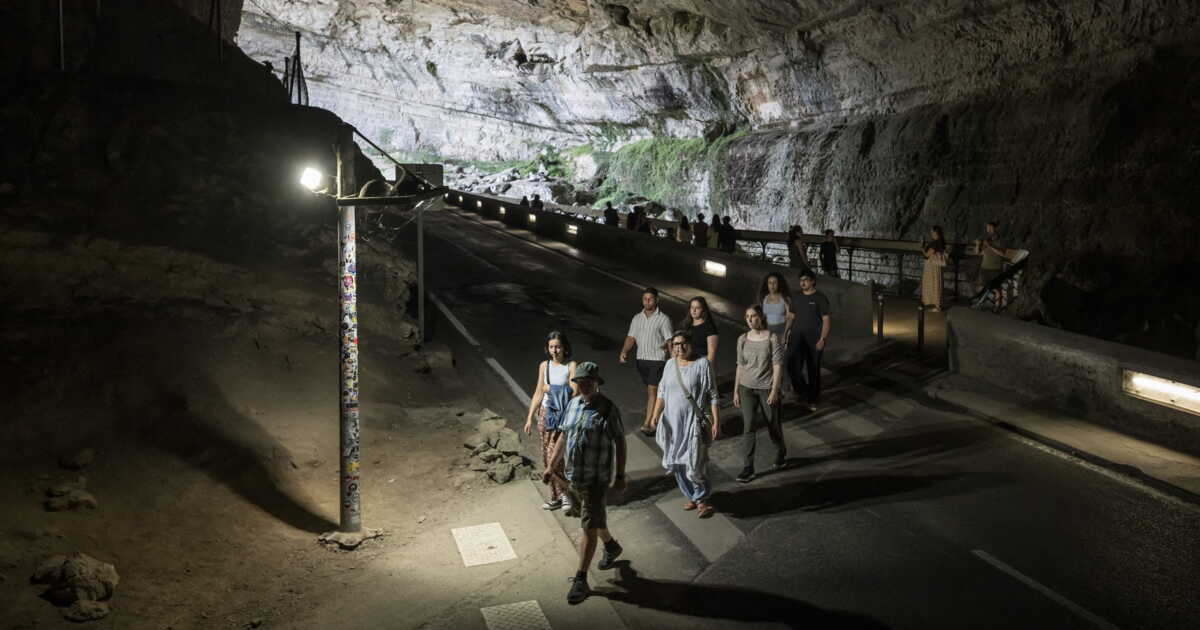
Among the sites involved is the emblematic Mas d’Azil cave, “exceptional from a geological standpoint as it is absolutely monumental”, described on site by Anne-Sophie Gimeno, head of caves at the Ariège Service for the Exploitation of Tourist Sites (Sesta). “It’s a force of nature”, whose main gallery “stretches to about 420 meters” and which shows traces of human occupation “between 40,000 years and 14,000 years before today”, she notes. Explored starting in 1887 and classified as a Historic Monument in 1942, this cave has become an Ariège attraction, drawing tens of thousands of visitors each year.
Between local concerns and major scientific stakes
The mayor of Mas d’Azil, Raymond Berdou, who says he hopes to raise the annual visitor count to 50,000 thanks to the reserve, nevertheless expresses concern. “This is a project that the State wanted to push fairly quickly (…) with, in my view, a lack of consultation”, says the mayor, who also serves as vice-president of the department in charge of culture. He worries especially about the “significant constraints” that incorporating the caves into this reserve could place on surrounding activities, such as bungee jumping or fireworks in relation to the cave in his commune. These fears led the departmental council to issue an unfavorable opinion during the public inquiry.
“Existing activities will continue to take place”, reassures Ms. Pauzat. “What often scares people is thinking, ‘we create reserves and then we won’t be able to do anything.’ It’s much more nuanced than that.” The reserve will also aim to support scientific research, for example in the Moulis cave-laboratory, set up by the CNRS in 1954, where researchers try to “understand how cavernicolous species manage to adapt to this particularly harsh environment due to the constant darkness”, details Olivier Guillaume, CNRS research engineer and technical director of the station.
Global warming is felt even underground
The caves of Ariège thus shelter bats, amphibians such as the calotriton, as well as insects or spiders. “Underground biodiversity is rather poorly known”, notes the researcher, and the reserve “will provide an ideal framework to develop educational activities, to better explain to the public the challenges of conserving subterranean species”, he says. In Moulis, researchers are also studying how, in the face of climate disruption, some species “are in the process of colonizing the underground environment”, which is becoming a kind of “refuge habitat”, describes Mr. Guillaume.
Même sous terre, où les températures varient peu au cours de l’année, le réchauffement se fait sentir “en particulier en ce qui concerne la disponibilité de la ressource en eau”, cruciale pour certaines espèces souterraines “très fragiles face aux changements de leur environnement”.
Après un avis favorable de la commission d’enquête publique en novembre 2025, le projet doit désormais être soumis pour avis consultatif à la Commission départementale de la nature des sites et des paysages, puis au Conseil national de la protection de la nature, et enfin au Conseil d’État, avant publication du décret au Journal officiel, “le plus rapidement possible au cours de l’année 2027”, selon Mme Pauzat.