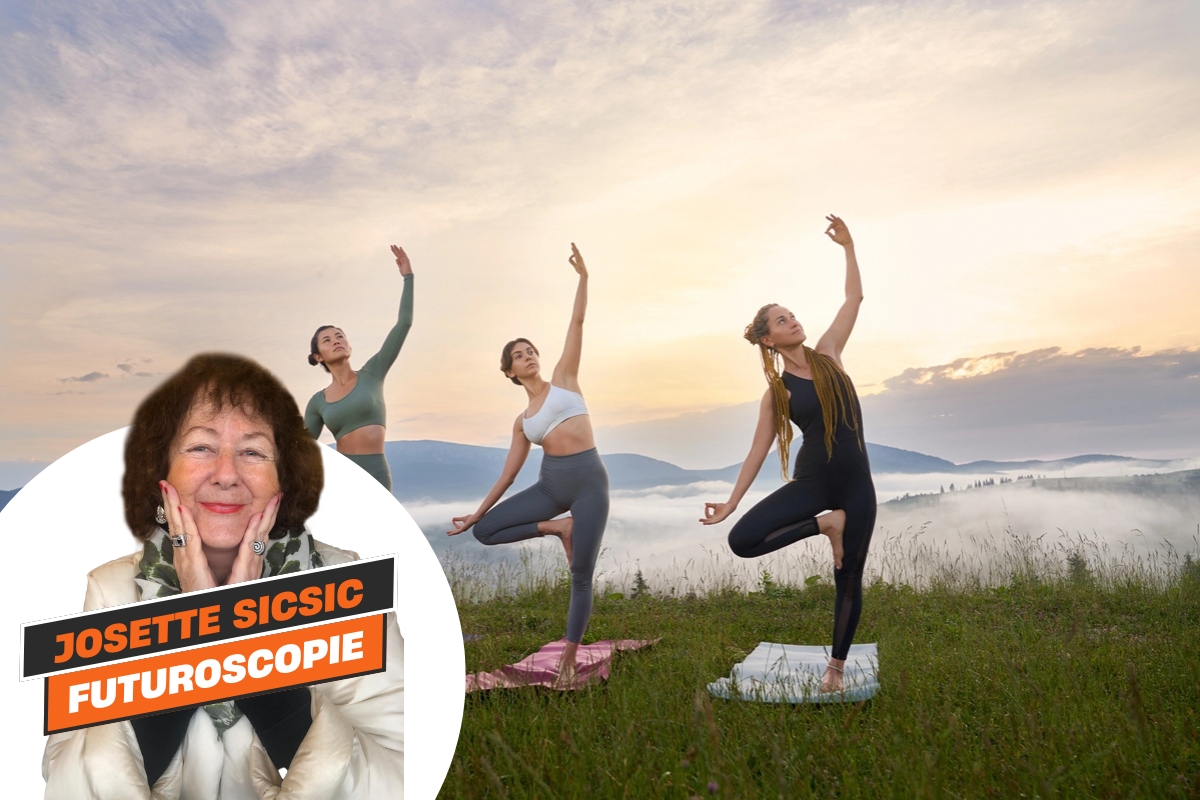


The reasons why the wellness sector is booming are multiple, but they share common threads.
From one nationality to another, from one country to another, they reflect the malaise of a society that increasingly distrusts a salvific future and focuses on its physical and mental health to combat the onslaught of all kinds of aggressions that the media broadcast in abundance. Whether true or false!
In this peculiar era of generalized tipping points, where many lose their bearings, the McKinsey Institute, among others, offers a series of trends worth knowing for any professional involved in this sector.
From one nationality to another, from one country to another, they reflect the malaise of a society that increasingly distrusts a salvific future and focuses on its physical and mental health to combat the onslaught of all kinds of aggressions that the media broadcast in abundance. Whether true or false!
In this peculiar era of generalized tipping points, where many lose their bearings, the McKinsey Institute, among others, offers a series of trends worth knowing for any professional involved in this sector.
Premier point : les demandes s’uniformisent de plus en plus
 With the power of the Web and social networks behind it, the same wellness sensitivity and demand are expressed from country to country.
Yes, the Chinese, the Koreans, the Brazilians, the French… and other nationalities are in search of “survival kits,” arrangements, cures, and services that could relieve them.
Admittedly, the cultural history of wellness in each country influences the market. But overall, each country displays comparable offerings.
La santé en six secteurs phares
Néanmoins, notons que cette uniformité se reflète dans une classification mettant en évidence six secteurs :
– the general health that everyone holds above all else ;
– suiv the sleep which, battered by modern life, is missing for many of us ;
– the nutrition, for its part, has never been more obsessive, especially among the more advantaged categories ;
– physical fitness has become mandatory: one must feel good in one’s skin and not show weaknesses in a world that evokes slowness but continues to live at high speed ;
– appearances, therefore the beauty domain, also counts enough to devote time and money to preserve and enhance them. Whether young or older ;
– mindfulness, finally, is taking more and more space in the wellness toolkit. Inspired by Eastern therapies and extreme Eastern approaches, it constitutes a full field of its own of which only a small portion has been explored and offered seriously.
Offers that could be addressed by the tourism sector in a more aggressive way, instead of being confined to increasingly luxurious but increasingly standardized hotel spa offerings.
What difference is there between the services and treatments of a Marrakech spa and a Thai spa? Even their design and interior architecture do not differentiate them. And only a few tour operators offer an innovative range of stays tailored to this type of demand.
Also read: Wellness and spas: a burst of creativity and seriousness
– the general health that everyone holds above all else ;
– suiv the sleep which, battered by modern life, is missing for many of us ;
– the nutrition, for its part, has never been more obsessive, especially among the more advantaged categories ;
– physical fitness has become mandatory: one must feel good in one’s skin and not show weaknesses in a world that evokes slowness but continues to live at high speed ;
– appearances, therefore the beauty domain, also counts enough to devote time and money to preserve and enhance them. Whether young or older ;
– mindfulness, finally, is taking more and more space in the wellness toolkit. Inspired by Eastern therapies and extreme Eastern approaches, it constitutes a full field of its own of which only a small portion has been explored and offered seriously.
Offers that could be addressed by the tourism sector in a more aggressive way, instead of being confined to increasingly luxurious but increasingly standardized hotel spa offerings.
What difference is there between the services and treatments of a Marrakech spa and a Thai spa? Even their design and interior architecture do not differentiate them. And only a few tour operators offer an innovative range of stays tailored to this type of demand.
Also read: Wellness and spas: a burst of creativity and seriousness
Les jeunes deviennent des cœurs de cible
Another important trend: generations, and especially the young.
Hounded by marketing that does not stop at traditional promotion networks but pours heavily onto social media, young wellness consumers are growing in numbers.
According to the McKinsey study, while Gen Z and millennials account for a little over a third (36%) of the adult population in the United States, they generate more than 41% of annual wellness-related spending.
By comparison, consumers aged 58 and older account for 35% of the population but only 28% of wellness spending.
A massive share that continues to rise by about 5-6% year over year!
Hounded by marketing that does not stop at traditional promotion networks but pours heavily onto social media, young wellness consumers are growing in numbers.
According to the McKinsey study, while Gen Z and millennials account for a little over a third (36%) of the adult population in the United States, they generate more than 41% of annual wellness-related spending.
By comparison, consumers aged 58 and older account for 35% of the population but only 28% of wellness spending.
A massive share that continues to rise by about 5-6% year over year!
Une mosaïque de consommateurs
Once these generalities are laid out, let us note, as always, that despite commonalities, a finer segmentation is necessary, underscoring the extreme need to monitor demand to respond to it.
What is it, again according to McKinsey?
1. The confident adherents: the least numerous
They represent the smallest share of wellness consumers (11%) and 15% of market spend, although they place great importance on wellness. But, more secure than the maximalist optimizers, they are obsessed with fitness, buy gym memberships, fitness apps, home equipment and sports nutrition products more frequently than other consumer groups. They also tend to conduct thorough research before buying wellness solutions, but remain loyal to what suits them once found. To attract these demanding and passionate consumers, it is best to offer them solid, serious deals comparable to what they use at home. They will not forgive average-quality tourism offers, risking to penalize their fitness programs.
2. The health traditionalists: a bit older
These are generally older consumers, mindful of their health and well-being, but who favor simplicity and practicality. They account for 20% of wellness product consumers and 13% of market spending. Their priority is healthy eating, taking vitamins and dietary supplements, and regular physical activity. They are, however, less open to experimentation or new technologies and solutions, such as weight-management prescriptions, telemedicine services or AI-based products. To win their trust, it is essential to meet their expectations. They are unlikely to buy a wellness product simply because it is new or trendy. Conversely, adherents of a traditional health approach focus on nutrition labels and ingredient lists. Wellness industry players must therefore adjust their positioning accordingly and emphasize high-quality natural ingredients where relevant.
3 and 4. The frail and those with health issues
Finally, these two groups (not exactly the same) account for 24% and 20% of consumers, and 22% and 10% of market spending, the smallest share of all groups. Tending to be stressed about their health and lacking motivation, particularly to maintain or lose weight, these people have “well-being” goals but struggle more to achieve them. It is therefore essential to make access to health management easier for them and less intimidating. Notably in a vacation setting.
Finally, let us not forget that there is a substantial portion of the population that is completely neglectful of its health and well-being. They pay less attention to health monitoring and buy only the essentials, while being very price-sensitive. They remain nonetheless a target to conquer.
What is it, again according to McKinsey?
1. The confident adherents: the least numerous
They represent the smallest share of wellness consumers (11%) and 15% of market spend, although they place great importance on wellness. But, more secure than the maximalist optimizers, they are obsessed with fitness, buy gym memberships, fitness apps, home equipment and sports nutrition products more frequently than other consumer groups. They also tend to conduct thorough research before buying wellness solutions, but remain loyal to what suits them once found. To attract these demanding and passionate consumers, it is best to offer them solid, serious deals comparable to what they use at home. They will not forgive average-quality tourism offers, risking to penalize their fitness programs.
2. The health traditionalists: a bit older
These are generally older consumers, mindful of their health and well-being, but who favor simplicity and practicality. They account for 20% of wellness product consumers and 13% of market spending. Their priority is healthy eating, taking vitamins and dietary supplements, and regular physical activity. They are, however, less open to experimentation or new technologies and solutions, such as weight-management prescriptions, telemedicine services or AI-based products. To win their trust, it is essential to meet their expectations. They are unlikely to buy a wellness product simply because it is new or trendy. Conversely, adherents of a traditional health approach focus on nutrition labels and ingredient lists. Wellness industry players must therefore adjust their positioning accordingly and emphasize high-quality natural ingredients where relevant.
3 and 4. The frail and those with health issues
Finally, these two groups (not exactly the same) account for 24% and 20% of consumers, and 22% and 10% of market spending, the smallest share of all groups. Tending to be stressed about their health and lacking motivation, particularly to maintain or lose weight, these people have “well-being” goals but struggle more to achieve them. It is therefore essential to make access to health management easier for them and less intimidating. Notably in a vacation setting.
Finally, let us not forget that there is a substantial portion of the population that is completely neglectful of its health and well-being. They pay less attention to health monitoring and buy only the essentials, while being very price-sensitive. They remain nonetheless a target to conquer.
Quid de demain ?
The wellness in its entirety – including thermalism, thalassotherapy, Ayurvedic cures, sleep, and art therapy – is probably the most promising thematic field for tourism development.
With one imperative: quality. Essential to an increasingly informed and demanding consumer, it is indispensable for an increasingly competitive offering.
Also read: New wellness trends seen by Six Senses
With one imperative: quality. Essential to an increasingly informed and demanding consumer, it is indispensable for an increasingly competitive offering.
Also read: New wellness trends seen by Six Senses


Josette Sicsic, journalist, consultant, speaker, has been observing the changes in the world for more than 25 years to analyze their impact on the tourism sector.
After developing the Touriscopie journal for more than 20 years, she remains on the front line of current events where she decodes the present to forecast the future. On the site www.tourmag.com, in the Futuroscopie section, she publishes several times a week forward-looking and analytical articles.
Contact: 06 14 47 99 04
Email: [email protected]
After developing the Touriscopie journal for more than 20 years, she remains on the front line of current events where she decodes the present to forecast the future. On the site www.tourmag.com, in the Futuroscopie section, she publishes several times a week forward-looking and analytical articles.
Contact: 06 14 47 99 04
Email: [email protected]