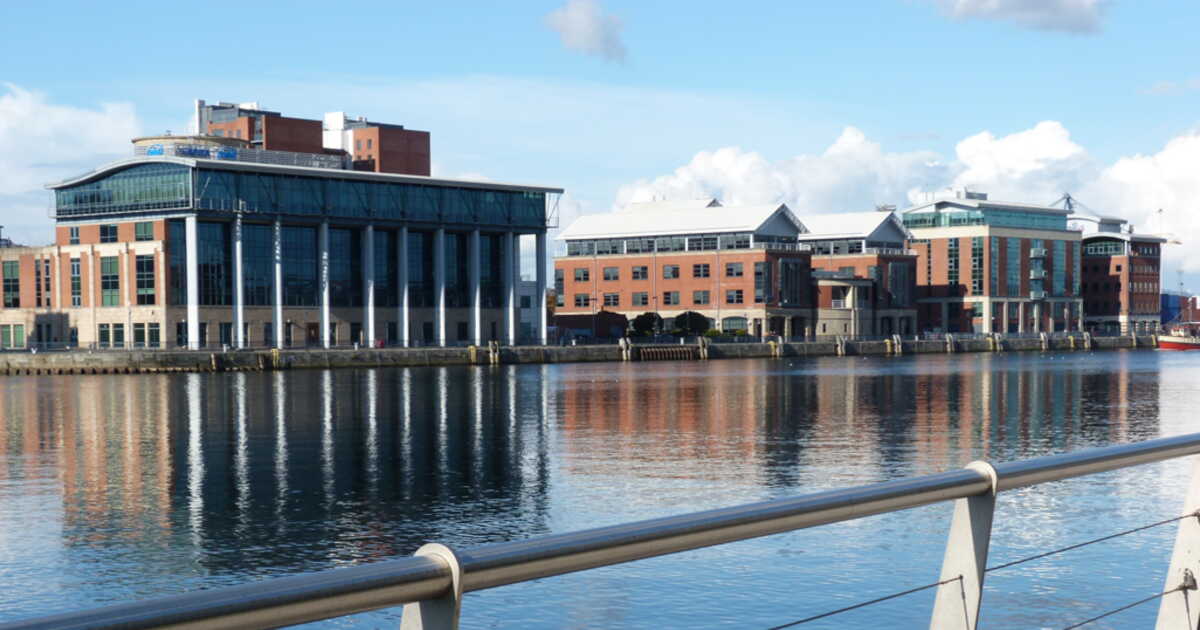
Nestled in the heart of the Northern Ireland, Belfast is a city that blends rich history with contemporary vitality. Known for its industrial roots and its central role during the Troubles, it now attracts visitors and locals alike with its emerging art scene, lively neighbourhoods, and surprising urban landscapes. If you are wondering what to do in Belfast, there is a multitude of activities to suit every kind of visit, whether for a day or longer. Let us explore together the attractions to prioritize to make the most of your stay.
1. Discover Titanic Belfast
Located in the Titanic Quarter, Titanic Belfast stands as one of the United Kingdom’s most iconic museums, both for its bold building, designed in homage to the legendary liner, and for the quality of its interactive exhibitions. Built on the historic Harland & Wolff shipyard site, it traces the birth, construction, and the centenary of the Titanic’s sinking.
The visit continues with admission to the SS Nomadic, the original tender docked nearby, another witness to the city’s maritime past. This immersive journey sits within the momentum of revalorising Belfast’s historic buildings, and constitutes an essential introduction to the local industrial history. Titanic Belfast is today a must-see stop on any itinerary in the city centre.
2. Explore the Cathedral Quarter
The Cathedral Quarter, in the heart of Belfast’s city centre, reflects the cultural buzz of the northern Irish capital. Around the St Anne’s Cathedral, a major edifice among Belfast’s historic buildings, unfolds an urban fabric of art galleries, pubs with traditional atmospheres, and concert venues.
This area is also a strategic hub for navigating the city. In the evening, visitors can attend a play or discover the recent mural frescoes that testify to an engaged contemporary art scene. The Cathedral Quarter represents a perfect synthesis of religious heritage, cultural vitality, and urban regeneration.
3. Stroll through the Botanic Gardens of Belfast
The Botanic Gardens, located south of the city centre, offer a moment of relaxation in the heart of the city. This public park, enjoyed for its outdoor activities, is built around the Palm House, a Victorian-era building designed by Sir Charles Lanyon, and the Tropical Ravine, housing a rich diversity of exotic plants.
This natural site, frequented by both locals and visitors, fits into urban itineraries for those seeking to escape the city bustle. It is also a link to culture, as it adjoins the Ulster Museum and provides a pleasant starting point to explore south Belfast. Ideal for a pause between two visits.
4. Discover the history at the Ulster Museum
The Ulster Museum, the largest museum in Northern Ireland, offers a structured reading of history and the arts in a building adjacent to the Botanic Gardens. Its permanent exhibition covers a wide spectrum, from prehistory to the Northern Ireland conflict, with a particular focus on urban memory and social evolutions.
The richness of its interactive exhibits draws both art lovers and visitors wishing to understand the region’s historical foundations. The museum is free, a strong argument for travellers mindful of their budget. It sits within a logical sequence of stops including Belfast Castle, Tudor-style buildings, and other downtown institutions.
5. Plunge into history with the Murals and Black Taxi Tours
Belfast’s mural frescoes, visible in several city districts, bear witness to the socio-political tensions that marked Northern Ireland’s recent history. To better understand their meaning, the Black Taxi Tours allow exploring this visual heritage in a documented context, often narrated by former witnesses of the events.
These guided tours traverse areas where history has been etched on the walls, notably around the Peace Wall, near the city centre. The role of Stormont Palace, the workings of the institutions, or stories connected to historical figures are addressed clearly. This itinerary is essential for anyone wishing to move beyond clichés and grasp the complexities of a city continually reconfiguring.
6. Stroll through St. George’s Market
St George’s Market, one of the oldest covered markets in the United Kingdom, is a must-visit to discover Belfast’s authentic atmosphere. Open on weekends, it hosts local producers, artisans, and restaurateurs in a Victorian landmark in the city centre. The stalls teem with fresh produce, handmade items, and specialties such as the Ulster Fry, a traditional dish.
This lively place is part of a broader effort to celebrate culinary and cultural heritage. With its central location, it makes an excellent starting point to explore the surrounding area, notably the city hall and the main Belfast historic buildings. Ideal for a break during a weekend, or to meet the city’s artisans.
7. Visit the Crumlin Road Gaol
The Crumlin Road Gaol, Belfast’s historic prison, offers immersion into a lesser-known chapter of local history. This Victorian-era building, still marked by past tensions, can be toured with or without a guide, through a structured route through the old cells, corridors, and the execution room.
Its role during the Troubles and earlier conflicts is explained in a factual manner, with integrated educational devices. Located a short distance from the city centre, the prison is a key stop to understand the social and political dimensions of Belfast’s history. It is also an example of successful heritage repurposing.
8. Admire Belfast City Hall
Belfast City Hall, or City Hall, stands out with its remarkable baroque revival architecture in the city centre. This building, whose construction was overseen by Sir Alfred Brumwell Thomas, houses exhibitions on municipal history and the city’s urban evolution. Free guided tours offer access to its ceremonial rooms, stained glass, and historic galleries.
Outside, the building is surrounded by open lawns often used for outdoor activities. A place for orientation and gathering, it makes an ideal introduction to Belfast for any visitor, near St George’s Market, the Crown Liquor Saloon, and other major institutions.
9. Enjoy a day trip to the Giant’s Causeway
A day trip to the Antrim Coast from Belfast lets you discover the Giant’s Causeway, a unique volcanic formation listed as a World Heritage site. Reachable in under two hours from the capital, this natural site impresses with its hexagonal columns perfectly formed.
The visit can be integrated into a broader circuit including coastal castles or locations used for TV series filmed in the region. For geology, photography, or hiking enthusiasts, this excursion represents a natural extension of a Belfast weekend, combining nature, culture, and heritage.
10. Relax at the Grand Opera House
The Grand Opera House embodies the elegance of live performance in Belfast, with a program that blends opera, theatre, and musicals. Its building, recently restored, offers a complete experience for stage enthusiasts in a historic setting. Its proximity to other iconic sites such as Titanic Belfast or the Crown Liquor Saloon makes it easy to include in a sightseeing itinerary, especially for short stays. Attending a show in this history-laden venue complements the city’s cultural discovery.
11. SS Nomadic: a ship-museum brimming with history
The SS Nomadic, the last ship of the White Star Line still intact, provides a natural extension to Titanic Belfast. This small tender, which once served to board first-class passengers at Cherbourg, is now moored in the city’s historic port. Recently restored, it welcomes the public for tours of its decks, cabins, and period spaces, recreated with precision.
This floating vessel, rich in personal stories and anecdotes, helps to better understand the social context of the early 20th century. It is recommended to couple the visit with Titanic Belfast for a complete reading of the city’s industrial past. The SS Nomadic is also a point of interest for sailing enthusiasts, naval design, and maritime World Heritage heritage, at the crossroads of workers’ memory and cultural tourism.
12. Belfast Castle: between city panoramas and Celtic legends
Overlooking the city from the heights of the Cave Hill Country Park, Belfast Castle offers an immersion into Northern Ireland’s architectural history. Built in the 19th century in the Scottish Baronial style, this building stands out for its romantic charm and its integration into preserved natural surroundings.
The surrounding park, rich in Celtic legends and hiking trails, leads to the famous Napoleon’s Nose, offering a breathtaking view of Belfast City Hall and the bay. Free to access, Belfast Castle is a place for relaxation as well as a cultural highlight, with its gardens and a café housed in the former cellars. It is one of the recommended stops for those wanting to combine outdoor activities with heritage during a weekend or a day trip.
13. Peace Walls of Belfast: a striking testimony of contemporary history
The Peace Walls, Belfast’s peace walls, remain one of the most powerful symbols of the political and religious division that marked Belfast in the 20th century. These historic walls in Belfast, transformed into open-air galleries, are today covered with mural frescoes recounting conflicts, but also the hopes of reconciliation.
Visiting the Peace Walls means stepping into a still-sensitive chapter of the United Kingdom’s history. This memorial route sits within a broader exploration of the city centre, between the Stormont Palace, the Belfast City Hall, and the cultural institutions that participate in the effort of collective memory. A must-see step to understand the complexities of Northern Ireland’s identity.
In conclusion, Belfast is a destination brimming with historical, cultural, and urban treasures that will captivate any curious visitor. Whether you are a music aficionado, a history buff, or simply seeking a picturesque setting to unwind, Belfast offers much to discover and reveals itself through multiple dimensions across its contrasting neighbourhoods and landscapes. Before concluding your stay, consider excursions around the city and seize the opportunity to capture the full cultural diversity of this capital in full renaissance.
What is Belfast’s most famous thing? A maritime heritage turned into a global emblem
The most famous thing about Belfast is probably Titanic Belfast, an iconic museum in the United Kingdom erected on the old White Star Line shipyards, where the legendary liner was built. Opened on the centenary of the sinking, this contemporary building, with angular shapes inspired by the ship’s bow, houses exhibitions tracing the Titanic’s history from its design to its tragic fate.
Located in the city centre, close to the SS Nomadic, the only surviving ship of the company, it forms with the latter a coherent heritage complex, accessible via a combined entry to the SS Nomadic. Titanic Belfast is not merely a museum: it embodies the city’s industrial identity, pays tribute to its workers, and stands as a major cultural heritage site within the city’s patrimony.
What to do in Belfast with children? A city suited for young explorers
Visiting Belfast with children allows for a mix of cultural discovery and outdoor activities. The Belfast Zoo, perched on the slopes of the Cave Hill Country Park, offers a spectacular view of the city and hosts over 130 animal species. The park itself, with its marked trails, enables families to reach the Napoleon’s Nose, a famous rock formation overlooking the Belfast Castle, a Victorian-era building nestled in a park ideal for a picnic.
For a more urban moment, children enjoy the exhibits at Titanic Belfast, as well as a visit to the SS Nomadic, which allows them to discover Belfast’s maritime world in a playful way. Finally, the murals and kid-friendly guided tours in the old districts mark an introduction to the city’s contemporary history.
What to do in Belfast on weekends? Culture, nature and gastronomy on the agenda
Spending a weekend in Belfast offers an excellent opportunity to explore the richness of this Northern Irish capital. Start at St George’s Market, famous for its fresh produce and authentic atmosphere, where visitors can sample a traditional Ulster Fry.
The city centre, dominated by the Belfast City Hall, invites strolls among Belfast’s historic buildings, such as the Crown Liquor Saloon, a pub listed as a historic monument, lit by its original gas lamps. Heritage enthusiasts will continue with Titanic Belfast and the SS Nomadic, to better understand the city’s maritime history. In the evening, attend a play or opt for a day trip to the Antrim coast, easily accessible.
This article was written with the help of artificial intelligence, then corrected, augmented and validated by the newsroom’s journalists.