Nestled between Mexico and Guatemala, the small English-speaking nation of Belize captivates with its natural and cultural diversity. Known for its reef barrier, the second largest in the world, and its Maya archaeological sites, this destination attracts travelers in search of adventure and discovery.
1. Dive into the Great Blue Hole
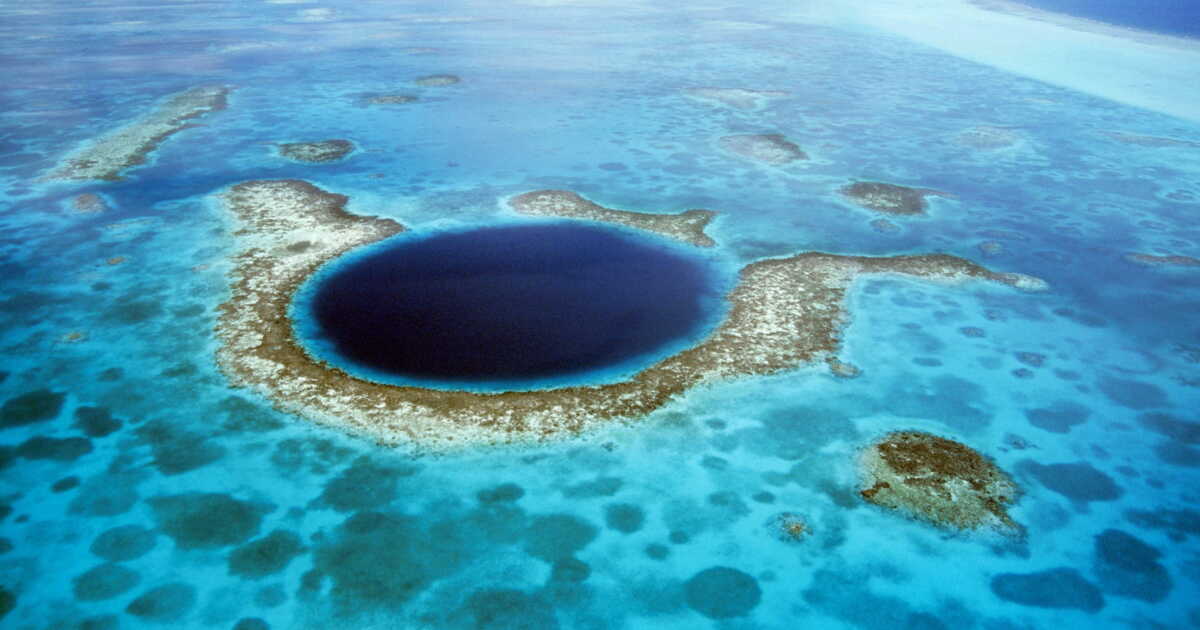
Diving into the Blue Hole, or Great Blue Hole, stands as one of the most emblematic experiences of a Belize trip. Located in the Lighthouse Reef Atoll, this circular marine sinkhole with a diameter exceeding 300 meters, a remnant of an ancient submerged limestone cave, fascinates snorkeling enthusiasts and divers from around the world. Its exploration, starting from Ambergris Caye, from San Pedro or from Caye Caulker, offers the chance to move through crystal-clear waters in deep expanses, with sheer walls lined with fossilized stalactites.
A UNESCO World Heritage Site, this natural landmark is impressive for its sky-high view, reinforcing Belize as a premier destination in Central America. An unforgettable experience that blends technical challenge with immersion in a preserved ecosystem at the heart of Belize’s coastline.
2. Explore the Maya sites of Xunantunich and Caracol
The archaeological sites of Xunantunich and Caracol illustrate the significance of Belize’s pre-Columbian past in its identity. Located in the southern portion of the country’s central region, these ancient Maya ceremonial centers rival each other with their impressive architecture and their natural surroundings. Xunantunich, reachable by ferry from San Ignacio, offers a panorama over the nearby valleys from its El Castillo pyramid.
Caracol, more secluded within the Chiquibul forest reserve, preserves massive temples, inscribed stelae, and traces of Maya urban planning. Their proximity to other sites like Altun Ha or the Maya site of Lamanai adds depth to a thorough reading of Belize’s travel history. These places are prized for the richness of their architectural details and the way ancient culture is integrated into the heart of wild forests.
3. Enjoy the beaches and laid-back vibe of Caye Caulker
Caye Caulker embodies the Go Slow spirit, the unofficial motto of this Belize island where time stretches between sea and sand. Over a few kilometers, this fishing village turned tourist haven attracts with its crystal-clear waters and a car-free lifestyle, where getting around is on foot or by bicycle. Visitors can explore the Hol Chan Marine Reserve, venture to Shark Ray Alley, or savor snorkeling-friendly dive sites.
The traditional cuisine is served with your feet in the sand, in a relaxed atmosphere facing a Caribbean sunset. Renowned for its authenticity, Caye Caulker offers a calmer alternative to Ambergris Caye, while still providing privileged access to Belize’s underwater wonders.
4. Discover Garifuna culture in Hopkins
South of the Belize coastline, the village of Hopkins stands as one of the liveliest hubs of Garifuna culture, an Afro-Caribbean community famed for its oral and musical heritage. In this small, multi-faceted country, Hopkins stands out for its intergenerational transmission of songs, ritual dances, and percussion, whose performances’ titles evoke stories of resistance and cultural pride.
Travelers are invited to join drum workshops or take traditional cooking classes for an immersion into local practices. The village, fringed by beautiful beaches and near the southern forest reserves, also serves as a launch point to the surrounding mountains and wild forests. Through this stop, Belize reveals a human and cultural dimension that complements its marine landscapes and archaeological sites.
5. Admire Belize Zoo’s wildlife
The Belize Zoo, located not far from Belize City, offers an educational and responsible approach to local fauna, recreating the country’s natural ecosystems for animals that mostly could not be reintroduced into the wild.
This ethical zoo, well integrated into the neighboring terrestrial reserves, houses more than 150 animals, including jaguars, tapirs, and toucans. Its value lies in highlighting Belize’s biodiversity, often overlooked by visitors focused on the islands or diving spots.
Easily accessible by car from the administrative capital, this site is particularly recommended for families, schools and travelers worldwide seeking a deeper understanding of the delicate balance between development and conservation in this small Central American country.
6. Hike in Mountain Pine Ridge Reserve
The Mountain Pine Ridge Reserve, in Belize’s western region, stands out for its unique geology and high-altitude landscapes that contrast with Belize’s coastline. Renowned for its dramatic waterfalls such as Big Rock Falls and the Thousand Foot Falls, among the tallest in Central America, this area draws travelers seeking placencia treks, wildlife watching, and sustained hiking.
Trails also lead to the Rio Frio Cave, a vast limestone cave with impressive dimensions, and to the natural pool of Rio On Pools, perfect for a refreshing dip. At the crossroads of adventure and contemplation, this region presents another facet of Belize, distant from the beaches yet rich in a natural, fragile UNESCO World Heritage site.
Wildlife and flora enthusiasts will appreciate the variety of bird species observable in this preserved environment, away from the usual tourist circuits.
7. Explore Belize City
Often seen as a mere waypoint, Belize City deserves a more nuanced look for any journey to Belize. As a former colonial capital, it retains major historical traces and serves as the country’s cultural crossroads. While it isn’t the coastal beat of the Belize littoral, it remains the logistical hub for reaching iconic sites such as Altun Ha, Lamanai, or islands like Ambergris Caye. The imposing scale of its old administrative buildings contrasts with more modest neighborhoods, illustrating the country’s multiple faces – a diversity echoed in the city’s cultural representations on offer.
With caution advised in certain areas, especially after dark, Belize City offers access to cave excursions, forest reserves, and the Lamanai archaeological site, rich in Belizean history. A breathtaking view of the Caribbean Sea from certain quays or charming hotels adds to the appeal of this stop, where colonial memory and modern dynamics coexist.
Belize is a destination with many faces, where every traveler can find joy. Whether you’re a history buff, a diving enthusiast, curious about authentic cultures, or seeking relaxation on dream beaches, this Central American country is sure to surprise you. To enrich your experience, be sure to savor the local cuisine and soak up the unique atmospheres as you traverse this captivating territory.
Travel Belize with confidence: what to watch out for without sacrificing the experience?
Despite its relaxed vibe and reputation as a welcoming small country, Belize, located in Central America, requires a few precautions for a fully successful stay. As with any tropical destination, basic vigilance against mosquitoes is essential, especially in wild forest areas and forest reserves like the Cock’s Comb Basin, famed for its birdlife.
In towns, particularly Belize City, it’s advisable to avoid certain neighborhoods after dark and to favor secured tourist zones. Visitors from around the world are encouraged to respect Belize’s delicate coastal ecosystems, especially when venturing to diving spots or the Lighthouse Reef atolls, true marine sanctuaries.
It’s also wise to follow local recommendations for excursions into limestone caves such as Actun Tunichil Muknal, where certified guides ensure a respectful approach to sacred sites. Traveling to Belize remains an authentic and rewarding experience, provided curiosity is paired with responsibility.
Is Belize expensive? Understanding the cost of a stay in this Caribbean paradise
Belize, while perceived as an exclusive destination in Central America, shows a variable cost of living depending on the region visited. On the Belizean islands, such as Ambergris Caye or San Pedro, some tourist services carry higher price tags, notably beachfront accommodations, boat trips to the Blue Hole (with its 300-meter diameter), or meals at establishments specializing in traditional cuisine.
The name Belize remains associated with a high-quality offering, accessible with proper planning. In rural or southern areas, around the Placencia Peninsula, travelers will discover more affordable options, notably through local Placencia agencies or Placencia trek itineraries.
The local currency, the Belize dollar, is pegged to the US dollar, which makes budgeting straightforward. Traveling to Belize means choosing a balance between authenticity, comfort, and immersion in nature, suitable for different budgets.
What to do in San Pedro, Belize? Discover the Isla Bonita and its marine treasures
In San Pedro, on the island of Ambergris Caye, nicknamed the legendary Isla Bonita, the travel experience is centered on the sea, relaxation, and discovering the unique marine ecosystems along the Belize coast. Snorkelers flock to Shark Ray Alley, famous for encounters with rays and nurse sharks, in the crystal-clear waters that fringe the Caribbean Sea.
The town, lively yet human-scale, preserves a fisher-village charm where golf carts ply a few kilometers of streets. The local motto, “Go slow,” is embodied in every moment spent feet in the sand, be it a sunset on the shore or a meal of traditional fare.
For visitors seeking to blend nature with culture, San Pedro also serves as a base for excursions to the Blue Hole and Lighthouse Reef. Far from mass tourism, San Pedro remains one of the best places to enjoy a Belizean journey in harmony with the environment.
Which Belize island to choose? Between beaches, diving, and local immersion
Choosing a Belize island means directing your Belize trip toward a direct relationship with the Caribbean Sea, its beautiful beaches, its crystal-clear waters, and its island culture. Ambergris Caye, the best known, combines accessibility, developed tourist offerings, and proximity to sites like Shark Ray Alley or Hol Chan, thus attracting snorkeling and diving enthusiasts from around the globe.
Other islands, more tranquil, offer a different approach: Caye Caulker, for instance, perfectly embodies the Go Slow philosophy, with a fisherman-village vibe, ideal for a sunset with feet in the sand. Each Belize island carries a name steeped in culture and history, and lets visitors alternate between relaxation and adventure.
Where to go will depend on your desires: total immersion, spotting sea turtles, exploring limestone caves, or spotting bird species on remote islets. In all cases, these islands extend the essential bond between land, sea, and culture that defines Belize, the Belize.
This article was written with the help of artificial intelligence, then revised, supplemented, and validated by the newsroom’s journalists.