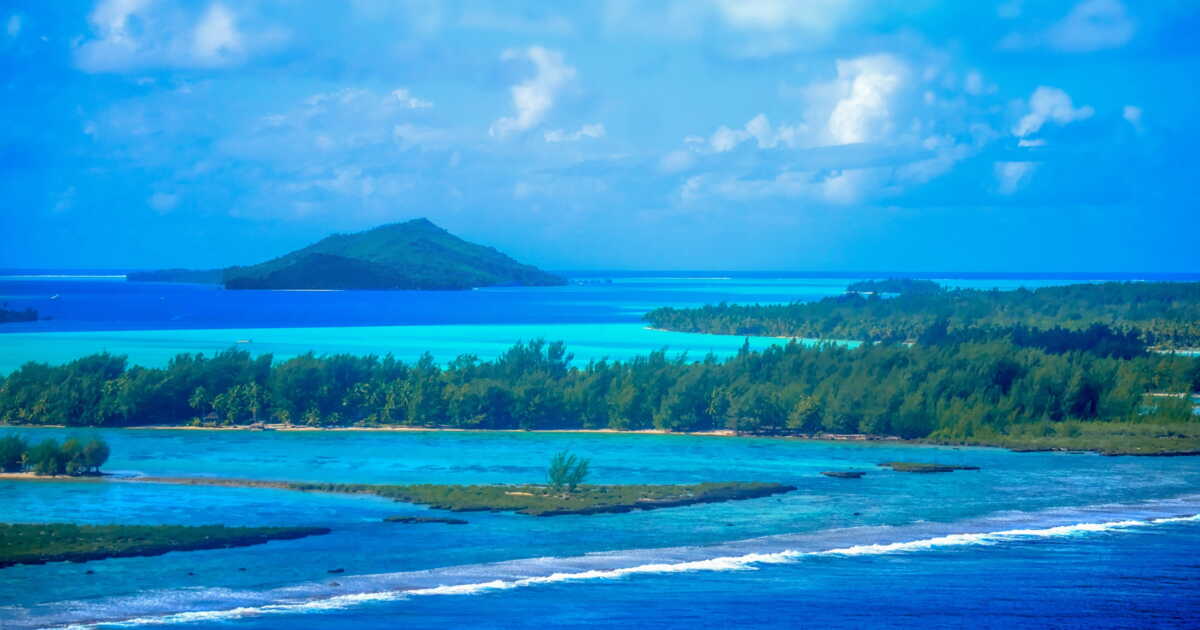
Nestled in the heart of the South Pacific, Bora Bora is a sought-after destination famed for its turquoise lagoon, white-sand beaches, and lush green mountains. This island of the Society Islands captivates travelers in search of idyllic scenery and unique experiences. Whether it’s diving into its crystal-clear waters, exploring its mysterious lands, or embracing its rich culture, the question remains: what to do in Bora Bora to fully enjoy this slice of paradise?
1. Exploring Bora Bora’s Lagoon
The Bora Bora lagoon represents one of the most remarkable marine ecosystems in French Polynesia, combining aquatic biodiversity, tourist accessibility, and exceptional scenic value. Protected by a coral barrier, this expansive lagoon space lends itself to a variety of supervised activities, ranging from snorkeling to scuba diving, allowing direct observation of coral gardens, as well as emblematic species such as blacktip reef sharks and manta rays.
These underwater outings are designed to be educational, safe, and suitable for different levels of experience. In parallel, excursions by traditional pirogue (outrigger canoe), by catamaran, or by glass-bottom boat offer a complementary reading of the Bora Bora lagoon, focusing on the color variations of the waters and viewpoints on the island’s relief. All of these activities position the lagoon as a central asset of local tourism, structuring the marine ecotourism offer and meeting visitors’ expectations for a guided discovery of the Polynesian natural environment.
2. Discover the Peaks on a Hike of Mount Otemanu
Bora Bora, with its pronounced relief, is built around two major volcanic summits: Mount Otemanu, the island’s highest point, and its immediate neighbor Mount Pahia. These geological formations, remnants of an ancient extinct volcano, offer a spectacular natural panorama that dominates the entire Polynesian lagoon. If the ascent to the Otemanu cave remains reserved for seasoned hikers, organized tours in four-wheel-drive vehicles (4×4) allow guided exploration of the surrounding hills, making strategic viewpoints over the island, its motus, and its turquoise waters accessible.
These excursions, often guided, also provide illumination on geology, endemic flora, and local history. The contrast between volcanic reliefs and the coral lagoon makes this area a privileged landscape observation site, prized for photography, naturalist documentation, or simply contemplation. Taken together, they position Bora Bora as a destination where geography, tourism, and conservation coexist in a sustainable approach to valuing the territory.
3. Enjoy Matira Beach
The Matira Beach, regarded as Bora Bora’s most emblematic public beach, is a central site in the island’s seaside offering, both for its ease of access and for the quality of its natural surroundings. Its fine white sand, its calm, shallow waters, and its low exposure to currents make it a space particularly suited to open-water swimming, gentle activities like paddle or kayaking, and relaxation.
Unlike other beaches often privatized by hotel complexes, Matira is accessible to all, making it a hub of local social life as well as tourism. In the late afternoon, it becomes a privileged sunset-viewing point, enhancing its appeal as a relaxation hotspot. All of these characteristics position Matira Beach as a key element of the beachfront experience in Bora Bora, combining accessibility, preserved natural surroundings, and versatility of recreational uses.
4. Dive into Polynesian Culture
The cultural experience in Bora Bora forms an essential complement to discovering its landscapes, allowing visitors to access a fuller understanding of the Polynesian identity. Among the core activities, an introduction to local cuisine plays a central role, whether through tasting emblematic dishes such as raw fish in coconut milk, or through culinary workshops that foster the transmission of traditional know-how.
Furthermore, visiting a pearl farm helps understand the production steps of Tahitian black pearls, a craft with high cultural and economic value, from oyster farming to final selection. Finally, some establishments offer a contextualized gastronomic experience, blending Polynesian ambiance, local products, and structured hospitality, reinforcing the link between tourism, gastronomy, and island culture. This immersive approach helps valorize local practices while strengthening the diversity of experiences in Bora Bora, beyond its purely seaside dimension.
5. Engage in a Range of Water Activities
For visitors seeking an active experience in Bora Bora, the island offers a diverse nautical lineup allowing exploration of its lagoon from a dynamic angle. Jet-ski excursions, guided by local guides, provide a quick and panoramic look at the motus and the turquoise waters, while gentler activities like kayaking or stand-up paddleboarding enable autonomous navigation in the lagoon’s calmer zones, fostering landscape and wildlife observation.
More experienced practitioners can head toward kitesurfing, a weather-dependent activity highly valued for the sense of freedom it provides. Finally, big-game fishing, supervised by local professionals, offers a complementary option for those wishing to combine sporting adventure with Polynesian maritime tradition. This variety of activities positions Bora Bora as a destination suited for supervised water sports, integrated into a framework of guided discovery of the island environment.
6. Delve into the island’s history
While Bora Bora is widely recognized for the beauty of its natural environment, it also hosts a lesser-known yet meaningful historic heritage, notably connected to World War II. Guided terrestrial tours, often done in 4x4s, allow you to explore the island’s highlands while recounting the key events of that period, when the island served as a rear base for American forces in the Pacific. Military remnants such as American cannons, still visible on some promontories, testify to this strategic presence and form accessible heritage points of interest.
These structured circuits provide a contextualized historical reading of Bora Bora, enriching the overall understanding of the island beyond its tourist and natural dimensions. Integrating this aspect into your stay helps to grasp how geopolitical issues, on their scale, helped shape local development and left a lasting imprint on the territory.
7. Relaxation and Well-Being
Vacation in Bora Bora is also an opportunity to prioritize rest and physical regeneration, thanks to a well-structured network of spas and wellness centers distributed across the island. These establishments offer treatments inspired by traditional Polynesian practices, incorporating the use of local oils, notably monoï, renowned for its soothing and moisturizing properties. Massage sessions, often performed outdoors or in over-water bungalows, fully benefit from Bora Bora’s exceptional natural setting, fostering complete sensory relaxation.
This approach to island well-being fits into a balanced tourism logic, combining body care, immersive landscapes, and local know-how. More broadly, the diversity of experiences offered on the island—whether focused on nautical adventure, cultural discovery, landscape exploration, or relaxation—enables building a modular stay, tailored to the varied profiles of travelers. By exploring Bora Bora’s different dimensions, everyone can access a complete and coherent experience, revealing why the island ranks among the most sought-after destinations in luxury tourism.
What to do in Bora Bora in 3 days? A balanced itinerary between lagoon, culture, and relaxation
Having three days in Bora Bora offers a concise yet rich immersion into this Pacific jewel. The first day can be devoted to an exploration of the famous lagoon: snorkeling, a pirogue ride, or a trip with a sighting of manta rays and blacktip reef sharks.
The second day allows you to explore the island’s interior, with a hike to Mount Pahia or a 4×4 excursion to explore the American military remnants.
Finally, a half-day of rest on a motu beach or in a Polynesian spa can close the stay. In three days, Bora Bora offers a balance of nature, culture, and rest, provided you optimize every moment.
How many days are needed to visit Bora Bora? Adapting your stay to the diversity of experiences
Visiting Bora Bora requires at least three days to discover the island’s main natural and cultural attractions. However, a five- to seven-day stay allows you to enjoy the island’s rhythm without rushing. Water activities, cultural visits, and simply admiring the lagoon deserve time. Extending your stay is also about giving yourself the luxury of slowing down, in tune with the Polynesian environment.
Those considering Bora Bora as a stop on a broader journey through French Polynesia can approach it in two to three days, but those making it a main destination will benefit from longer stays.
What to do in Bora Bora with family? Accessible activities and shared memories at the heart of the Pacific
Traveling to Bora Bora with family allows discovering a calm and educational facet of Polynesia. The lagoon, calm and shallow in many spots, is conducive to swimming and snorkeling with children.
Boat trips with glass bottoms or motorized pirogues enable wildlife observation with ease. On land, some pearl farms welcome visitors to explain the culture of the black pearl.
Finally, hotels often offer suitable activities: weaving workshops, Polynesian storytelling, or local cuisine. Bora Bora proves accessible to families, provided you choose your accommodation wisely and adjust transportation times.
What to do in Bora Bora when it rains? Exploring the island differently through local crafts and cultural discoveries
Even in the rain, Bora Bora retains its appeal. If nautical activities are limited, other options are available. The craft centers of Vaitape offer insights into wood, fabric, and pearl work within covered spaces. The spas, numerous across the island, provide traditional treatments inspired by Polynesian knowledge.
Some cultural excursions, such as visits to archaeological sites or dance and music workshops, can take place indoors. Rain in Bora Bora invites slowing down and turning toward more introspective or educational aspects of travel, often overlooked in clear weather.
This article was drafted with the help of artificial intelligence, then corrected, expanded, and validated by the editors of the staff.