Table of Contents
-
1. Exploring the Andes: Quito and its surroundings
-
2. Discovering the Amazon: biodiversity and Indigenous cultures
-
3. The charm of the Pacific coast: beaches and marine life
-
Galápagos: nature and underwater wonders
-
Culture and handicrafts in Cuenca
-
When to visit Ecuador to fully experience its natural and cultural contrasts?
-
What to do in Ecuador as a couple to combine adventure and intimate moments?
-
What to do in Ecuador with family to blend cultural discoveries and easy adventures?
-
What to do in Ecuador in the evening to extend the cultural and sensory experience?
-
Is visiting Ecuador dangerous? A safe country as long as you are informed
-
The landscapes of Ecuador: between mountain ranges, forests and shores
Whether you have a few days or several weeks, Ecuador promises a rewarding discovery.
Before any international travel, we remind you that it is useful to consult the Travel Advice from the foreign affairs ministry, to know the security and health risks specific to certain areas, and the administrative steps to take before your trip.
1. Exploring the Andes: Quito and its surroundings
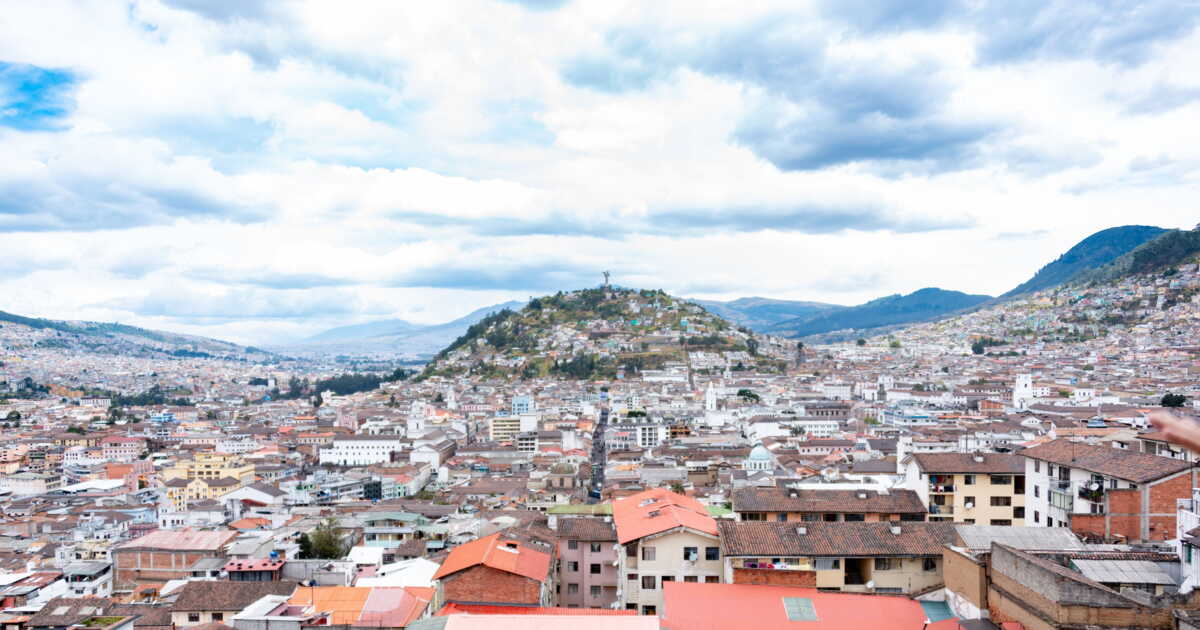
Perched capital at 2,850 m above sea level, Quito embodies the cultural and geographic entry point to a trip in Ecuador, positioning the city as an authentic immersion between colonial architecture and Andean panoramas. Its historic center, a UNESCO World Heritage site, illustrates Iberian influence in the region through colorful buildings, the Independence Plaza and a layout shaped by the surrounding valleys.
To the north of Quito, the Middle of the World allows visitors to materialize the division of the hemispheres, often visited for its educational value. From Quito, excursions to the Cotopaxi National Park are easily organized, offering rare access to an active volcano in the Andean range. Not far away, the Limpiopungo Lagoon, with its Andean bird species and high-altitude reflections, provides a high-altitude pause with open landscapes, frequently integrated into Ecuador itineraries.
2. Discovering the Amazon: biodiversity and Indigenous cultures
The Amazon region stands as one of the highlights of an Ecuador trip, both for its biodiversity and for direct access to living ancestral traditions. In the Cuyabeno Reserve, eco-friendly lodges welcome travelers into a primary forest setting, where one can practice wildlife watching: howler monkeys, rare bird species, colorful amphibians, and sometimes even pink dolphins in flooded lagoons.
These places also allow an approach to the reality of indigenous communities, whose agricultural, medicinal, and craft practices reveal sustainable resource management. This Amazonian dimension, often complementary to an Ecuador circuit, enables a reading of the territory that is both scientific and human, fostering a nuanced understanding of the Ecuador on an environmental and social level.
3. The charm of the Pacific coast: beaches and marine life
On the Pacific coast, the Ecuador during the warm season reveals all of its marine and coastal wealth. The Montañita beaches, known for their changing colors with the light and for their constant waves, are a hotspot for extreme sports favored by surfers, but also a lively social space with a developed nightlife and a relaxed vibe. Further north, Puerto López serves as a strategic gateway for marine activities.
From this charming fishing village depart excursions toward the Isla de la Plata, nicknamed the “little Galápagos,” ideal for wildlife observation. During certain periods, notably from June to September, the coast becomes a privileged observatory for humpback whales that come to breed there.
4. Galápagos: nature and underwater curiosities
A trip to Ecuador often culminates in a stay on the Galápagos Islands, whose geographic isolation makes them an outstanding site for the natural sciences and responsible tourism. These volcanic islands, with San Cristóbal as one of the entry points, allow visitors to discover lava tunnels, deserted beaches with emerald-blue colors, and a world-famous fauna: giant tortoises, marine iguanas, sea lions, and blue-footed boobies.
If cruises offer comprehensive coverage of the archipelago, land stays organized at reasonable prices can include exploring several islands with naturalist guides, often led by biologists. The Galápagos illustrate the notion of balance between conservation and tourism, offering nature lovers a direct reading of evolutionary mechanisms.
5. Culture and handicrafts in Cuenca
Listed as a UNESCO World Heritage site, Cuenca, located over 2,500 m above sea level, is often cited as an essential experience when visiting Ecuador. The city captivates with its colonial architecture, its local markets, its museums, and a calm atmosphere conducive to strolling. Its cobbled lanes and the domes of its churches make it a cultural showcase of the Andean region.
Nearby, the Ingapirca site traces the legacy of the Inca in Ingapirca, with significant architectural remains in a place that sits between the invader and indigenous heritage. Farther north, the Otavalo market is a must-stop for discovering local crafts: alpaca wool, embroidery, and colorful weavings on the Plaza de los Ponchos, the city’s central hub.
Ecuador, though relatively small compared to its southern neighbors, offers a striking variety of activities and landscapes. From Andean summits to the depths of the Amazon, through the marvelous Galápagos Islands and the sunny beaches of the Pacific coast, every traveler can tailor a rich and varied itinerary. The cultural and natural diversity of this country ensures that every journey will be unique and enriching, stimulating both the mind and the senses.
When to visit Ecuador to fully experience its natural and cultural contrasts?
Choosing when to go to Ecuador depends closely on the regions you plan to visit, as this equatorial country features remarkable climatic diversity. In general, the best period for an Ecuador trip falls within the dry season, from June to September, especially for exploring the Andes mountain range or the Baños thermal town.
The Galápagos Islands, on the other hand, offer excellent underwater visibility between December and May, a period when the island colors shift with the currents. At altitude, notably in Cuenca, situated at 2,560 m, temperatures stay mild year-round, but rains can limit hiking.
What to do in Ecuador as a couple to blend adventure and intimate moments?
For a two-person stay, the Galápagos Islands offer exceptional moments, particularly on San Cristóbal, with its lava tunnels and its deserted beaches with emerald-blue colors. On the mainland, the hot springs of the city of Baños de Agua Santa promise wellness moments against the backdrop of the Pailón del Diablo, an impressive waterfall framed by tropical vegetation. For a more nature-filled escape, a two-person hike around the Quilotoa loop or in the Cotopaxi National Park offers memorable moments in the heart of the Andes.
What to do in Ecuador with family to combine cultural discoveries and gentle adventures?
A family trip to Ecuador allows you to build an itinerary accessible to all ages, blending cultural immersion with close contact with nature. In Quito, visiting the old town classified by UNESCO and the Independence Plaza provides an ideal introduction to the country’s history. In the Middle of the World, in the north of Quito, children can test their balance on the equatorial line and explore astronomy according to Andean cosmovisions.
Further north, the Otavalo market and its Plaza de los Ponchos allow encounters with local crafts, notably alpaca wool. For younger visitors, the bird species of the Cuyabeno Reserve or boat trips on the Amazonian rivers bring a playful dimension to wildlife watching. Finally, the tranquil beaches of a charming fishing village on the coast or the thermal waters of Baños are ideal places for family rest periods.
What to do in Ecuador in the evening to prolong the cultural and sensory experience?
In Ecuador, the evenings offer a different atmosphere depending on whether you’re in the old town of Quito, high up in Cuenca, or along the Pacific coast. In Quito, the nighttime ambience centers around the La Mariscal district, with its cafés, museums and local concerts.
In the city of Baños, the thermal pools are accessible in the evening, in a peaceful setting conducive to relaxation after a day of hiking. In Montañita, the beaches come to life at dusk with open-air music scenes and a lively atmosphere, ideal for travelers seeking gentle celebrations.
For a more tranquil outing, the Andean towns like Cuenca let visitors savor local specialties on terraces, often at reasonable prices, and chat with locals. Whether for a family meal or a romantic stroll in illuminated places, Ecuadorian evenings extend the richness of the travel in Ecuador into a warm, culturally rich continuum.
Is visiting Ecuador dangerous? A safe country if you stay informed
Questioning whether visiting Ecuador is dangerous is reasonable, but it should be nuanced. The country welcomes thousands of travelers each year without incident, especially in tourist areas such as Quito, Cuenca, the Galápagos Islands, or the Baños town.
As with any region in Latin America, a reasonable level of vigilance is advisable, particularly in some city neighborhoods or after dark. It is recommended to avoid isolated areas after sunset and to use official or guided transportation.
Turning to a private driver for long distances, or to identified taxi drivers, is often recommended. Prices are typically transparent, with rates posted in advance in most tourism services. Ecuador remains, in terms of safety, a genuine immersion where risks can be minimized with proper preparation.
The landscapes of Ecuador: between cordilleras, forests and shores
The richness of ECUADORIAN landscapes is one of the first reasons to travel in this country with its exceptional topography. In a few hours of road travel, you can go from the eternal snows of the Andean Cordillera to the tropical plains of the Oriente, passing iconic sites such as the Limpiopungo lagoon or the Quilotoa loop, famed for its spectacular views.
To the east, the Cuyabeno Reserve offers immersion into the Amazonian biodiversity, with wildlife watching, pink dolphins and rare bird species. On the coast, the Montañita beaches enchant with their vivid colors, while the Galápagos Islands unveil a mosaic of preserved ecosystems, where one can grasp the link between the color of the island and the adaptation of species.
This article was written with the help of artificial intelligence, then corrected, complemented and validated by the editors of the newsroom.