Summary
-
1. Discover the Borobudur Temple
-
2. Explore the Prambanan Temple
-
3. Stroll through Yogyakarta
-
4. Hike Mount Bromo
-
5. Behold Kawah Ijen
-
6. Stay on the Dieng Plateau on Java
-
7. Enjoy the Tumpak Sewu waterfalls
-
8. Visit Solo (Surakarta)
-
9. Discover Bandung
-
Savor Javanese cuisine
-
How long does it take to visit Java?
-
What to do in Java in 5 days?
-
How to go from Java to Bali?
-
Visiting Java with family, what to do?
Nestled in the heart of Indonesia, Java is a vibrant island that blends tradition and modernity. It is a popular destination for travelers seeking history, adventure, and a sense of novelty.
1. Discover the Borobudur Temple
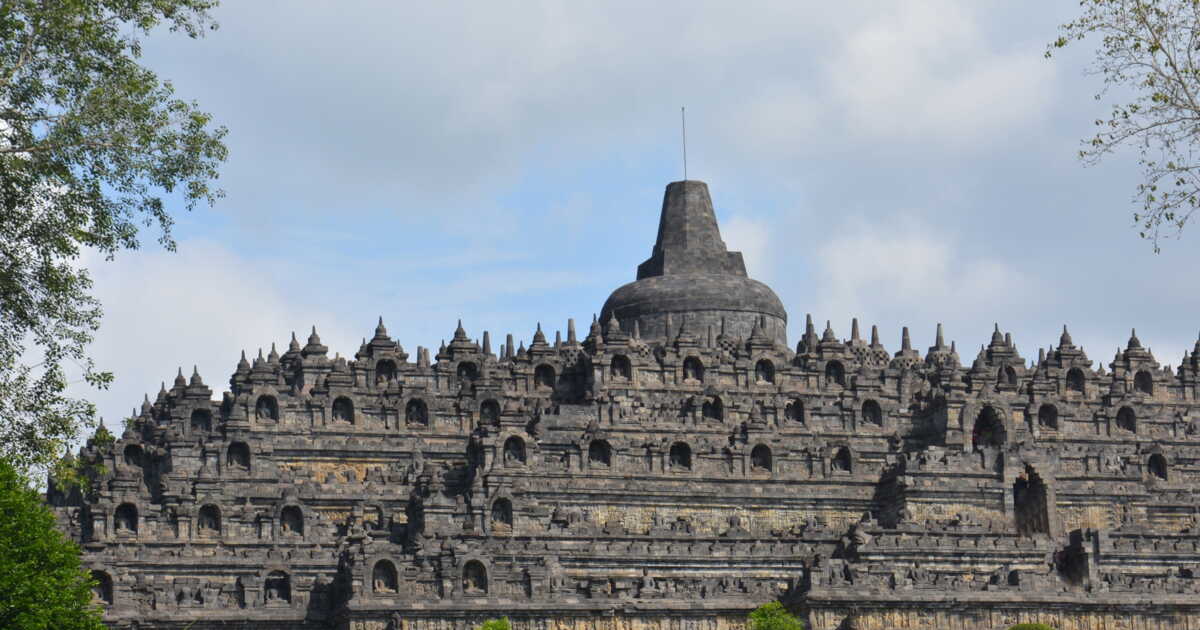
The Borobudur Temple, located on the Island of Java, stands as one of the most emblematic Buddhist heritage sites in Indonesia. Classified as a World Heritage Site, this monument is a perfect starting point for a stay on Java. The sunrise over the stupas, during the dry season, offers a rare moment of quiet contemplation.
The spiral ascent to the summit allows visitors to behold a series of bas-reliefs recounting the life of the Buddha, revealing the architectural ingenuity of the era. For a traveler in search of culture, this visit is essential on Java, combining spirituality, scenery and deep historical significance.
2. Explore the Prambanan Temple
The Prambanan Temple, another jewel of the Island of Java, illustrates the influence of Hinduism within the region. This 9th-century complex, a World Heritage site, perfectly complements the visit to the Borobudur Temple, offering a double reading of the religious influences on the island. Notable cultural activities at the site include classical dance performances that bring to life the stories carved in stone.
It is advisable to arrange this visit with a guide, allowing for a better understanding of architectural and mythological details. The journey between Borobudur and Prambanan can be organized in a day, but requires good time management. Prambanan is a key piece of Java’s cultural puzzle, revealing the tensions and harmonies between the island’s various spiritualities.
3. Stroll through Yogyakarta
Yogyakarta stands as the cultural capital of the Island of Java, blending living heritage, traditional urban planning, and a thriving artistic scene. A stroll through its streets means diving into immersion in Javanese culture, with playful market activities, street food, batik workshops, and historical museums. The Sultan’s Palace and the Taman Sari complex are major landmarks, and the surrounding neighborhoods provide a glimpse into the old urban planning that shaped the city.
The bustling markets and the historic lanes of the old town extend this authentic urban experience. Easily accessible by train, Yogyakarta is an ideal starting point to reach the major sites of Java, while enjoying a human-scale urban atmosphere.
4. Hike Mount Bromo
Mount Bromo, in the eastern part of the Island of Java, remains a flagship stop for travelers seeking spectacular landscapes and outdoor activities. A nighttime ascent is a common practice to reach a vantage point at sunrise. From the ridge, the view of the sea of sand and Mount Semeru, Java’s highest peak, creates a breathtaking panorama.
Local guides provide effective supervision during this hike, which can be chilly depending on the season. The journey to Bromo often takes several hours from Malang or Yogyakarta, but the experience justifies the effort. For a traveler seeking to combine nature, physical activity, and visible seismic activity, this excursion stands as a reference.
5. Awe at Kawah Ijen
Kawah Ijen, located to the east of Mount Bromo, is famous for its rare phenomenon: blue flames produced by sulfurous gas. A nighttime ascent is necessary to observe this natural spectacle before dawn. Once at the summit, a viewpoint overlooks a turquoise acidic lake at the heart of the crater, an impressive testament to the volcanic activity in the region.
Beyond the natural aspect, meeting sulfur miners who work under extreme conditions provides a strong human perspective. Kawah Ijen is among Java’s must-see experiences, blending geological discovery, visual emotion, and social awareness.
6. Stay on the Dieng Plateau on Java
The Dieng volcanic complex, perched at 2,000 meters above sea level on the Dieng Plateau, offers a striking contrast to the wetter zones of the Island of Java. This region, marked by its cool climate and rugged topography, provides a palette of varied activities: colorful lakes, fumaroles, and ancient Hindu temples.
Time spent here is synonymous with rest, gentle hikes, and landscape observation. From the city of Yogyakarta, it is possible to arrange a trip to this remote area. For travelers wishing to get away from the crowds, Dieng represents a perfect spot, often absent from standard itineraries but rich in interesting cultural activities and natural wonders.
7. Enjoy the Tumpak Sewu waterfalls
The Tumpak Sewu Falls, located near Malang, illustrate the diversity of Java’s national parks and natural areas. Access to this site often requires a long journey, followed by a steep descent into the gorge, but the arrival spectacle justifies the effort. The water bursts forth in multiple curtains along the rock faces, creating a lush natural amphitheater.
The rugged terrain demands sturdy footwear, constant caution, and sometimes the assistance of a local guide. For those combining urban sightseeing with nature, Tumpak Sewu offers a strong contrast to volcanic landscapes or the colorful villages of Malang. This site deserves its place among the must-see spots for nature enthusiasts.
8. Visit Solo (Surakarta)
The city of Solo (Surakarta) stands out as a discreet yet valuable alternative to Yogyakarta for exploring the culture of the Island of Java. Less crowded, it allows for in-depth discovery of local historic centers, with traditional markets, royal palaces, and batik workshops.
The city is also involved in several social initiatives, such as slum upgrading and the enhancement of historic districts. Solo makes an excellent base for travelers wishing to avoid the crowds, benefit from local specialist guides, and immerse themselves in a living cultural fabric.
9. Discover Bandung
Around Bandung, the itinerary offers exploration between geology, lush landscapes, and rural culture. Located in western Java, this city is a practical starting point for various cultural sites and national parks, along routes connecting well-served towns. The exploration often combines stops at tea plantations, volcanic areas, and hot springs — an ideal opportunity to combine engaging cultural activities with natural discovery.
Bandung, despite its urban character, provides quick access to the mountains, with a mild climate suitable for gentle hikes during the dry season. It thus fits into a broader travel logic, coherent for those wishing to traverse Java in a thematic and progressive manner.
10. Savor Javanese Cuisine
Javanese cuisine is an essential component of the local experience. In cities such as Yogyakarta, Malang, or Solo, markets are often opportunities to sample a multitude of traditional dishes: nasi goreng, satay, fried tempeh, and sticky rice desserts. Traditional markets are hubs of life, commerce, and transmission, where a local guide can be invaluable in explaining recipes, ingredients, and their symbolism.
For many travelers, gastronomy becomes a through-line, linking Malang’s villages to Bandung’s streets or the rice terraces of the Dieng Plateau. Eating in these places is also a form of immersion in culture, discovering eating habits and the culinary ingenuity of Java’s inhabitants.
In conclusion, Java is a versatile island that will captivate travelers seeking adventure, culture, or rest. The opportunities for exploration are endless, whether you are traversing volcanoes, meditating in ancient temples, or simply wandering the lively streets of its iconic cities.
How long does it take to visit Java?
To discover the many facets of the island of Java, a stay of 10 days is most common. This duration allows combining visits to major cultural sites, such as the Borobudur temples, with exploring iconic cities such as Yogyakarta, known as Java’s cultural capital. Nature lovers can also plan trips to spectacular sites like the Tumpak Sewu waterfall or the region’s active volcanoes.
With less than a week, internal travel can be challenging, limiting immersion in the Javanese culture. For a balanced trip between heritage and nature, two weeks allow for an in-depth visit, from the island’s center to the far east at Kawah Ijen with its blue flames, or to peaceful villages in the west.
What to do in Java in 5 days?
In 5 days on the Isle of Java, the ideal is to concentrate your visit on one emblematic region. Yogyakarta makes for a perfect base: this vibrant city is rich in historical treasures, including the sultan’s palace and the Taman Sari site. Nearby, the Borobudur temples, World Heritage-listed, offer a fascinating plunge into Java’s Buddhist past.
To complete this cultural route, a side trip to the hills of Prambanan or the slopes of the Merapi Volcano, reachable in under an hour, allows you to discover the diversity of Javanese landscapes.
Towards the end of the trip, a excursion to Mount Bromo can be considered to experience the unique sunrise over a volcanic landscape, before catching a return flight. This itinerary, dense yet doable, offers an initial glimpse into the diversity of Java in Indonesia.
How to go from Java to Bali?
Reaching Bali from Java is a frequent step in an itinerary across Southeast Asia. Several options are available depending on your starting point on the Island of Java. The most common method is to take a ferry from Banyuwangi, at the eastern tip, after a possible visit to Kawah Ijen, famous for its blue flames. This voyage links Java to Gilimanuk on Bali’s western coast. Domestic flights are also possible from the cities of Yogyakarta, Surabaya, or Jakarta.
This crossing between two major islands allows for varying atmospheres: after exploring the cradle of Javanese civilization with its temples, volcanoes, and inland landscapes, Bali offers a more coastal and spiritual continuation. The Mount Bromo volcano, located in the eastern part of the island, can also be included for a spectacular pause between Java and Bali, reinforcing the itinerant and comprehensive nature of the circuit.
Visiting Java with family, what to do?
Family travel on the Island of Java offers a good balance between education, gentle adventure, and wonder. A visit to Yogyakarta, a lively and accessible hub, lets children discover Javanese history through landmarks such as the sultan’s palace, the Taman Sari complex, and shadow theater performances.
Approximately an hour by road, the Borobudur Temple, a grand Buddhist World Heritage monument, impresses with its scale and finely carved bas-reliefs. For families who love nature, the Tumpak Sewu waterfalls offer a striking spectacle in a preserved environment.
More adventurous souls may consider spending a night around the volcano Mount Bromo or the Kawah Ijen, provided children are properly supervised. These experiences, though more intense, leave a lasting imprint on young travelers. Visiting Java with family amounts to combining cultural discovery with gentle thrills, in an environment where hospitality and diversity prevail.
This article was written with the help of artificial intelligence, then revised, expanded, and validated by the editors of the newsroom.