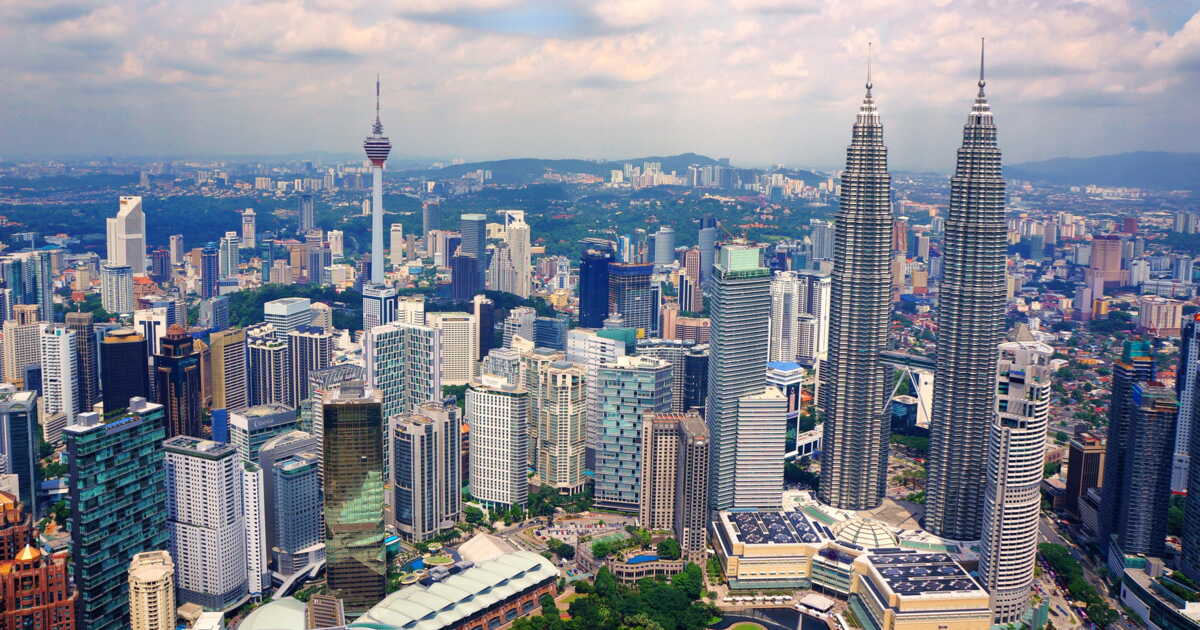
Kuala Lumpur, the vibrant capital of Malaysia, is a city that never sleeps, a place where culture meets modernity and where the old coexists harmoniously with the future. If you’re wondering what to do in Kuala Lumpur, this article aims to explore the many facets of this dynamic city to offer a variety of activities suitable for all types of travelers, whether traveling solo, with family, or with friends.
1. Explore the Petronas Towers and the KLCC Park
No stay in Kuala Lumpur would be complete without a visit to the Petronas Towers, which over the years have become the city’s undisputed symbols. Dominating the skyline at a height of 452 meters, these iconic twin towers offer from their observation deck a panoramic view of the Malaysian capital’s urban fabric.
Located at their base, the KLCC Park provides a natural counterpoint to the vertical surroundings, with its tree-lined avenues, rest areas, and musical fountains that punctuate the day. To avoid crowds, advance ticket booking is strongly advised, especially during peak tourist seasons. Together, the Petronas Towers and the KLCC Park illustrate Kuala Lumpur’s ability to combine architectural modernity with accessible relaxation spaces, offering visitors a balanced experience between urban contemplation and a nature break in the heart of the city.
2. Discover Batu Caves
About fifteen kilometers north of Kuala Lumpur, the Batu Caves form a major site that blends Hindu religious heritage with geological interest, attracting thousands of visitors and pilgrims each year. This complex of limestone caves, whose origins go back millions of years, houses one of the most important Hindu shrines outside India, dedicated to the god Murugan.
The 272 colorful steps leading to the main cave provide a physical and visual experience, punctuated by monumental statues, monkeys roaming freely, and spectacular rock formations. Easily accessible by public transport or taxi from the city center, Batu Caves stand out as a must-visit to better understand Malaysia’s spiritual diversity and to discover a place where the natural dimension strengthens the symbolic power of the site.
3. Visit Central Market and Chinatown
The Chinatown district in Kuala Lumpur is a flagship convergence of popular culture, local cuisine, and lively commerce, offering an immersive glimpse into one of the city’s most vibrant facets. The street-food stalls, presenting a wide range of traditional Chinese and Malaysian dishes, contribute to a striking olfactory and visual atmosphere, especially in the evening.
Nearby, the Central Market—an old covered market refurbished—presents itself as a must-visit for purchasing handicraft souvenirs, handmade items, and representative works of local craftsmanship.
This district, cherished by both visitors and locals, invites bargaining, a common and culturally accepted practice, while enabling a direct discovery of the social and economic dynamics of the historic center. Chinatown and the Central Market thus offer a complete urban experience, combining cultural diversity, artistic expression, and daily life in an accessible and dense environment.
4. Stroll through Bukit Bintang and Jalan Alor
The Bukit Bintang district stands out as one of Kuala Lumpur’s nerve centers for shopping, food, and nightlife, dense with modern shopping malls, international restaurants, specialized cafés, and trendy bars. Renowned for its accessibility and constant energy, it serves as a prime waypoint for travelers seeking a dynamic urban experience.
Just a short walk away, Jalan Alor completes this lively atmosphere by offering a comprehensive panorama of Malaysian street food, where one can savor, in an informal setting, a variety of signature dishes such as satay, stir-fried noodles, exotic fruits, and traditional desserts. This area represents a successful synthesis of commercial modernity and culinary tradition, making Bukit Bintang an essential stop for anyone looking to understand the multifaceted urban lifestyle of Kuala Lumpur.
5. Admire the arts at the Malaysian Islamic Arts Museum
The Malaysian Islamic Arts Museum, located in the heart of Kuala Lumpur, stands as a major reference for Islamic artistic heritage in Southeast Asia. Housing over 10,000 pieces, its permanent collection spans a broad spectrum, from religious architecture to ancient manuscripts, including jewelry, ceramics, textiles, and everyday objects, each illustrating the diversity and richness of artistic expressions within the Muslim world.
Displayed in thematic galleries with meticulous museography, these works help deepen understanding of cultural exchanges, regional influences, and the stylistic evolutions that marked Islamic history in Asia. Complementing the visit, the museum offers a peaceful cafe, appreciated for its bright setting and views of the surrounding gardens, providing a welcome moment of rest after exploration. Accessible, well-documented, and pedagogically organized, the Malaysian Islamic Arts Museum stands out as a key place to broaden one’s understanding of Islamic cultures in a high-quality museum context.
6. Relax at Perdana Botanical Gardens
The Perdana Botanical Gardens, located near Kuala Lumpur’s administrative heart, offer a structured green space conducive to outdoor relaxation, leisurely walking, and observing local biodiversity. Arranged around varied botanical themes, this expansive park includes landscaped gardens, decorative ponds, and shaded pathways ideal for a stroll.
Among its main attractions, the Kuala Lumpur Bird Park, integrated within the park, allows the observation of hundreds of exotic bird species roaming freely in a controlled environment. Suited for families, nature enthusiasts, or anyone seeking a green pause in the urban setting, this site stands as a successful example of integrating nature into the metropolitan fabric. The Perdana Botanical Gardens embody Kuala Lumpur’s commitment to environmental preservation and to providing high-quality spaces accessible to all audiences.
7. Step into Brickfields, Kuala Lumpur’s Little India
The district of Brickfields, also known as Little India, stands as one of Kuala Lumpur’s most striking cultural hubs, offering an immersive glimpse into the Indian world as it is expressed in Malaysia. This lively area features specialty spice shops, traditional textiles, artisan jewelry, and devotional articles, along with numerous richly decorated Hindu temples, which bear testimony to the neighborhood’s spiritual and community vitality.
A true commercial and cultural crossroads, Brickfields is especially well-suited to gastronomic discovery, particularly through its Indian restaurants offering authentic, spice-rich cuisine. Easily accessible from the city center, this district embodies Kuala Lumpur’s ethnic and religious diversity, offering visitors a living portrait of Malaysia’s cultural pluralism in a friendly, well-structured, and historically rooted environment.
8. Admire the Thean Hou Temple
The Thean Hou Temple, one of the largest Chinese temples in Southeast Asia, stands out for its elevated setting, offering a panoramic view of Kuala Lumpur and its surroundings. Dedicated to the goddess Mazu, protector of sailors, this place of worship blends traditional Chinese architecture, Taoist symbolism, Buddhist and Confucian elements, and a remarkable decorative richness, notably through its multi-tiered roofs, dragon sculptures, and colorful lanterns.
Beyond its spiritual function, the temple regularly hosts religious ceremonies, cultural festivities, and visitors seeking moments of contemplation or observation. Easily accessible, the Thean Hou Temple is a meaningful stop to understand Chinese religious practices in Malaysia and to appreciate a place where cultural heritage, urban panorama, and architectural serenity come together in a harmonious setting.
9. Visit the Masjid Jamek Sultan Abdul Samad
Situated at the confluence of the Klang and Gombak rivers, the Jamek Mosque is one of Kuala Lumpur’s oldest mosques, a major testimony to the city’s religious and urban history. Built in a Mughal-influenced style blending Indo-Saracenic and colonial elements, it is distinguished by its onion-shaped domes, tall minarets, and finely crafted arcades, forming a remarkable architectural ensemble that contrasts with the surrounding landscape.
Beyond its spiritual function, the mosque offers a tangible entry point to understanding Malaysia’s religious diversity and its multicultural heritage. Open to the public outside prayer times, it makes for a rewarding stop for any visitor aiming to grasp the historical and cultural dynamics shaping Kuala Lumpur’s city center, where traditions and modernity coexist in a structured balance.
10. Discover Aquaria KLCC
Located in the heart of downtown, Aquaria KLCC is a premier educational and family-friendly attraction in Kuala Lumpur, especially for rainy days. This modern aquarium houses more than 5,000 marine and freshwater specimens, spread across carefully recreated environments, offering an immersive experience through glass tunnels that allow close-up observation of sharks, rays, and other emblematic species.
Designed as a tool for raising awareness about aquatic biodiversity, Aquaria KLCC combines educational entertainment with accessibility, right in the KLCC complex. Extending the visit beyond the aquariums, Kuala Lumpur reveals itself through its contrasts—multicultural heritage, contemporary architecture, and lively historic districts. Each urban zone, from the colonial district to modern night markets, provides a unique lens on the country, reinforcing Kuala Lumpur’s image as a complete urban destination, both educational and engaging for every type of traveler.
How many days to visit Kuala Lumpur? Adjust your stay according to your priorities
Asking how many days to visit Kuala Lumpur comes down to defining the pace of the experience you seek. Two to three days are enough to cover the essentials: the Petronas Towers, Batu Caves, the colonial quarter, and Jalan Alor’s markets. But a four- to five-day stay allows for deeper exploration with excursions to Putrajaya or urban parks like Perdana Botanical Gardens.
The city, dense yet well-structured, lends itself to quick discoveries while offering a rich cultural tapestry that deserves a slower pace for those who wish to go beyond the tourist icons. Kuala Lumpur is a multifaceted capital, and its discovery can be tailored to the time available without losing meaning.
What to do in Kuala Lumpur at night? Discovering the city’s nocturnal dimension between gastronomy and urban panoramas
Kuala Lumpur by night reveals a vibrant face, blending architectural modernity with culinary traditions. Food courts such as Jalan Alor or Lot 10 Hutong become major attractors where you can sample Malay, Chinese, and Indian specialties. For an overall view of the illuminated city, skybars located in Bukit Bintang hotels or near the Petronas Towers offer an immersive experience.
Night markets, for their part, allow you to observe local life up close, between crafts and street food. Kuala Lumpur never truly sleeps: its nightlife unfolds through peaceful strolls, gastronomic discoveries, or unforgettable urban panoramas.
What to do in Kuala Lumpur with kids? A city well-suited for family exploration
Exploring Kuala Lumpur with children proves simple and rewarding thanks to a varied offering specially designed for families. The KLCC Park, at the foot of the Petronas Towers, features a large playground and interactive pools. The Petrosains Science Museum, located in the same complex, offers playful and educational exhibits.
The Aquaria KLCC aquarium or the Negara Zoo add a natural dimension to the visit. Outside the city center, the KL Bird Park, located within Perdana Lake Gardens, provides immersion in a semi‑open space, ideal for younger visitors. With a warm but steady climate and accessible logistics, the Malaysian capital is perfectly suited for a family trip, combining gentle learning with the pleasure of discovery.
This article was written with the help of artificial intelligence, then corrected, expanded, and validated by the editorial staff.