Summary
-
1. Discovering Nouakchott and Its Beach
-
2. Exploration of the Ancient Caravan Cities
-
3. Immersion in Banc d’Arguin National Park
-
4. The Unique Experience of the Desert Train from Zouérat to Nouadhibou
-
5. Hikes and Desert Excursions
-
6. Encounter with Local Culture
-
7. Terjit Oasis: A Must-Stop in the Mauritanian Desert
-
8. Practical Tips and Safety
-
Is it Safe to Travel in Mauritania Right Now? Understanding Safety Before Planning Your Trip
-
What is the Best Time to Visit Mauritania? Understanding the Climate to Better Choose Your Departure
-
What to Do in Atar, Mauritania? Discovering the Cultural and Saharan Heart of the Adrar
Located in West Africa, bordered by the Atlantic Ocean to the west and embraced by the vast Sahara, Mauritania is a land of contrasts and cultural riches.
Before any international travel, we remind you to consult the travel advice from the Ministry of Foreign Affairs to understand the security and health risks specific to certain areas and the administrative steps to take beforehand.
1. Discovering Nouakchott and Its Beach
Nouakchott, the capital of the country, often serves as the main entry point into Mauritania for many travelers. The camel market offers a glimpse of a traditional trade still very much alive. The Saudi mosque, meanwhile, highlights the importance of religious architecture in this regional city.
As evening falls, the atmosphere at the fishing harbor—with its iodine scent and sailors’ songs—composes a singular spectacle against the backdrop of sunset. A land of contrasts, Nouakchott blends administrative modernity with Saharan legacies, while remaining a strategic hub for organizing travel deeper into the country.
2. Exploration of the Ancient Caravan Cities
The ancient Adrar towns, such as Chinguetti and Ouadane, as well as the towns of Tichitt (in Tagant) and Oualata (in the East), constitute major stops on the country’s caravanist history. Each ruined city, from the Tagant to the Adrar desert, bears urban forms adapted to winds and sands, with its narrow lanes, traditional houses, and conservation efforts led by institutions like the French Development Agency.
. Exploring the ruins of these cities means tracing the footsteps of trans-Saharan caravans and desert scholars, in constant partnership with a local guide familiar with the nuances of these sometimes sensitive lands.
3. Immersion in Banc d’Arguin National Park
The Banc d’Arguin National Park, located on the Atlantic coast between Nouakchott and Nouadhibou, is an internationally renowned nature reserve, inscribed on the world heritage list for its biodiversity. Between the sea grass beds and the sands, this site hosts a remarkable fauna, notably the pink flamingo, visible during certain migratory periods.
By joining the Imraguen fishermen at the village of Iwik, visitors can observe their traditional fishing technique performed with the help of dolphins. Respect for marine ecosystems, organized pirogue trips, and the warm reception from the locals make it an educational and contemplative experience. The area remains protected, but guidance from a local guide is strongly recommended due to distance and road conditions.
4. The Desert Train Experience from Zouérat to Nouadhibou
Boarding the Desert Train, linking Zouérat to Nouadhibou, offers a singular experience at the heart of Mauritania’s mineral landscape. Stretching over many kilometers, this train primarily carries iron ore, but also welcomes adventurous travelers who settle in open goods wagons or, more rarely, in a passenger wagon.
The crossing of the Adrar desert, with its
5. Hikes and Desert Excursions
Hikes and excursions into the Tagant regions and the Adrar enable visitors to grasp the Saharan nature in its most authentic form. On foot, in a 4×4, or on a camel’s back, routes lead to iconic sites such as the Erg Amatlich, the White Valley, or the outskirts of the Guelb er-Richat, the enigmatic Eye of Africa with a diameter of over 40 km.
Spending a night under the stars in a traditional bivouac, sharing mint tea around a fire, or climbing a dune at sunset are among the most memorable moments. These excursions require the companionship of a local guide and precise logistics, particularly regarding road conditions and water supplies. They are suited to travelers seeking space, silence, and an understanding of the desert’s most structuring aspects for nomadic peoples.
6. Encounter with Local Culture
The discovery of Mauritanian culture often begins with taking part in a tea ceremony, a central moment of hospitality across all regions of Mauritania. Served slowly, in three pours, this mint tea reflects values of respect, sharing, and listening inherent to local traditions.
In the markets, the scents of coriander, fresh date, or tanned leather also tell another facet of this land. Enjoying a méchoui or a couscous in a traditional house allows for an authentic meeting with the locals, far beyond classic itineraries. Curious travelers can learn the language, observe artisans at work, or discuss the traces of the French explorer Theodore Monod, a respected figure in Sahara exploration.
7. The Terjit Oasis: A Key Stop in the Mauritanian Desert
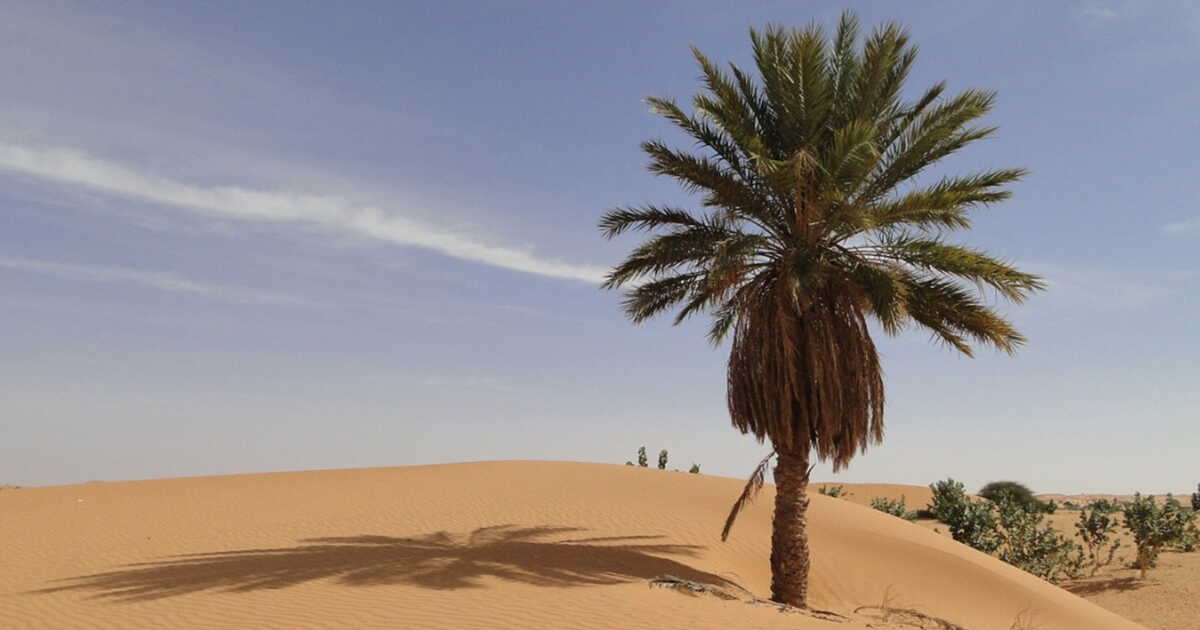
The Terjit Oasis stands out as one of the most appreciated spots in the Adrar, thanks to its hot spring, dense palm trees, and a narrow canyon that contrasts with the surrounding aridity. Located not far from Atar, this oasis represents a strategic resting place after traversing the Adrar desert, often punctuated by visits to ruined towns leading to ancient ksour.
Its natural freshness and the shade offered by the rock walls make it a major stop for any traveler seeking a haven in the Tagant or Adrar regions. The site lends itself to a cultural as well as natural pause, revealing a unique spectacle created by water in a mineral environment.
8. Practical Advice and Safety
To plan a trip to Mauritania, several practical tips should be followed. A valid passport, a biometric visa (often on entry to Mauritania), and information on health recommendations are essential, with yellow fever vaccination being strongly advised and sometimes mandatory depending on your country of origin.
In the remote regions, infrastructure is limited, and medical costs can be high: a first-aid kit and good protection against mosquito bites are essential. The state of the roads varies greatly by area, so hiring a local guide is recommended, especially to reach the ruined towns, the historic ksour, or the desert zones. Finally, it is advisable to consult updates from diplomatic authorities and check border access through Senegal or the Nouakchott airport.
Mauritania opens up to travelers seeking authentic and enriching experiences. Whether you are drawn to its desert landscapes, its ancient cities, or its culture, each stage of your journey promises discoveries. With practical and safety aspects well prepared, your stay in Mauritania can be both an adventure and a plunge into enduring traditions.
Is It Safe to Travel to Mauritania Right Now? Understanding Safety Before Planning Your Trip
Traveling to Mauritania requires careful preparation, particularly due to the diversity of the country’s regions, the condition of the roads, and the large distances between towns. While some areas remain not recommended, tourist circuits around the Adrar, Chinguetti, Atar in the Adrar, or the Amogjar Pass are undertaken with the support of a local guide, a crucial safeguard for moving confidently in this desert environment. Travelers should have a valid passport, a biometric visa, and consider yellow fever, mosquito bites, and potential medical costs.
In authorized zones, notably around the Adrar Desert, the country remains generally accessible, especially for those who strictly follow safety rules and take into account local specifics, such as entry through the Senegal border or access to remote regions of the Tagant.
What is the Best Time to Visit Mauritania? A Climate to Understand for Better Planning
The best period to discover Mauritania spans from October to March, when temperatures in the Adrar Desert become milder, making it feasible to traverse dunes, rocky plateaus, and sandy banks in good conditions. This season offers remarkable light over the Erg Amatlich, the White Valley, or the Guelb er-Richat, sometimes called the Eye of Africa, a circular structure nearly 50 km in diameter. Bivouac evenings under the beautiful starry sky are especially suited for stargazing in the Sahara.
Travelers also find a great time to walk along Nouakchott’s broad beach, explore the marine meadows of the village of Iwik, or watch the pink flamingo at the Diawling National Park, near the southern border. This dry season enhances road travel and makes exploration smoother across all regions of Mauritania.
What to Do in Atar, Mauritania? Discovering the Cultural and Saharan Heart of the Adrar
The town of Atar, a true crossroads of the Saharan road trip, sits in the heart of the Adrar and serves as a central gateway to the ancient ksour of Chinguetti and Ouadane, the surrounding plateaus and mineral landscapes. Known for its heritage, its traditional houses, and its lively market, Atar is also the ideal base to reach the Amogjar Pass, the ruins of old villages, and routes leading to the infinite dunes of the region.
Visitors appreciate the contact with locals, the tasting of mint tea, and exchanges about the adventures of the famous French explorer Theodore Monod, a key figure in Sahara exploration. Atar thus remains an essential regional town for understanding life in a desert environment and structuring an itinerary toward Chinguetti, Ouadane, or the Terjit Oasis.
This article was written with the help of artificial intelligence and then revised, expanded, and validated by the editors.