Summary
-
1. Discovery of the Bund
-
2. Exploring Yu Garden
-
3. Ascending the Oriental Pearl Tower
-
4. A Visit to the Shanghai Museum
-
5. Strolling through the French Concession
-
How long does it take to visit Shanghai? Grasping a megacity in flux
-
What to do in Shanghai with kids? A city suited to family discoveries
-
What to do in Shanghai at night? Exploring a city that keeps reinventing itself after sunset
-
What to do in Shanghai when it rains? A metropolis designed for indoor exploration
With nearly 28 million inhabitants, Shanghai is China’s largest city. As the country’s economic powerhouse, this city like no other blends past, present, and future in harmony. Its historical and cultural reach, a fusion of East and West, makes it a vibrant, cosmopolitan metropolis. Far from being reduced to its numerous skyscrapers—though they are architectural feats in their own right—Shanghai continually delights visitors from around the world, especially history and architecture enthusiasts.
1. Discovery of the Bund
The Bund stretches along the Huangpu River and, at a glance, showcases Shanghai’s architectural contrasts. Opposite a row of European-style buildings dating from the colonial era, some historic structures recall former banking or consular functions, while the Pudong skyline rises with towers such as the Shanghai Tower and the Shanghai World Financial Center.
This striking opposition presents a city with a double face, rooted in its past while being propelled toward the future. A stroll along the Bund becomes an ideal spot to observe, photograph, or simply contemplate the most iconic urban vantage points of modern China.
At night, the place transforms into an illuminated balcony, enjoyed by locals and visitors alike, who come to capture the visual energy of a metropolis in constant flux. As part of a Shanghai stay, this must-visit location helps illuminate the dialogue between history and modernization that shapes China’s urban identity.
2. Exploration of Yu Garden
Nestled in the heart of the old town, Yu Garden stands out as a perfect spot to discover the aesthetics of classical Chinese gardens. In this enclosed space, carved wooden pavilions, koi-filled ponds, winding paths, and rockeries form a harmonious ensemble conducive to a peaceful stroll. The garden sits beside the famous Huxinting Teahouse, renowned for centuries.
Just steps away, the neighboring shopping lanes extend the experience in a livelier register, with fashion boutiques, street-food stands, and traditional souvenirs. On a Shanghai stay, this visit offers an immersion into another era, starkly contrasted with the modern fêtes or ultramodern districts like Pudong. Yu Garden, by its distinctive shape and its ties to Ming dynasty traditions, reveals another facet of the city, between contemplation and daily life.
3. Ascending the Oriental Pearl Tower
The Oriental Pearl Tower embodies Shanghai’s push toward the future in architecture. With its stacked spheres and distinctive silhouette, it rises to 468 meters above ground, offering spectacular panoramic platforms over the whole city—from Pudong to the Bund, including the historic buildings and shopping avenues like Nanjing Road. The ascent to its summit reveals the bold lines of the skyscrapers, while underscoring the verticality and density of the modern city.
For photography enthusiasts, it’s a paradise for observation, especially at sunset. The visit integrates naturally into a Shanghai itinerary, offering a compact view of urban expansion and the logic behind Chinese urban planning. Visible from numerous vantage points, the tower is not only a symbol but also a constant visual landmark that draws thousands of visitors each day, camera in hand.
4. Visit to the Shanghai Museum
Located on People’s Square, near Xintiandi and Nanjing Road, the Shanghai Museum stands as a crucial reference for understanding Chinese arts across the centuries. Its architecture, inspired by an ancient ritual vessel, houses galleries dedicated to bronzes, ceramics, paintings, calligraphy, and major imperial art works.
This visit lets you trace time from the earliest dynasties to contemporary schools, offering a structured reading of the country’s aesthetic and spiritual evolution. For residents and visitors alike, the museum is an ideal spot on a rainy day or a calm afternoon devoted to culture.
It effectively complements outdoor explorations of the city, such as the imposing statues at People’s Square or the surrounding colonial-era buildings. This venue proves essential in any Shanghai stay aiming to connect tangible heritage with collective memory.
5. Strolling through the French Concession
The former French Concession of Shanghai, of which Xintiandi is a neighborhood and which stretches to the west of the Bund, offers a gentle contrast to the Bund’s vertical districts and the bustle of Xintiandi. Framed by century-old trees, the area hosts numerous historic buildings, Art Deco villas, and city structures repurposed into galleries or cafés.
This must-visit place, steeped in a quaint charm, draws history, design, and photography enthusiasts. Shanghai residents practice tai chi at dawn, spend their afternoons in cafés, and frequent independent fashion boutiques and art galleries tucked away in discreet courtyards.
For travelers seeking a calm, ideal spot away from the clamor of large fêtes and towering skyscrapers, this pedestrian district remains a structuring reference in a Shanghai stay balanced between modernity and memory. It offers a precious pause in exploring the city’s vertical cities and infrastructures such as the high-speed train or the Maglev toward Pudong International Airport.
How long does it take to visit Shanghai? Grasping a megacity in flux
Asking about the time needed to explore Shanghai requires measuring its urban density, its historical heritage, and its contemporary dynamism. A stay of three to five days allows you to apprehend the city’s major contrasts: from the old town and its Taoist temples to the futuristic skyscrapers of Pudong, including the French Concession or the Shanghai Museum.
For a first immersion, three well-structured days are enough to connect historical landmarks with the main cultural hubs, while including a pause on the Bund or in the Yu Garden. A deeper exploration will require more time, but even a brief stay in Shanghai offers a striking glimpse of a rapidly transforming urban China.
What to do in Shanghai with children? A city suited to family discoveries
Traveling to Shanghai with children can be especially stimulating. The cultural and recreational offerings are wide and often tailored for a family audience. Among the must-sees, Shanghai Disneyland stands out as a major destination, combining international attractions with Chinese aesthetic touches.
In the city, the Shanghai Aquarium, the Science and Technology Museum, and walks in urban parks such as Century Park offer playful and educational experiences. Transportation is safe and efficient, making family travel easy. The city thus blends urban density with a focus on family-friendly options, in a structured, secure setting rich in activities.
What to do in Shanghai at night? Exploring a city that keeps reinventing itself after sunset
When night falls, Shanghai reveals a unique luminous aesthetic. The Bund lights up facing the towers of Pudong, in a dramatic architectural dialogue. Cruises on the Huangpu River offer a striking nighttime perspective. Culture lovers can attend a Chinese opera or a contemporary acrobatic show.
On the gastronomy side, night markets like Shouning Road provide local culinary immersion. In the former industrial quarters redeveloped as creative hubs, cafés and galleries stay open late, embodying the cultural vitality of a city that keeps evolving.
What to do in Shanghai at night thus comes down to choosing between contemplation, performance, and urban exploration.
What to do in Shanghai when it rains? A metropolis designed for indoor exploration
Rainy days do not hinder the discovery of Shanghai. A dense, well-equipped, and culturally vibrant city, it offers a multitude of sheltered options. The Shanghai Museum, located on People’s Square, presents an exceptional collection of ancient objects, calligraphy, and bronzes. Shopping centers like IAPM or K11 blend contemporary art, design, and gastronomy in climate-controlled spaces.
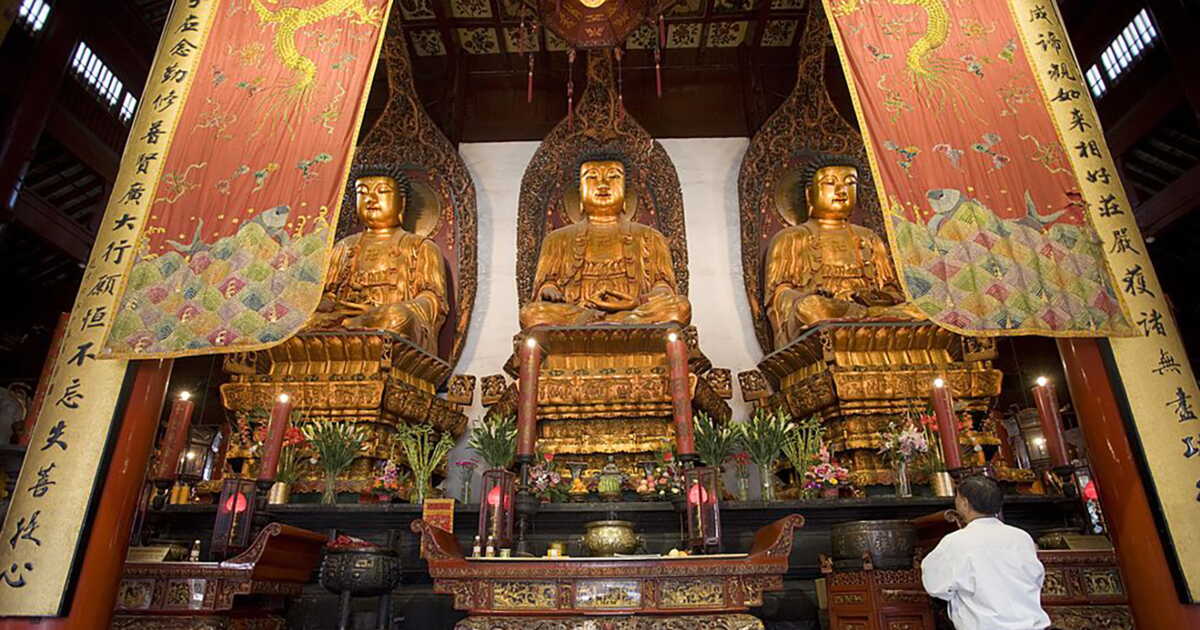
Buddhist temples, such as the Jade Buddha Temple, provide a spiritual indoor immersion. Finally, traditional teahouses or bookstore cafés invite a pause. Exploring Shanghai in the rain means slowing down and opening up to its more introspective dimension.
This article was drafted with the help of artificial intelligence, then revised, expanded, and validated by the editorial staff.