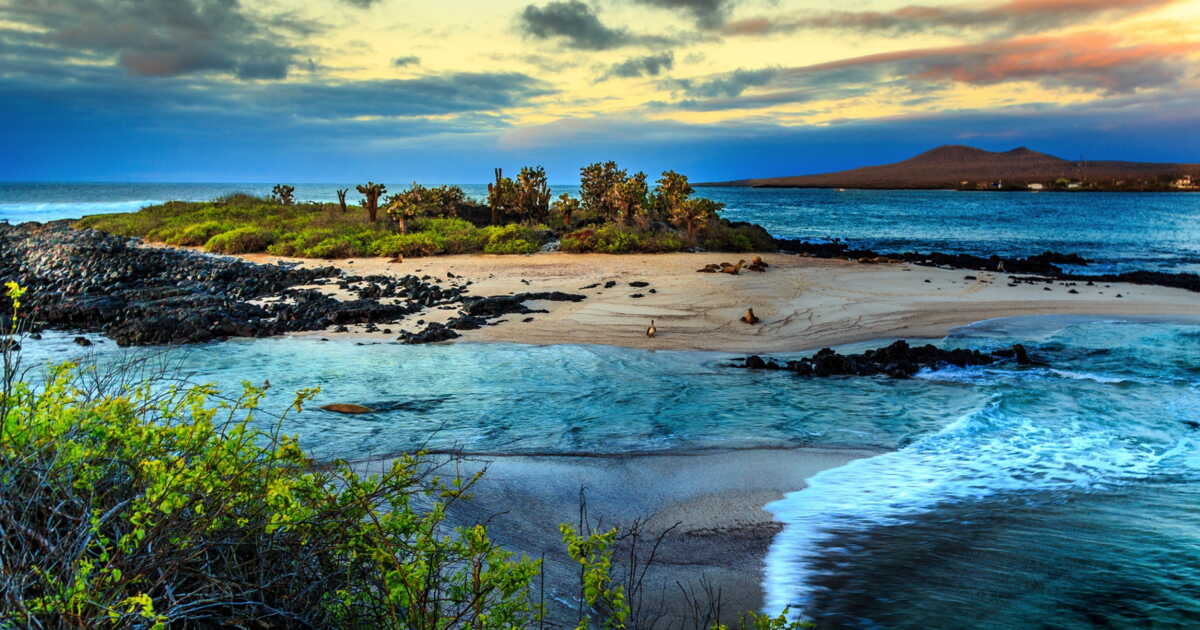
In the Pacific Ocean off the coast of Ecuador, the Galápagos Islands stand as a true paradise. The richness of their fauna and flora, the turquoise waters, and the variety of landscapes provide compelling reasons to visit the archipelago.
1. Exploring Santa Cruz: An Essential Starting Point
Exploring Santa Cruz constitutes the indispensable starting point for any stay in the Galápagos, as this island concentrates the main infrastructures and a significant portion of the archipelago’s biodiversity. Accessible via the Baltra Airport, with connections from Quito airports through various airlines, it facilitates arrival in the Galápagos for travelers seeking adventure or scientific discovery. In Puerto Ayora, a variety of options await, whether you’re traveling on a small budget or prioritizing comfort. Not far from the urban center, the Charles Darwin Research Station is devoted to protecting the giant tortoises, an impressive endemic animal observable also in the humid, green Highlands. This island is also ideal as a starting point for a Galápagos cruise or for excursions to other islands like Isabela or Floreana, making each day in the Galápagos rich with discoveries.
2. Hiking Tortuga Bay on Santa Cruz
Hiking to Tortuga Bay on Santa Cruz is an essential experience for those seeking to combine discovering Ecuador, landscape immersion, and wildlife watching. The footpath from Puerto Ayora makes this excursion easy, even on a Galápagos trip on a small budget. Lined with mangroves and featuring a white-sand beach, the bay hosts marine iguanas, shorebirds, and sometimes sea lions, in a peaceful atmosphere. The clear waters of the Galápagos are conducive to snorkeling, and while there isn’t much in terms of on-site services, the pristine ambience strengthens the sense of being somewhere nowhere, in nature, just a few kilometers from the equatorial coast. Tortuga Bay perfectly illustrates the link between land animals, conservation, and coastal beauty.
3. Discovering the Volcanic Landscapes of Sierra Negra on Isabela Island
Discovering Sierra Negra’s volcanic landscapes on Isabela Island lets you gauge the geological force that shaped the Galápagos Archipelago. Climbing this active volcano, renowned for hosting one of the world’s largest craters, offers a unique panorama of volcanic rocks and frozen lava flows. This hike ranks among the best options for geology enthusiasts or trekkers, while also allowing the observation of Darwin’s finches, another endemic animal of the archipelago. Down below, the Wall of Tears, a vestige of an old penal colony, adds a historical dimension to the day. The Isabela Island, reachable by ferry or Galápagos cruise, is a must in any list of Galápagos days, especially for those who want to move away from mass tourism.
4. Diving or Snorkeling at Kicker Rock (Leon Dormido)
Diving or snorkeling at Kicker Rock (Leon Dormido), off San Cristóbal, offers a direct immersion into one of the planet’s richest marine ecosystems. This iconic rock formation, a true refuge for marine life, draws divers for frequent sightings of hammerhead sharks, manta rays, and turtles. The crystal-clear waters of this site enhance visibility and make the experience especially rich. Even while snorkeling, you can encounter a multitude of tropical fish and approach Galápagos penguins. Kicker Rock is regularly included in day tours or in certain Galápagos cruises, departing from San Cristóbal, making the experience accessible to travelers mindful of preserving their budget.
5. Visit to Post Office Barrel on Floreana
The Post Office Barrel visit on Floreana Island combines historical heritage and immersion in the unique world of the Galápagos Archipelago. Established in the 18th century by sailors, this mail barrel still serves today as an informal exchange of letters among travelers. This quirky use anchors the site in a human-scale discovery of Ecuador. Nearby, Cormorant Point offers the chance to observe pink flamingos in a brackish lagoon, while the clear waters of the Galápagos invite snorkeling in a relatively uncrowded natural environment. Floreana, reachable by boat from Santa Cruz, remains less visited, which ensures a degree of remoteness from mass tourism and close contact with land and marine animals, within easy reach.
6. Meeting the Blue-Footed Boobies at Isla Lobos
Near San Cristóbal, it is possible to observe blue-footed boobies, one of the most emblematic birds of the Galápagos in their natural habitat.
The marked trails traverse a semi-arid landscape where sea lions and marine iguanas also roam, offering a condensed snapshot of biodiversity in just a few kilometers.
This birding excursion, often paired with snorkeling in crystal-clear waters, allows observers to witness the spectacular courtship rituals of the blue-footed boobies, an impressive endemic animal both for its colors and behaviors. Isla Lobos is an accessible stop during a Galápagos cruise or as a day trip, and ranks among the favorites for wildlife lovers.
7. Relaxation in Puerto Villamil (Isabela)
Relaxing in Puerto Villamil, on Isabela Island, provides a welcome break after days of hiking or intensive exploration. This tranquil village, far less visited than Puerto Ayora, embodies another facet of a Galápagos stay, more local and less packaged. The pale-sand beaches are long, the waves gentle, and the waters welcoming for swimming. Concha de Perla, reachable on foot from the town center, is an excellent snorkeling site in a protected bay. Ideal for travelers on a Galápagos budget, Puerto Villamil offers a peaceful setting away from mass tourism, while maintaining access to the best wildlife experiences, including Galápagos penguins, turtles, and sea lions.
8. Española Excursion to Observe Albatrosses
Exploring Española to observe the Galápagos albatrosses stands out as an exceptional naturalist excursion. Accessible only by boat as part of Galápagos cruises, Española Island hosts a large population of albatrosses, visible from April to December. Punta Suárez concentrates a remarkable density of seabirds, including the famous blue-footed boobies, as well as marine iguanas with distinctive pigmentation. This island also offers dramatic landscapes, with windswept cliffs and endemic vegetation. Including Española in your Galápagos trip means an immersion in the rare endemic animal, far from mass tourism, in an almost pristine space located several kilometers from the continental coasts.
9. Exploration des cratères jumeaux sur Santa Cruz
The exploration of Santa Cruz’s twin craters, located in the Highlands, reveals another facet of Santa Cruz Island, marked by lava tunnels, humid forests, and rich endemic vegetation. These massive volcanic collapses, accessible via a moderate hike, offer a striking glimpse into the geological formation of the Galápagos Archipelago. The trails around the craters are also conducive to observing Darwin’s finches and other land animals in their native ecosystem. For environmentally conscious travelers or those exploring Ecuador from a scientific perspective, this stop complements a Galápagos stay meaningfully, without requiring special equipment or high expenditures.
10. Aquatic Safari in the Tortuga Bay
Going on an aquatic safari in Tortuga Bay offers a unique and gentle way to discover the Galápagos’ marine life. By kayak or pirogue, you’re likely to spot rays, turtles, and the elusive Galápagos penguins, swimming in the crystal-clear shallow waters. This non-motorized approach provides a respectful relationship with the environment and suits travelers looking to avoid mass tourism. Easily accessible from Puerto Ayora, this activity sits among the best options for spending a few days in the Galápagos autonomously, even on a small budget. It fully exemplifies the idea of a measured and mindful immersion in one of the planet’s most iconic natural sanctuaries.
11. Explore Las Grietas
Exploring Las Grietas ranks high on any must-see places list for a Galápagos stay. Located on Santa Cruz Island, just minutes from Puerto Ayora, this geological fault system filled with crystal-clear waters attracts visitors seeking swimming, snorkeling, or contemplation. Bordered by volcanic rocks, these natural crevasses offer an immersion in a rare mineral landscape, where it is sometimes possible to observe land or marine animals between two walls. This site perfectly illustrates the exploration of Ecuador from a geological and natural angle. Easily accessible on foot and often included in day excursions, Las Grietas is a favorite for travelers, whether on a Galápagos cruise or in a Galápagos on a budget format, combining accessibility and wonder.
In conclusion, the Galápagos Islands are a treasure trove of diverse activities, ranging from the simplest hikes to the richest underwater explorations. To fully discover the wealth of this archipelago, solid planning is essential. Respect for local rules and the unique ecosystem remains paramount to preserve the splendor of these fascinating islands.
How can I get around the Galápagos?
Getting around the Galápagos Archipelago requires careful planning, as the distances between islands, environmental constraints, and protection rules limit improvisation. Access to the main islands such as Santa Cruz, San Cristóbal, or the Isabela Island is by sea or air, with strict checks at the Baltra Airport or at the CGREG desk at the airport. Between the islands, local ferries allow cheap travel, though journeys can be long and subject to sea conditions. To explore the uninhabited islands, the Galápagos cruise remains the most structured option, enabling close observations of the Galápagos penguins, blue-footed boobies, or the red crabs of the Galápagos in their natural habitat. This solution avoids mass tourism while maximizing encounters with terrestrial and marine animals. Those opting for a Galápagos trip on a budget can combine inter-island boat travel with day trips from a fixed starting point such as Puerto Ayora. Whatever the choice, managing days in the Galápagos and respecting the ecosystems are essential for a respectful and enriching experience.
What is the Best Time to Visit the Galápagos Islands?
The best time for a Galápagos stay depends on both the weather and the animal behaviors you wish to observe. From December to May, the warm season brings milder conditions, crystal-clear waters ideal for diving, and easier viewing of the giant tortoises during nesting. The clear waters of the Galápagos are perfect for diving with sea lions and Galápagos penguins. From June to November, cooler currents bring in many marine species and plankton, making this period excellent for marine wildlife enthusiasts. Far from being merely a climate note, choosing when to arrive in the Galápagos profoundly influences the types of experiences and endemic animals you’ll see, from the blue-footed booby to the Darwin’s finch. It is therefore wise to structure your trip around your naturalist priorities, keeping in mind that the Galápagos Archipelago, located a few kilometers from Ecuador’s coast, remains accessible year-round, but never in the same form.
Which Islands Should You Prioritize for Exploring the Galápagos?
Knowing which islands to visit in the Galápagos is a central decision in planning a Galápagos trip. Each island of the Galápagos Archipelago has its own ecosystem and houses impressive endemic animals. Santa Cruz, easily accessible from the Baltra airport, makes a great base with its giant tortoises at the Darwin center and its white-sand beaches. San Cristóbal, the administrative seat of the archipelago, is the best starting point to visit Leon Dormido, the iconic rock formation ideal for diving. The Isabela Island, the largest, delights with its lava tunnels, the Los Túneles, its volcanic rocks, and the hike of the Wall of Tears, offering a glimpse of the island’s penal history. These three islands concentrate the essential emblematic wildlife: sea lions, penguins, red crabs, and rare terrestrial animals. For a structured list of the best options, it is advisable to combine these islands according to the duration of the stay, naturalist preferences, and the best Galápagos cruise options or guided excursions.
How to Get There to the Galápagos Islands from mainland Ecuador?
Understanding how to reach the Galápagos Islands starts with an arrival in Ecuador, typically at one of the Quito or Guayaquil airports. From there, several airlines offer direct flights to the Baltra airports (near Santa Cruz) or to San Cristóbal, depending on the chosen departure island. Before boarding, a baggage check is conducted to prevent the introduction of exogenous species, an essential precaution for protecting the endemic animals of the Galápagos Archipelago. The flight lasts about two hours, and once on site, entry fees and a visit to the CGREG desk are to be planned. These procedures frame the arrival in the Galápagos within a conservation framework, where mass tourism is managed. This starting point then conditions itinerary possibilities, whether you opt for a Galápagos trip on a budget, a structured cruise, or days in the Galápagos with fixed lodging. Logistics remain straightforward as long as you follow official guidelines and book your tickets well in advance.
This article was written with the help of artificial intelligence, then corrected, expanded, and validated by the editorial staff’s journalists.