Behind this seemingly simple question lies an important distinction among the different types of bodies of water and the criteria used to compare them. Depending on whether one considers borders, the origin of the lake, or its total surface area, the ranking can indeed yield some surprises.
What are the criteria for determining the size of metropolitan France’s lakes?
Lakes classifications for the largest bodies of water in France vary. While most sites are common to these retrospectives, they do not always rely on the same criteria. These criteria primarily hinge on surface area and water volume, which can lead to estimates of depth and underwater configuration. It is also important to clearly distinguish the categories involved, such as natural versus artificial lakes, freshwater versus saltwater lakes.
Another peculiarity concerns territorial distribution. Some lakes are shared by several countries. Border or cross-border locations must be taken into account. Others are located entirely within France. Calculations can consider only the portion that lies on a given territory rather than the lake in its entirety. These criteria help explain the common confusion surrounding Lake Geneva (Lac Léman), Bourget, Hourtin-Carcans, and Serre-Ponçon.
What are the three largest natural lakes in France?
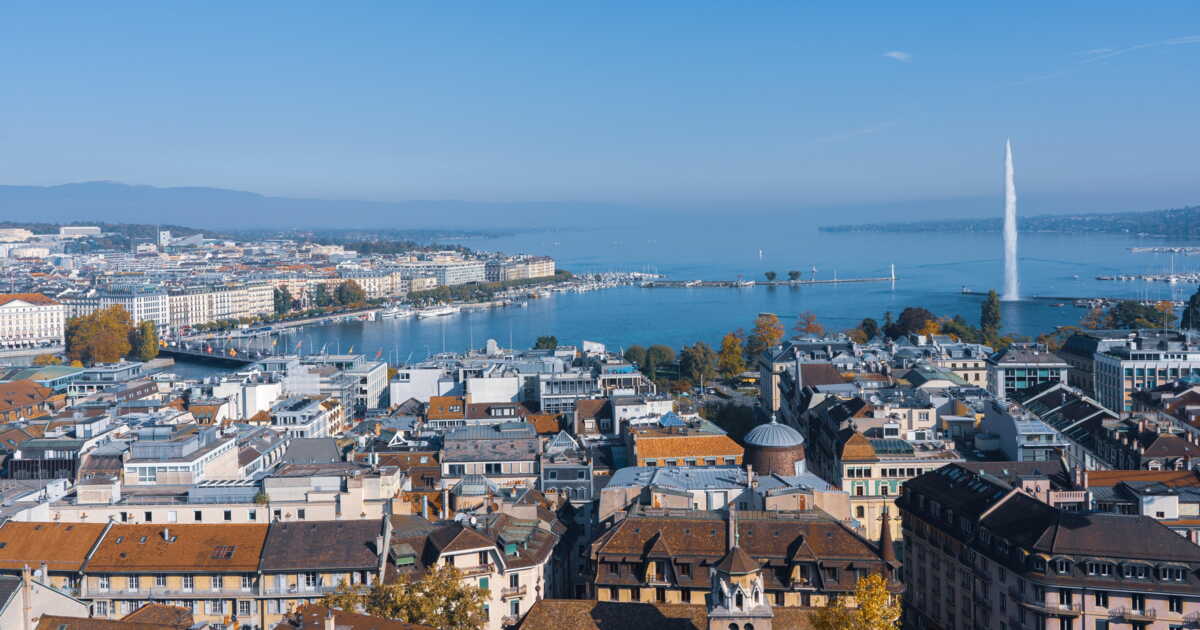
Lake Geneva, or Lac Léman, is regarded as the largest lake in the Hexagon. It spans 234 km² within French borders. That accounts for only about 40% of its total area. With Switzerland, its combined area is a little over 582 km². It offers a wide range of nautical activities, notably in the towns of Thonon-les-Bains, Yvoire, and Sciez.
Next comes Hourtin-Carcans Lake with about 56 km². Located in the Gironde department, it is also the largest freshwater lake in France. The commune of Carcans-Maubuisson hosts a nautical base, while Hourtin has a port. Still in the Nouvelle-Aquitaine region, one can mention Lac de Cazaux et de Sanguinet. Its area is 55 km².
What are the ten largest artificial lakes in France?
Among the largest lakes in France, one can also focus on artificial bodies of water. In the top 10 of the most extensive sites, still in metropolitan France, the following are found:
- Lake Der-Chantecoq with 48 km²;
- Lake Serre-Ponçon with 28 km²;
- Lake Sainte-Croix with 22 km²;
- Lake Vouglans with 17 km²;
- Lake Pareloup with 13 km²;
- Lake Bort-les-Orgues with 11 km²;
- Lake Vassivière with 10 km²;
- Lake Salagou with 7 km²;
- Lake Castillon and Lake Pannecière with 5 km².
What are the five largest lakes in Europe?
With a border-sharing arrangement among many countries, including Russia and Iran, the Caspian Sea is considered a lake for legal purposes. Covering 371,000 km², it is the largest lake in Europe and in the world. If we stay on the European continent, including its eastern part, other sites can be mentioned:
- Lake Ladoga in Russia with 16,400 km²;
- Lake Onega in Russia with 9,890 km²;
- Lake Kuybyshev in Russia with 6,450 km²;
- Lake Vänern in Sweden with 5,650 km².
In Western Europe, one also finds Lake Saimaa in Finland with 4,380 km² and Lake Vättern in Sweden with 1,900 km².
What are the five largest lakes in the world?
After the Caspian Sea and its 371,000 km², other large lakes can be found around the world. This ranking includes artificial and natural lakes, without regard to borders. It includes salty and freshwater bodies. Here are the four other largest lakes in the world:
- Lake Superior in North America (Canada and United States) with 82,100 km²;
- Lake Victoria in Africa (Kenya, Uganda, Tanzania) with 69,485 km²;
- Lake Huron in North America (Canada and United States) with 59,600 km²;
- Lake Michigan in North America (United States) with 57,750 km².
Thus, there is a clear dominance of the Great Lakes on the North American continent.