Is air travel still safe—or almost safe—to fly? On May 21, 2024, a Singapore Airlines flight from London to Singapore was battered by violent turbulence, resulting in one death and 79 serious injuries. This incident reminded everyone that a journey that had been peaceful can quickly turn into a catastrophe. With climate change, atmospheric phenomena capable of triggering these jolts could become more intense and frequent. Among them, a particular type of turbulence worries experts because it can surprise aircraft midflight, with no visible sign and undetectable by standard meteorological radars.
Powerful storms amplified by climate change
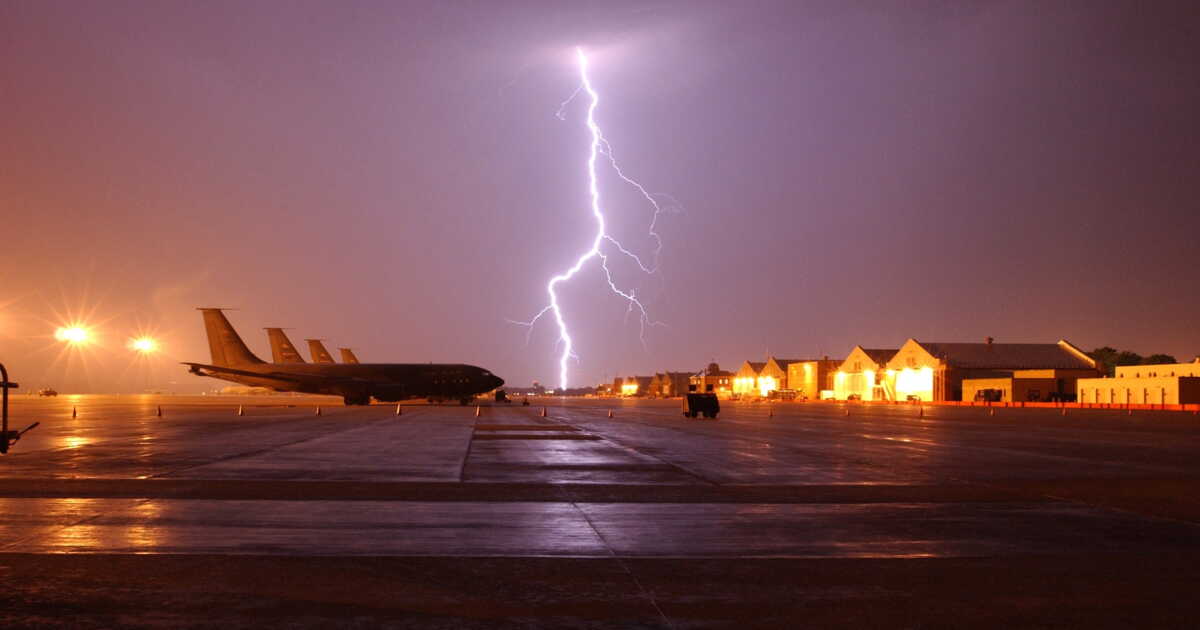
Turbulence already stands as the leading cause of injuries to passengers and crew in non-fatal aviation accidents, according to the International Air Transport Association (IATA). While some turbulence is linked to terrain, notably over the Andes and the Himalayas, others occur near thunderstorms. And climate change could make these storms more violent.
On May 21, 2024, Singapore Airlines flight SQ321 traversed a zone of strong turbulence above Myanmar, as storms were developing in the region. In a matter of seconds, unbuckled passengers were thrust against the cabin ceiling before falling back to the floor. The episode, which lasted a little over 21 seconds, resulted in one death and 79 serious injuries.
These jolts are mainly explained by vertical air movements inside cumulonimbus clouds, the thunderstorm clouds that can reach heights beyond 10,500 meters. The updrafts and downdrafts there are particularly strong. According to Richard Woodward, a former test pilot for the Royal Australian Air Force and a Qantas captain for 32 years, quoted by the Guardian, “there will be an increase in the intensity of thunderstorms and storms in general as the planet warms, because the energy feeding these phenomena will become considerably greater.”
The mechanism is well understood by scientists. “For every degree of warming, the atmosphere can hold about 7% more water vapor,” explains to the English press Todd Lane, a professor of atmospheric sciences at the University of Melbourne. Or, this humidity fuels storms, and the violence of storms is closely linked to the intensity of the turbulence they produce.
The consequences are already visible in some regions. In Australia, the Brisbane–Sydney corridor regularly ranks among the most turbulent routes in the country. In May 2024, a Qantas Boeing 737 encountered strong jolts near Brisbane after entering a thunderstorm at roughly 3,475 meters. Three crew members were injured.
Clear-air turbulence, a risk hard to anticipate
Storms are not the only source of concern. Clear-air turbulence (CAT), which often occurs at high altitudes, particularly near jet streams, poses an additional challenge for aviation. Unlike disturbances tied to thunderstorm clouds, CAT can occur in a sky that is completely clear and is not detectable in advance by standard onboard weather radars.
They are principally triggered by wind shear, i.e., rapid changes in wind speed or direction over short distances. Global warming could sharpen certain temperature contrasts between equatorial and polar regions, thereby altering jet-stream dynamics and promoting these turbulences.
A study conducted by researchers at Reading University in the United Kingdom, using atmospheric data collected from 1979 to 2020, showed a clear increase in these phenomena. Over that period, severe clear-air turbulence rose by 55%, versus 37% for moderate turbulence and 17% for light turbulence.
The projections are equally worrisome. Even in a scenario where global warming is limited to 1.5°C above pre-industrial levels, severe clear-air turbulence could rise by 27%. With a 2.75°C increase, this rise would reach 56%.
Nevertheless, experts do not view these changes as inevitable. Weather forecasts, real-time data relayed by other instruments, and evolving detection systems should enable airlines to anticipate risk zones more effectively. Since 2018, IATA has been collecting observations from thousands of aircraft to improve forecasts through artificial intelligence tools.
For passengers, one essential precaution remains: keep your seat belt fastened whenever you are seated, even when the seat belt sign is off. Airplanes are designed to withstand forces far greater than those encountered during normal flight. The immediate danger mainly concerns people who are hurled about the cabin during sudden jolts.