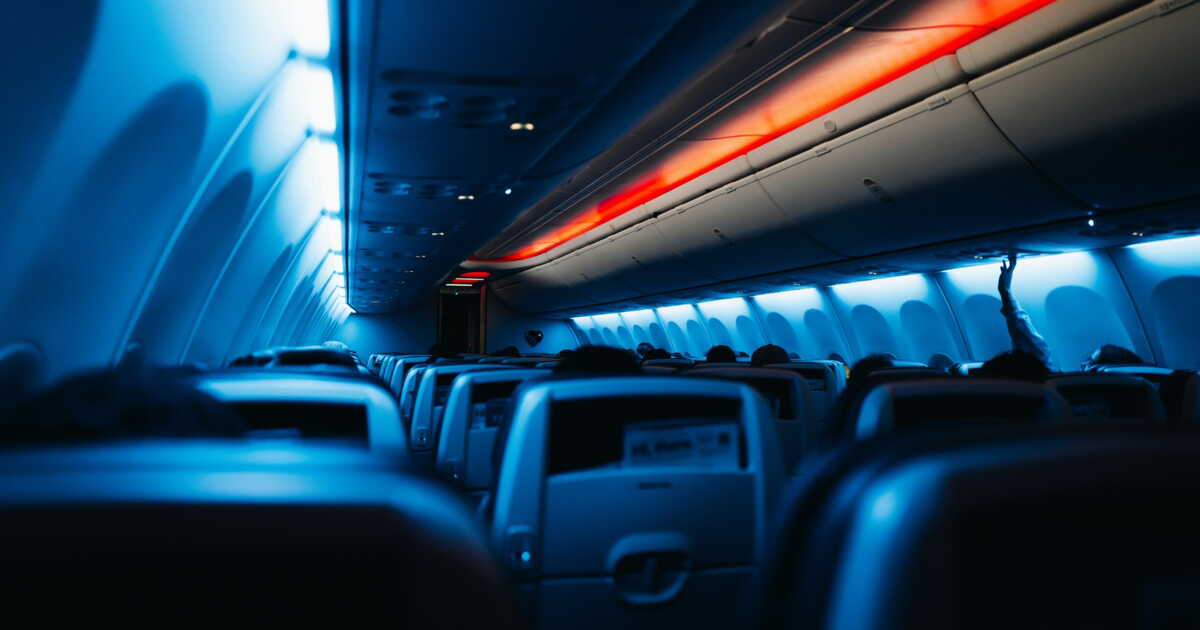
If you’ve ever flown — or you’ll be taking to the skies this summer for a vacation — you’ve probably noticed something remarkable: during takeoff and landing, the cabin lights are switched off. It’s not to create a zen ambiance in the cabin or to reassure passengers terrified by these stages of the flight. There is a real scientific reason behind it, explains Condé Nast Traveller India.
The subdued ambience in the airplane cabin during the flight’s key moments is a safety matter. “These are the most critical phases of a flight, and if evacuation is needed, our eyes must already be ready for the external lighting conditions, especially if it’s dark outside”, explains Anubha Jaiswal, a captain for IndiGo.
Our Eyes Need to Adapt to Changes in Brightness
You’ve guessed it, it’s for brightness reasons in case of an emergency that the lights are dimmed. Just as we wake up in the morning, our eyes need a few seconds, or even a few minutes, to adjust to the change in brightness. If the lights are already off in the aircraft and only the exit-sign lamps glow, the adaptation is quicker. And that precisely helps to see these emergency signals faster in case something goes wrong.
For the crew first, and for passengers in the event of an accident, this also helps to better see the external conditions. If something strange is taking place on the tarmac or in the air near the aircraft, it’s easier to spot it if no stray light is obstructing the view.
How Long Does It Take to Evacuate an Airplane in an Emergency?
In the United States as in Europe, aviation regulators have codified this obligation into their procedures for night takeoffs and landings. In reality, most airlines follow this protocol at any time of day or night. It’s worth noting that with an optimally estimated evacuation time of 90 seconds, you’d better not have to worry about adjusting your eyes to brightness.
Want to share your view on climate change in France? Join the Oeil du climat photo competition!