Our eyes will have been turned skyward for much of the summer. After the solar eclipse visible from parts of western Europe on August 12, the visitors and residents of Greece will have reason to rejoice on Friday, August 28. The Ministry of Culture is organizing, for the 27th consecutive year, several events during the full Moon. For the occasion, 126 monuments, architectural sites, and museums will be open from 7:30 p.m. to midnight across the country.
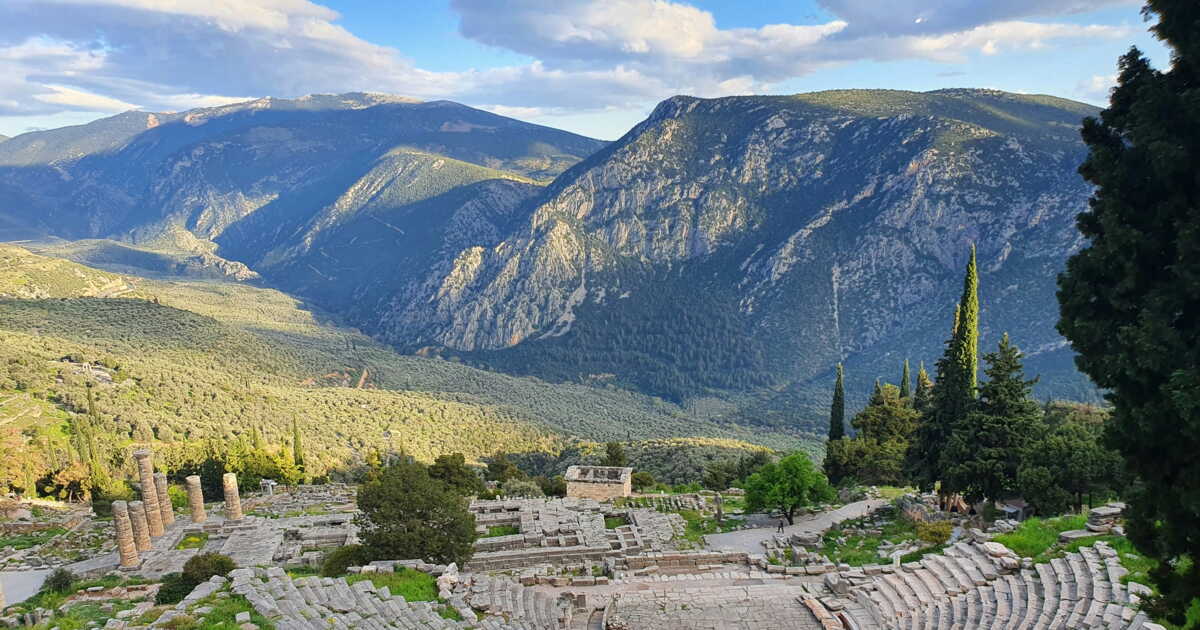
If you happen to be in Greece at that time, it’s the perfect opportunity to discover majestic places bathed in opal light. Some of the sites open at night are famous. For example, Delphi, a city on Mount Parnassus and a sanctuary where the oracle of Apollo once bellowed its predictions. A UNESCO World Heritage archaeological site. On August 28, entry there will be free from 7:30 p.m.
Discover Ancient Sites Under the Moonlight in Greece
Some of these Greek moonlit encounters will include guided tours with specialists. This will be the case in the ancient city of Olympia, in the Peloponnese, birthplace of the Olympic Games, or in the town of Mystras, near the ancient city of Sparta. In Athens, several sites are also involved, of course. The Acropolis Museum will stay open until midnight, free of charge. The night-guided tours are all already sold out.
Among the 126 sites open to the public under the full Moon this year, many are lesser-known as well. Euronews specifically mentions the Nekromanteion of the Acheron, a sanctuary dedicated to Hades and Persephone, rulers of the Underworld in Greek mythology, in Epirus. “This site was built around darkness and rites, so visiting it at night under the full Moon is a new experience — probably closer to what it was meant to look like at the origin,” says Yahya Dawood, interviewed by Euronews.
The Nekromanteion of the Acheron, the oldest oracle site in Greece, will also be open to the public on the night of August 28. Some locations in Crete are also expected to open their doors during these few hours of the full Moon. The full list of affected sites is available on the Culture Ministry’s website. Some will even extend the festivities on August 29 and 30, 2026.
August Nights Full of Treasures in the Sky
The August full Moon is commonly called the Sturgeon Moon. The Republic of the Pyrenees explains that this name comes from the Algonquin people, who link each full Moon to a seasonal natural phenomenon. Yet at the end of August, sturgeons are easier to catch than usual.
This full Moon will be all the more notable this year because it coincides with a partially visible lunar eclipse in Europe (notably in its southwest). On the morning of August 28, the Earth will pass between the Moon and the Sun, casting a shadow on its natural satellite – observable safely without glasses!
Want to share your view on climate change in France? Enter the Climate Eye photo contest!