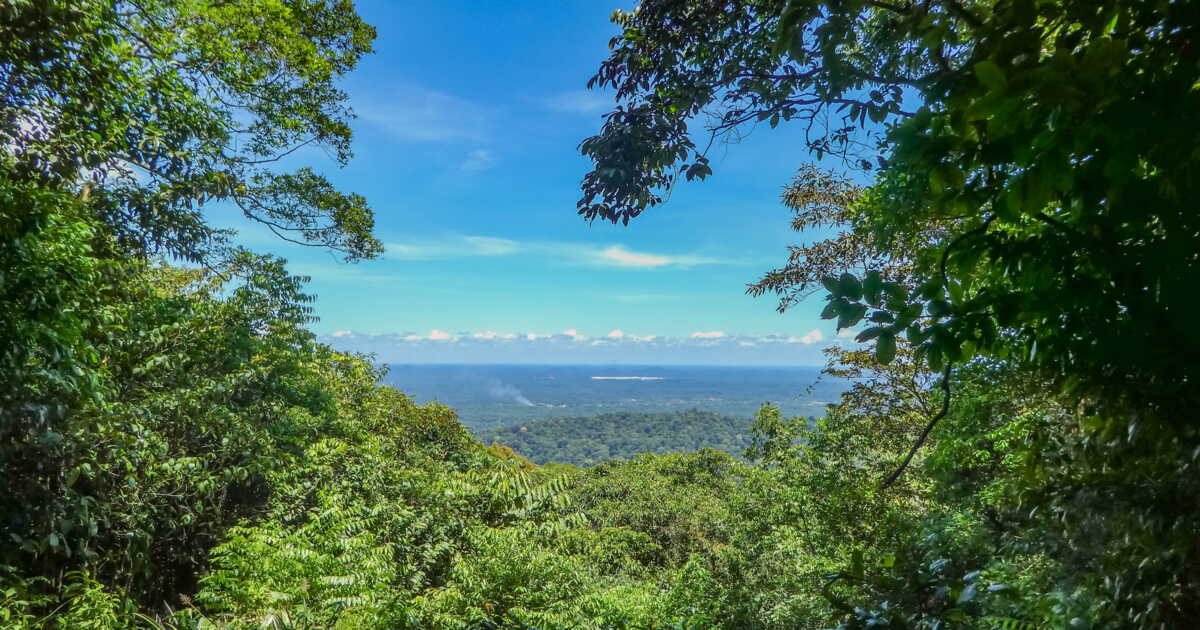
Suriname, a country in South America tucked between Brazil, Guyana, and French Guiana, captivates with its cultural and natural diversity. Its capital Paramaribo, UNESCO World Heritage-listed, and its tropical forests offer a unique backdrop for adventurers and curious travelers from all horizons. Whether drawn to its beaches, its rich history, or the promise of pristine nature, Suriname provides a variety of activities that deserve to be explored.
If you’re wondering what to do during your visit, here is a detailed guide to the must-see experiences. Before traveling abroad, we remind you to consult the Travel Advice from the Ministry of Foreign Affairs to learn about security and health risks specific to certain areas, and the administrative steps to complete before your trip.
1. Explore Paramaribo, the historic capital
Paramaribo serves as the perfect starting point for your adventure. Its wealth of historic landmarks and its culturally diverse ambience are truly engaging. Don’t miss the Saint Peter and Paul Cathedral-Basilica, a wooden construct completed at the close of the 19th century, as well as Fort Zeelandia, a stone relic from the colonial era. A stroll through the old town will lead you to places like the Neve Shalom Synagogue and the Keizerstraat Mosque, emblematic of religious coexistence.
2. Brownsberg Nature Park discovery
Just a few hours from Paramaribo, Brownsberg Nature Park is a popular destination for hiking enthusiasts. The park offers spectacular panoramic views of the Brokopondo reservoir and hides waterfalls perfect for a refreshing break. It is a meeting point for nature lovers, with exceptional biodiversity at every turn.
3. Boat excursions at Bigi Pan
The Bigi Pan Reserve is a fascinating aquatic ecosystem located in the northwest of the country. Known for its boat trips, it’s a paradise for birdwatchers. The stilt houses offer distinctive accommodations, enabling direct observation of rare bird species while enjoying unforgettable sunsets over the water.
4. Explore the colonial plantations along the Commewijne River
The plantations along the Commewijne River stand as living witnesses to Suriname’s colonial past. Guided tours of sites such as Mariënburg and Frederiksdorp immerse visitors in the country’s sugar-era history. A bicycle ride through this tranquil region, where dolphins and bucolic landscapes share the scene, reveals another facet of Suriname.
5. Beach and culture at Galibi
In the northeast of Suriname, Galibi is famed for its beaches and, above all, for the spectacle of sea turtles laying eggs on the sandy shore. It is also a unique opportunity to meet the Kali’na Amerindians and discover their ancestral culture. This cultural immersion adds a human and authentic dimension to your getaway.
6. Discovery of the ancient Jewish colony at Jodensavanne
Travel back in time to the ancient Jewish colony of Jodensavanne. Located along the banks of the Suriname River, it reveals the remains of a synagogue and a cemetery, recalling the role of Jews in the region’s history. It is a tranquil, history-filled site that deserves a thorough visit.
7. Fort Zeelandia & Fort Nieuw‑Amsterdam: between colonial heritage and immersion in history
Fort Zeelandia, situated in Paramaribo, is a former Dutch fort shaped like a pentagon, dating from the 17th century, which now houses the National Museum. Just downstream, on the right bank of the river, Fort Nieuw‑Amsterdam — built between 1734 and 1747 — stands as another strategic witness of colonization and now hosts an outdoor museum. When a traveler visits, they can take a boat taxi, discover the wooden or stone bastions, and then proceed to an old plantation, illustrating the transition from a military fort to sugarcane farming.
For history lovers and heritage enthusiasts alike, this itinerary offers a moment to pause and reflect on the past. Moreover, these sites are suitable for travelers in transit who are looking for a day trip near the capital. Note that in mid-August or during the dry season, the soft morning light enhances the fortress walls and surrounding vegetation. Be sure to check opening hours and arrange a local guide to enrich the visit.
In conclusion, Suriname stands out for its cultural and natural wealth, with activities that cater to every curiosity. Whether urban exploration in Paramaribo, outdoor adventures in its nature reserves, or immersion in local stories, every moment spent in this country is a discovery. Suriname offers a journey that blends exploration with authenticity, a destination sure to satisfy all desires for discovery.
Is Suriname a safe country?
Suriname today presents a generally good safety level for travelers, subject to the usual caution. Foreign authorities classify Suriname at the level “exercise normal precautions”, meaning risks exist but are not particularly high. However, in the capital Paramaribo and its surroundings, crimes such as pickpocketing or isolated assaults have been reported, especially in poorly lit areas or late at night.
Consequently, a passing tourist or a traveler eager to discover history would benefit from staying vigilant: entrust hinterland driving to local guides, avoid poorly lit zones, and refrain from displaying signs of wealth. But the country is not off-limits: the vast nature, the presence of Indigenous and Maroon communities, and the warm welcome remain. In short: yes, Suriname can be visited with confidence, provided you adopt a responsible and prepared approach.
Why go to Suriname?
Suriname stands out as a singular destination, halfway between tropical adventure and colonial heritage, offering travelers an experience that is both authentic and well-structured. On one hand, more than 90% of its territory is covered by rainforest — a rarity in South America. On the other hand, the capital Paramaribo, a UNESCO World Heritage site, and its Dutch forts like Fort Zeelandia or Fort Nieuw‑Amsterdam bear witness to a rich colonial past.
These contrasts create an ideal playground for day trips, whether by boat-taxi to an old plantation or a visit to a vibrant city that blends sugar cane, wooden architecture, and traditional ways of life. Suriname thus meets the expectations of history buffs and heritage lovers, as well as nature enthusiasts ready to immerse themselves in a nature reserve or to spot howler monkeys in the dry season. This mix of ecology, history, and cultural diversity makes it a country worth exploring.
Where is Suriname located?
Suriname lies on the northern coast of South America, bordered to the north by the Atlantic Ocean, to the west by Guyana, to the east by French Guiana, and to the south by Brazil. Covering roughly 163,820 km², it is the smallest country in South America by area and is very sparsely populated.
Most of the population lives along the coast or near the river, leaving the interior—deep in the Amazon rainforest—relatively under-urbanized. This location gives it both maritime and river access, making it an interesting starting point for excursions to the central Suriname’s nature reserves.
This article was drafted with the help of artificial intelligence, then corrected, expanded, and validated by the editorial staff.