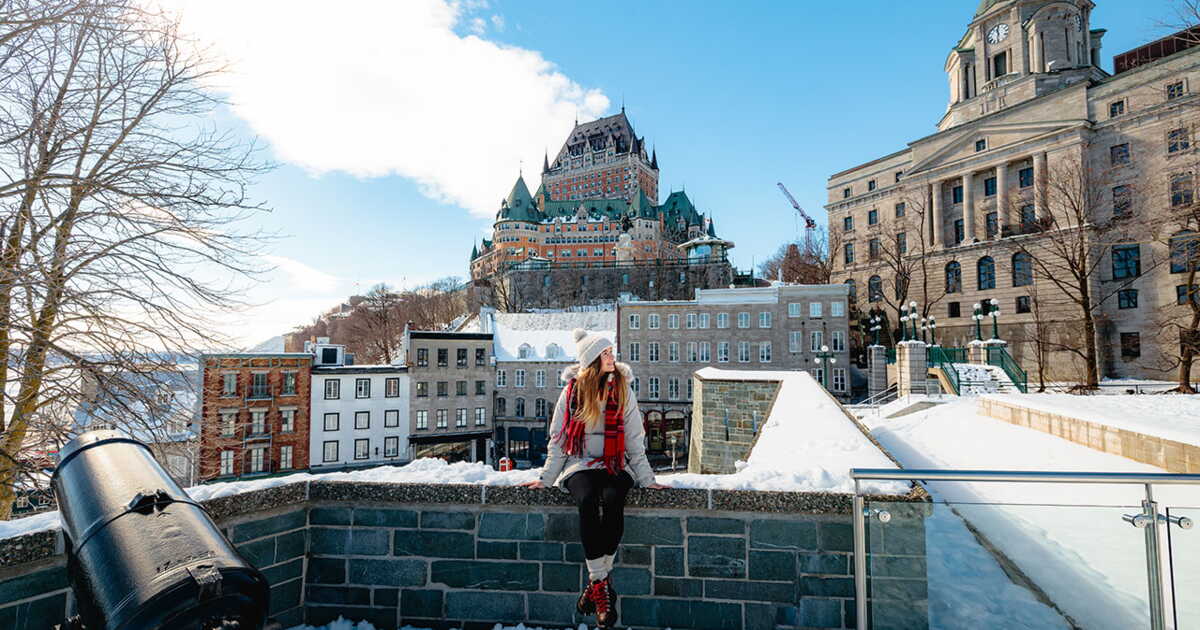
Visiting the city of Québec is to explore a captivating fusion of historic charm and contemporary vitality. Founded in 1608, it stands as one of the oldest cities in North America offering a wealth of diverse activities for every type of traveler. Whether you seek a cultural, natural, or gastronomic escape, Québec has plenty to spark your curiosity. During your stay you’ll likely wonder: what to do in Québec? Here is a detailed guide to the activities to consider in order to make the most of your experience.
1. Explore Old Québec and Place Royale
Exploring the Old Québec and its Place Royale is an essential visit to Québec, both for its historical significance and for the density of its historic buildings. This historic district, a genuine world heritage jewel, embodies the living memory of New France. The Terrasse Dufferin, set against the Château Frontenac, provides a spectacular backdrop over the Saint Lawrence River, making this spot a favorite with Instagrammers. A structured stroll typically begins at this starting point, then descends toward the Petit-Champlain, and onward to the Place Royale, cradle of French presence in North America. A guided Quebec tour helps place these heritage elements in perspective, integrate the visible religious influences at the Notre-Dame Cathedral, and grasp the commercial and cultural dynamics of the Vieux-Port, another perfect spot to deepen understanding of the area. This dense circuit, nestled in the downtown core, remains an excellent way to appreciate the historical value of the city of Québec.
2. Discover the Surrounding Nature
The natural surroundings of the Québec region provide an essential complement to any visit. The Montmorency Falls Park, also known as the Parc de la Chute-Montmorency, stands out as one of the country’s major natural sites. With a drop of 83 meters, this cascade surpasses Niagara Falls and offers a dramatic demonstration of Québec’s water power. It can be observed from a cable car, a suspension bridge, or along developed trails that cater to different levels. In summer, these paths grant secure access to wide viewpoints. Nearby, Île d’Orléans highlights the craftsmanship of local producers in a rural setting, while the via ferrata route on the rock face of the waterfall offers a more challenging athletic option. This area provides a structured alternative to the downtown while combining exploration, relaxation, and interpretation of the landscape, notably through multimedia interpretation trails. It represents a meaningful spot to pair a cultural weekend with a natural immersion.
3. Immerse Yourself in Local Culture
Understanding the cultural context of the city of Québec involves immersing oneself in its museum institutions, starting with the National Museum, whose permanent exhibitions trace the major artistic currents of Québec. Located on the Plains of Abraham, it forms a structuring landmark for anyone seeking to approach regional visual expressions through the lens of Québécois society. For visitors traveling with children, the museum workshops for kids at the Museum of Civilization are designed to convey knowledge through interactive setups. These establishments, accessible year-round, represent an excellent way to extend a visit to Québec, especially when it comes to understanding the territory’s evolution, its multiple identities, and the historical role Québec has played in the construction of North America. These cultural districts, often near the downtown, such as the Saint-Roch district or the Saint-Jean district, structure the city’s cultural offerings.
4. Experience Culinary Delights
The city of Québec offers a cuisine rooted in the authenticity of its products and the celebration of its local producers, forming a strong component of every visit. Over a weekend, visitors can discover a variety of dining spots that showcase regional culinary know-how, whether in the Petit-Champlain district, at the Old Port, or atop the downtown area. Sampling a classic poutine, the emblematic dish of Québec, fits into this experience, as does a visit to a sugar shack during the sugar season (summer or winter). The discovery of craft beers in the regional microbreweries also helps grasp local production dynamics. These places are often run by entrepreneurs who are deeply invested in preserving traditions, and each encounter becomes a meeting with a culinary culture rooted in the history of New France. This gastronomic dimension naturally complements a guided tour of Québec, where built heritage and culinary heritage align.
5. Take Part in Québec’s Festivities
Throughout the year, the city of Québec stands out for its event calendar that sets the pace of local life and shapes visitors’ itineraries. In winter, the Winter Games of the Québec Carnival activate public spaces from the historic district to the Petit-Champlain and the Plains of Abraham, with the Terrasse Dufferin providing a varied program for all ages. In summer, the Québec Summer Festival turns the city into an open-air musical stage, gathering international artists in places like the Saint-Jean district. These events, accessible over a weekend or longer stay, demonstrate Québec’s ability to animate its urban heritage through a cohesive event lineup. Each occasion reinforces the city’s foothold in the North American cultural landscape, and these celebrations fit perfectly into a visit to Québec, combining heritage discovery with contemporary vitality.
6. Unwind on the Plains of Abraham
The Plains of Abraham, vast green spaces near the downtown, constitute a landmark area for both history and landscape. This site, where the 1759 battle of Québec unfolded, now anchors much of the city’s recreational life. Traversed by several kilometers of trails, the park hosts a range of activities from concerts and picnics to sports events. It also offers broad viewpoints over the Saint Lawrence River, and footbridges to other neighborhoods and great places to discover the city from a different angle. In winter, the winter games are held in a structured setting, while in summer the expansive lawns make it a favorite spot for locals and visitors alike. The historic buildings and commemorative installations on site enhance the educational dimension of a visit, turning the Plains into a true crossroads between memory, relaxation, and transmission.
7. Find Weather-Appropriate Activities
Québec’s climate calls for thoughtful planning. When a rainy day or a cold snap arrives, certain indoor activities take precedence. Museums such as the National Museum or the Museum of Civilization provide a solid shelter to continue a guided tour of Québec in comfortable conditions. The permanent exhibitions and the children’s workshops are resources to transform weather-related constraints into opportunities to deepen knowledge. Districts like Saint-Roch and Saint-Jean, with galleries, bookstores and cafés often housed in basements, allow for sheltered wandering while still enabling exploration. The multimedia interpretation trails, especially those integrated into certain museums or cultural institutions, also facilitate the experience. This is an excellent way to optimize a weekend or a visit to Québec, regardless of weather conditions.
8. Visit the Citadelle of Québec
The Citadelle of Québec, perched in an exceptional setting overlooking the Saint Lawrence River, is a major site for understanding the city’s military heritage. This active site, still occupied by a unit of the Armed Forces, offers a guided tour that places the strategic evolution of Québec in North America in perspective. Visitors can explore its ramparts, inner courtyards, and exhibition rooms that recount key episodes in history, notably the era of New France. The Citadelle perfectly complements an itinerary that includes the historic district, the Château Frontenac, and the Notre-Dame Cathedral, forming a cohesive heritage experience. Its place in the urban fabric makes it a structured stop for any visit to Québec, whether in summer, winter, or simply over a weekend.
In conclusion, Québec is a rich and varied destination that offers a multitude of experiences suited to all desires and weather conditions. Whether you’re passionate about history, nature, or gastronomy, this city will enchant you with its diversity and heritage. By planning your stay with these suggestions, you can be assured of making the most of what Québec has to offer while creating unforgettable memories.
What to Do in Québec in Summer to See the City at Its Best?
The City of Québec reveals during the summer season a wealth of heritage that makes it a top destination in North America. A visit to Québec in summer often begins at the Terrasse Dufferin, a genuine instagrammable spot, offering a remarkable backdrop to the Château Frontenac and the Saint Lawrence River. The lanes of the Petit-Champlain and the Old Port invite a stroll where historic buildings bear witness to the heritage of New France. Visitors can extend their exploration with a guided tour of Québec, enabling a sense of the architectural coherence of the historic district, classed as a world heritage jewel. Markets highlighting local producers, forest light shows in the Québec region, or excursions to the Jacques-Cartier complete a program where nature and culture resonate with one another. Summer thus becomes an ideal starting point for enjoying kilometers of trails, river panoramas, and the regional know‑how that characterizes the city.
Québec for Couples: A Cultural and Harmonious Getaway
For a two-person stay, the City of Québec offers a sequence of perfect places that blend calm, heritage, and cultural discovery. A guided tour in the Saint-Jean district, followed by a stroll through the downtown, allows you to observe a diverse array of historic buildings and wander streets where cafés, bookstores, and artisan studios create an atmosphere conducive to lingering. The Terrasse Dufferin, often regarded as a favorite spot, provides a privileged vantage to behold the encounter between the Château Frontenac and the Saint Lawrence River, while the Citadelle of Québec recalls the site’s military importance in the city’s history. Couples can extend the experience with a visit to the Notre-Dame Cathedral, explore the exhibits at the National Museum, or share a meal featuring the region’s local producers from the Old Port. A excursion to the Montmorency Falls Park, whose power testifies to Québec’s unique water, offers a welcome natural interlude.
What to Do in Québec in Winter to Embrace the Cold Season?
In winter, the City of Québec becomes a stage where winter games, festive events, and cultural routes blend together harmoniously. A visit to the historic district, beneath the snow, highlights the uniqueness of its historic buildings and the majesty of the Château Frontenac. Visitors can explore the multimedia interpretation trails offered in the region, partake in activities at the Village Vacances Valcartier, or venture into the Québec region to enjoy the kilometers of trails dedicated to winter hiking. The Citadelle, open year-round, provides an informative perspective on the military heritage, while the streets of the Petit-Champlain offer a sparkling backdrop. For those seeking a sporty start, some outings including a winter via ferrata route or a snow exploration constitute an excellent way to understand how residents relate to the winter season.
What to Do in Québec When It Rains While Keeping the Visit Engaging?
When rain arrives, a visit to Québec remains easy thanks to the abundance of cultural and heritage offerings. The National Museum, with its permanent exhibitions, is perfectly suited for discovering the region’s artistic know‑how. The Saint-Roch district on the other hand offers several venues dedicated to contemporary creation, specialized shops, and cafés often located in basement settings. A guided tour of Québec remains relevant: itineraries adapt their parcours to explore the interiors of the Notre-Dame Cathedral, the Citadelle of Québec, or the cultural spaces of the Old Port. Weekend travelers will find in these places a structured way to maintain discovery despite the weather. Rain then becomes a pretext to deepen the heritage of New France, observe religious, military, and commercial influences that shaped the city.
What to Do in Québec with Children for a Rich Family Experience?
For a family activity, the City of Québec offers numerous perfect spots, suited for children, where learning and entertainment merge. A visit to the National Museum provides hands-on workshops for kids, enabling an interactive discovery of Québécois culture. A trip to the Montmorency Falls Park, easily accessible from the downtown, is an excellent way to raise youngsters’ awareness of the importance of Québec water, while developed trails facilitate walking. In the Petit-Champlain District, narrow lanes, artisan shops, and the Old Port contribute to a playful approach to heritage. To extend the experience, the traditional Huron-Wendat site at Sainte-Anne imparts knowledge about the First Nations, complementing the historical narrative from New France. These experiences, easy to organize over a weekend, constitute a true family must-do in Québec.
This article was drafted with the help of artificial intelligence, then corrected, expanded, and validated by the editorial team.