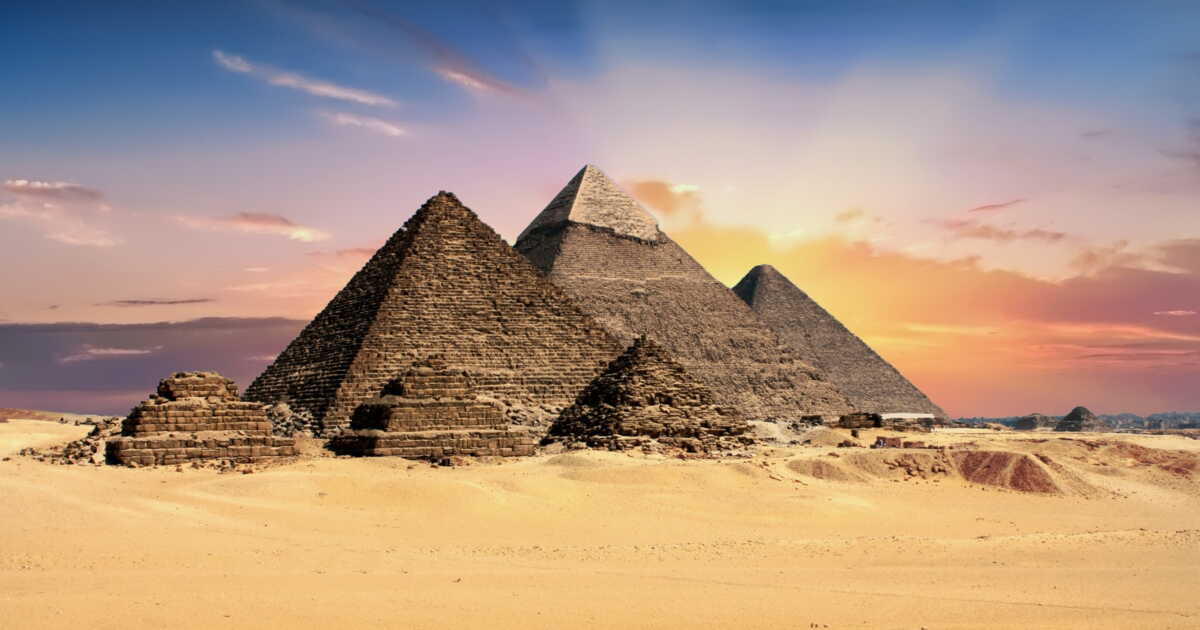
Giza, situated on the arid plateau along the Nile, is a destination that attracts visitors from around the world eager to uncover the mysteries of ancient Egypt. But beyond the famed pyramids, Giza is a gateway to a wealth of cultural and historical experiences. So what is there to do in Giza? Let’s explore the daytime and nighttime activities that make this place a must-see.
1. Visit the Pyramids of Giza
Begin your visit with the Great Pyramid of Khufu, followed by those of Khafre and Menkaure. These monumental structures stand as testaments to the architectural genius of ancient Egypt. Each pyramid offers a unique experience and takes a little time to be fully appreciated. Also plan to visit the adjacent tombs for a deeper understanding of the history of these sacred sites.
2. Explore the Great Sphinx of Giza
Located near the pyramids, the Great Sphinx of Giza stands majestically, ready to welcome visitors. It is said that this monumental statue, with a human head and lion’s body, guards the secrets of ancient Egypt. A visit to the site will allow you to behold this masterpiece and learn more about the mysteries surrounding it.
3. Discover the Solar Boat Museum
Once housed near the Great Pyramid, the Solar Boat is now displayed in a modern museum near the main site. This vessel, discovered in 1954, is one of the best-preserved boats from antiquity. A visit to the museum offers a fascinating plunge into the funerary beliefs of the Egyptians, who thought this boat would carry the deceased pharaoh into the afterlife.
4. Take a Camel Ride
For a more immersive experience, embark on a camel ride across the Giza Plateau. This activity not only offers a different vantage point of the pyramids but also lets you savor a traditional mode of transport used in this desert region. Be sure to negotiate the price before you mount these majestic beasts.
5. Attend the Sound and Light Show on the Giza Plateau
In the evening, the Giza Plateau comes alive with the Sound and Light Show that recounts the history of ancient Egypt through projections and captivating narration. Immerse yourself in the mystical atmosphere of the site as the pyramids and the Sphinx come to life before your eyes. It’s an activity that offers a different perspective on the monuments, away from the daytime crowds.
6. Strolling Through the Local Market
After visiting the historic monuments, venture into the local markets. Though less renowned than those in Cairo, these places offer a variety of artisanal and culinary products typical of the region. Stalls overflow with spices, textiles, and other unique souvenirs. It’s the perfect spot to experience an authentic slice of life away from well-trodden tourist trails.
To conclude, Giza is not limited to its famous pyramids. The cultural and historical richness of the region offers visitors numerous avenues to explore, whether by day or by night. Whether you are a history enthusiast, a seeker of cultural discoveries, or a fan of lively evenings, Giza promises unforgettable experiences. Let the majesty of this place envelop you and embark on a journey to discover the hidden treasures that have earned this historic destination its fame.
How Many Pyramids Are There in Egypt: Exploring the Monumental Heritage of the Old Kingdom
Egypt contains more than 120 documented pyramids, erected over the course of the Old Kingdom to serve as royal tombs. While the most famous ones are at Giza, where the Great Pyramid of Khufu rises to over 140 meters tall, other complexes just as significant, such as those at Saqqara and Dahshur, testify to the architectural evolution of the era. This vast funerary heritage, spanning several regions of the country, forms a network of major sites for any trip to Egypt.
Where to See the Pyramids in Egypt: An Itinerary Between the Major Burial Complexes
To see the pyramids in Egypt, the Giza Necropolis is the essential starting point. Located about twenty minutes from Cairo, it houses the three great pyramids (Khufu, Khafre, Menkaure), the Great Sphinx, and the Solar Boat Museum. Other essential sites dot the Nile Valley: the Saqqara complex (with the Step Pyramid of Djoser) and the Dahshur pyramids, even older, round out an informative day of sightseeing. These places associated with the pyramids are often well laid out, with shaded areas, restaurants near the pyramids, and several hotels with views, especially around Giza.
What to Do in Giza in the Evening: Experience Giza at Sunset
At the end of the day, the city of Giza reveals another face. When the sunset sets the golden stones alight, the Pyramids of Giza become the stage for a nocturnal show (Sound and Light Show) retelling the pharaonic story. To extend the experience, restaurants like El Dar Darak offer a tasty break with vegetarian options, and numerous border-front hotels, such as the Pyramids View Inn, allow for a stay in Giza with breathtaking views of the monuments. It is advisable to wear light clothing even in the evening, as the Cairo temperatures remain mild depending on the season.
Giza Necropolis: The Monumental Heart of the Egyptian Journey
The Giza Necropolis is arguably the most emblematic funerary complex in Egypt. It brings together the pyramids of Khufu, Khafre, and Menkaure, the accompanying temples, the Great Sphinx, and the pharaoh’s funerary chamber, notably in the king’s chamber and the queen’s chamber. Each structure embodies the principles of sacred IIIrd-mynte BCE-era architecture. For a successful day of visiting, plan comfortable shoes and a few Egyptian-related books for on-site purchases. Giza is also a viewpoint unique for grasping the Old Kingdom’s engineering ambition.
The Name of the Pyramids of Giza: Key Landmarks to Understand the Site
At Giza, the three main pyramids bear the names of the pharaohs they shelter: Khufu (the largest), Khafre (which still retains some outer casing at the summit), and Menkaure (the smallest, but perfectly proportioned). Each offers a specific place for exploration: inner chambers, galleries, and the site entrance located southeast of the plateau. This pyramid complex is structured around temples, processional causeways, and the Great Sphinx, a millennial guardian facing east. The best months for visiting are October through April, when the temperatures are more moderate.
Khufu, the Great Pyramid: Immersion in One of the World’s Greatest Monuments
With a 230 m base length and an original height of 146 m, the Great Pyramid of Khufu remains the most renowned. Its interior, accessible via a narrow passage, leads to the King’s Chamber and the Queen’s Chamber, examples of the funerary engineering of the Giza complex. It is a place where the pyramids reveal their details, from the monumental blocks to the astronomical arrangement. A panoramic view is offered from certain points on the site, and the Solar Boat Museum completes this major step of a journey in Egypt.
This article was written with the help of artificial intelligence, then corrected, expanded, and validated by the editors of the newsroom.