

This Sunday and Monday, Mexico has demonstrated the insecurity that pervades its stunning landscapes, seaside resorts, and colonial towns… following the death of the cartel kingpin: El Mencho.
Put under a genuine curfew, numerous cities closed schools and government offices, sometimes airports, to shield their populations from the violence of armed clashes between police and traffickers.
Backed by American intelligence, the army indeed achieved the unthinkable: killing the godfather of these monstrous networks that operate from south to north across the continent and today threaten around twenty Mexican states, including the major ones from Jalisco and its capital Guadalajara to Puebla and Veracruz.
In tourist-heavy zones, visitors attempted to leave as quickly as possible as airports were closing.
From France, the Quai d’Orsay immediately reacted and urged “to strictly avoid zones where the security forces are operating, to stay vigilant, to seek shelter, and to limit any non-essential travel by following information shared by reliable local media and the authorities’ instructions…” !
Put under a genuine curfew, numerous cities closed schools and government offices, sometimes airports, to shield their populations from the violence of armed clashes between police and traffickers.
Backed by American intelligence, the army indeed achieved the unthinkable: killing the godfather of these monstrous networks that operate from south to north across the continent and today threaten around twenty Mexican states, including the major ones from Jalisco and its capital Guadalajara to Puebla and Veracruz.
In tourist-heavy zones, visitors attempted to leave as quickly as possible as airports were closing.
From France, the Quai d’Orsay immediately reacted and urged “to strictly avoid zones where the security forces are operating, to stay vigilant, to seek shelter, and to limit any non-essential travel by following information shared by reliable local media and the authorities’ instructions…” !
From Mexico to Veracruz
 While waiting for a clearer picture of a situation that could either intensify or temporarily ease, the mood here is therefore not festive.
Yet, among all Latin American countries, Mexico ranks among the most festive. Indeed, its carnivals are less famous than its Day of the Dead festival which, across the country, attracts thousands of curious visitors eager to immerse themselves in a local tradition that is particularly captivating.
A century old, the Veracruz Carnival tops the list of the most spectacular, but there are also carnivals in Campeche, Merida, and Mazatlan — one of the oldest — which attract a significant share of visitors, the majority of whom are indigenous. This lends them the sought-after authenticity.
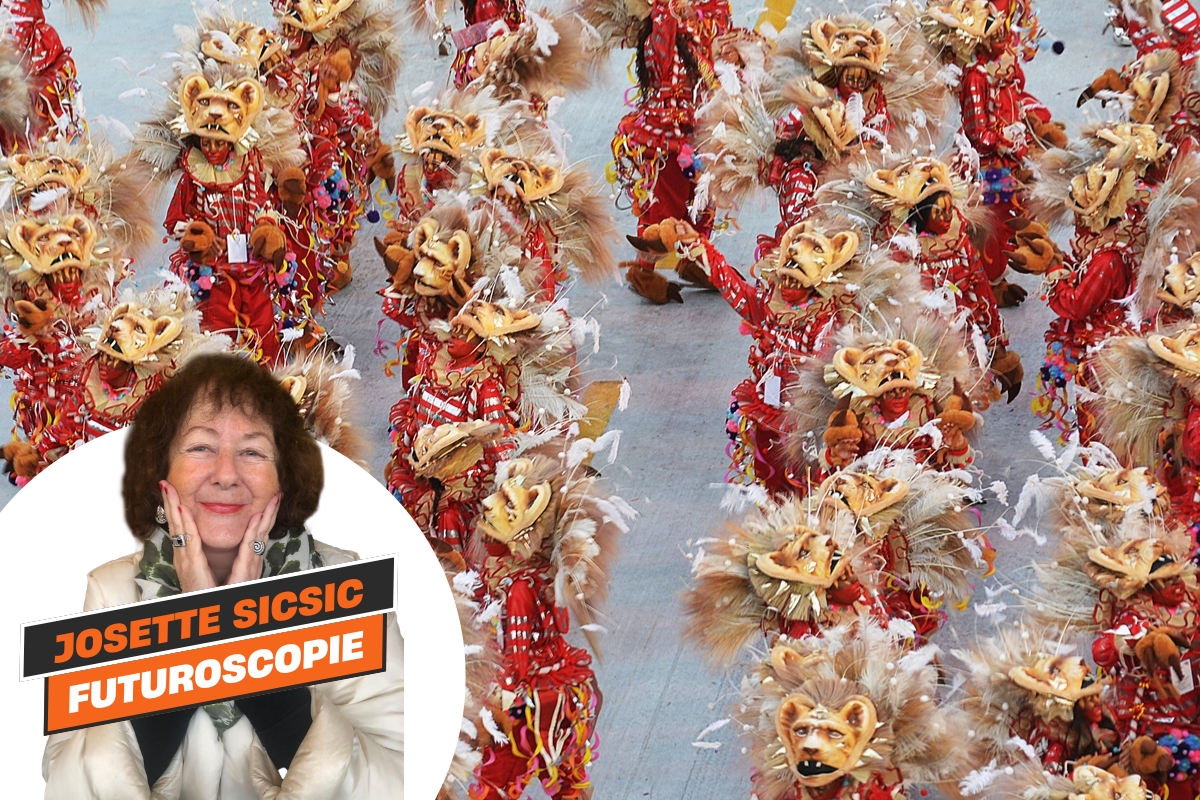
In fact, mixing pagan and Christian traditions, the spectacularly costumed parades, loudly powered by the trumpets of the “mariachis” and the satirical verses aimed at local and national authorities, help shape, here as elsewhere, that eccentric and transgressive atmosphere that gives carnival its charm.
From New Orleans to Mobile, American carnivals
Plus au nord of this country with 140 million inhabitants that attracts around 40 million international tourists each year – including members of the American diaspora -, we arrive in the USA, where one can discover the renowned New Orleans Carnival which each year, over about ten days, draws roughly one and a half million spectators who come to applaud 5,000 participants in musical parades and other processions.
Yet New Orleans is not the only place to celebrate this now-secular event where one discovers costumes, dances, music, and where people get drunk and party in a particularly joyful and wild atmosphere.
Elsewhere in Louisiana but also in Alabama, smaller carnivals attract a mixed national audience and some international visitors drawn by the originality of the event and the quality of the musicians.
They pour into the streets of Montgomery and especially Mobile, which offer a bustling schedule of parades organized by the region’s “mystic societies,” parading throughout the city and displaying their traditions, and thus their identity.
Yet New Orleans is not the only place to celebrate this now-secular event where one discovers costumes, dances, music, and where people get drunk and party in a particularly joyful and wild atmosphere.
Elsewhere in Louisiana but also in Alabama, smaller carnivals attract a mixed national audience and some international visitors drawn by the originality of the event and the quality of the musicians.
They pour into the streets of Montgomery and especially Mobile, which offer a bustling schedule of parades organized by the region’s “mystic societies,” parading throughout the city and displaying their traditions, and thus their identity.
The Carnival King: Rio and its samba schools
Obviously, the crown for the most surprising and memorable carnivals goes to Rio.
Pouring millions of people into the streets to have fun, let off steam, and push daily reality to the limit, this carnival features, beyond the official parades of the samba schools, hundreds of smaller processions: the “bloсos,” where Cariocas and national and international tourists, this year totaling about 65 million participants, come together. That figure is 22% higher than last year.
According to Embratur and the tourism ministry, the carnival injected into the city’s economy, especially through hospitality which operated at near full capacity with an almost 100% occupancy rate, 67 million USD.
On the aviation side, aircraft ticket purchases rose by 9% from abroad, notably from Chile (+41%), the USA (+11%) and Argentina (+8%)… to which are added millions of travelers who arrived by road, making the powerful neighbor the leading outbound market for Brazil, with 40% of its total foreign visitors.
Beyond Rio and its famous finale at the Sambódromo drawing about 80,000 privileged spectators, perfectly managed by the municipality, other Brazilian carnivals fire the imaginations of millions of tourists:
– Bahia: international reservations and ticket sales to the state jumped 43%, with Argentina and Portugal leading;
– São Paulo: more than 16 million people attended the parades of 600 “bloсos”;
– Belo Horizonte: the number of participants is estimated at 6.2 million and the economic impact at 190 million USD;
– as for Recife and Olinda, they recorded 3.6 million and 4 million attendees respectively, with a carnival featuring its own musical rhythms (frevo and maracatu instead of samba), drawing crowds to street parades and outdoor shows.
Pouring millions of people into the streets to have fun, let off steam, and push daily reality to the limit, this carnival features, beyond the official parades of the samba schools, hundreds of smaller processions: the “bloсos,” where Cariocas and national and international tourists, this year totaling about 65 million participants, come together. That figure is 22% higher than last year.
According to Embratur and the tourism ministry, the carnival injected into the city’s economy, especially through hospitality which operated at near full capacity with an almost 100% occupancy rate, 67 million USD.
On the aviation side, aircraft ticket purchases rose by 9% from abroad, notably from Chile (+41%), the USA (+11%) and Argentina (+8%)… to which are added millions of travelers who arrived by road, making the powerful neighbor the leading outbound market for Brazil, with 40% of its total foreign visitors.
Beyond Rio and its famous finale at the Sambódromo drawing about 80,000 privileged spectators, perfectly managed by the municipality, other Brazilian carnivals fire the imaginations of millions of tourists:
– Bahia: international reservations and ticket sales to the state jumped 43%, with Argentina and Portugal leading;
– São Paulo: more than 16 million people attended the parades of 600 “bloсos”;
– Belo Horizonte: the number of participants is estimated at 6.2 million and the economic impact at 190 million USD;
– as for Recife and Olinda, they recorded 3.6 million and 4 million attendees respectively, with a carnival featuring its own musical rhythms (frevo and maracatu instead of samba), drawing crowds to street parades and outdoor shows.
Risks of violence and soccer


Journalist, consultant, speaker, Josette Sicsic has been observing world changes for more than 25 years to analyze their consequences for the tourism sector.
After developing Touriscopie for over 20 years, she remains at the forefront of current events where she decodes the present to forecast the future. On the site www.tourmag.com, in the Futuroscopie section, she publishes several times a week forward-looking and analytical articles.
Contact: 06 14 47 99 04
Email: [email protected]
After developing Touriscopie for over 20 years, she remains at the forefront of current events where she decodes the present to forecast the future. On the site www.tourmag.com, in the Futuroscopie section, she publishes several times a week forward-looking and analytical articles.
Contact: 06 14 47 99 04
Email: [email protected]