


Between Milan and Cortina d’Ampezzo and two additional resorts, the Italians mobilized and have already demonstrated, through the opening ceremony of the 2026 Winter Olympics, their organizational prowess and aesthetic genius.
A masterpiece that is already being praised by the international press and drawing an audience estimated at 750,000 people, of whom 60,000 attended the opening.
And this, despite astronomical prices ranging from €250 to €2,000 or more! And while figure skating, the flagship event, shows tickets priced from €250 to €1,200 depending on category.
As for the spectators, expectations run to around 3 billion viewers globally, including social networks.
In the United States alone, 21 million Americans watched the opening ceremony. In France, for the entire event, expectations are approximately 40 to 50 million viewers.
The sole figure skating broadcast on France 2 drew nearly 3 million French viewers. And the opening ceremony captivated around fifteen million viewers with a peak at 7.5 million!
That illustrates how the enthusiasm for major events of this kind continues to grow.
Admittedly, the Winter Games are not as widely followed as the Summer Games. Paris 2024, for instance, would have drawn around 5 billion viewers, while Sochi and Beijing registered a little over 2 billion.
Read also: 2030 Olympics: sporting events, a lever of tourist attractiveness in Provence!
A masterpiece that is already being praised by the international press and drawing an audience estimated at 750,000 people, of whom 60,000 attended the opening.
And this, despite astronomical prices ranging from €250 to €2,000 or more! And while figure skating, the flagship event, shows tickets priced from €250 to €1,200 depending on category.
As for the spectators, expectations run to around 3 billion viewers globally, including social networks.
In the United States alone, 21 million Americans watched the opening ceremony. In France, for the entire event, expectations are approximately 40 to 50 million viewers.
The sole figure skating broadcast on France 2 drew nearly 3 million French viewers. And the opening ceremony captivated around fifteen million viewers with a peak at 7.5 million!
That illustrates how the enthusiasm for major events of this kind continues to grow.
Admittedly, the Winter Games are not as widely followed as the Summer Games. Paris 2024, for instance, would have drawn around 5 billion viewers, while Sochi and Beijing registered a little over 2 billion.
Read also: 2030 Olympics: sporting events, a lever of tourist attractiveness in Provence!
The strengths and weaknesses of major events
 To achieve such results, the bill, however, has been steep: €6.6 billion for the Paris Games. And around €5.2 billion for Milano-Cortina.
Knowing that France will stage the next Winter Games (from February 1 to 17, 2030) in the Provence-Alpes-Câte d’Azur and Auvergne-Rhône-Alpes regions, which implies spending at least around €2.1 billion, one can understand why a portion of public opinion protests against what is still seen as a wasteful extravagance by rich nations.
Hence the demonstrations by “eco” activists during much of the events, outraged by the costs but also by the astronomical water and energy expenditures.
As for the inevitable environmental degradations, they will also be hard to justify in the eyes of a portion of the public. And this despite a sustainability commitment that the local and national authorities highlight prominently.
On the other hand, there are a few positives that make such manifestations more acceptable.
The prestige, above all, the reputation, the notoriety of the involved regions which, already on the event sites, should attract 2 million spectators, including 500,000 international visitors who purchased 70% of the tickets.
And, as is now customary, a post-event rebound in the region’s popularity is to be expected.
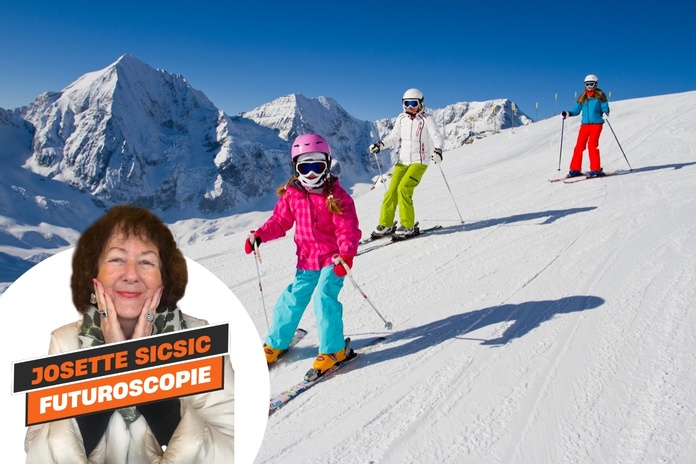
Only 9% of French people take winter holidays
Nevertheless, the practice of winter sports remains in a country as affluent as France, highly elitist.
After the euphoric decades when white gold was supposed to sustain mountains ravaged by rural depopulation and deindustrialization, climate disruption forecast and announced since the end of the last century has contributed to the current crisis that many prefer not to face.
Despite solid year-end results, some resorts have had no choice but to close doors and figure out where to hide the skeletal remains of their ski lifts, while others are precariously run by volunteers and most are trying to diversify their offerings while awaiting snow-starved winters.
The millions of skiers anticipated since the 1960s did not materialize in mid-mountain resorts irrationally equipped, while only the very high-altitude resorts were deemed winners in the race for white gold.
Despite snow classes, despite a strong presence of social tourism and a sizable influx of foreign skiers drawn to exemplary ski domains, “winter sports participation concerns less than one in ten French people,” according to the Credoc survey on living conditions and aspirations.
Nine percent of the population thus traveled to the mountains in winter 2023 for at least four consecutive nights. A rate very close to the 2010 level, which stood at 8%.
More precisely, still according to the national barometer of sports practices led by Credoc for the DJEPVA (Directorate for Youth and Sports), it is estimated that of the 9% of French people who practiced winter and mountain sports in the past twelve months:
After the euphoric decades when white gold was supposed to sustain mountains ravaged by rural depopulation and deindustrialization, climate disruption forecast and announced since the end of the last century has contributed to the current crisis that many prefer not to face.
Despite solid year-end results, some resorts have had no choice but to close doors and figure out where to hide the skeletal remains of their ski lifts, while others are precariously run by volunteers and most are trying to diversify their offerings while awaiting snow-starved winters.
The millions of skiers anticipated since the 1960s did not materialize in mid-mountain resorts irrationally equipped, while only the very high-altitude resorts were deemed winners in the race for white gold.
Despite snow classes, despite a strong presence of social tourism and a sizable influx of foreign skiers drawn to exemplary ski domains, “winter sports participation concerns less than one in ten French people,” according to the Credoc survey on living conditions and aspirations.
Nine percent of the population thus traveled to the mountains in winter 2023 for at least four consecutive nights. A rate very close to the 2010 level, which stood at 8%.
More precisely, still according to the national barometer of sports practices led by Credoc for the DJEPVA (Directorate for Youth and Sports), it is estimated that of the 9% of French people who practiced winter and mountain sports in the past twelve months:
– 4% took up alpine skiing,
-2% cross-country skiing,
-2% snowshoeing,
– 2% sledding,
-2% ski touring,
– 1% ice skating,
-1% snowboarding and other snow-related surfing.
Last point: in terms of age, 66% are under 50, while those over 65 make up only 13%. Between these two age bands, the 50–64 group accounts for 11% of winter holidaymakers.
Read also: Futuroscopy – And if skiing is not dead?
Read also: Futuroscopy – And if skiing is not dead?
Mountains: an unsettled destiny
Given such statistics, can one afford to be pessimistic about the future as many have become, blaming primarily climate change?
Indeed, the temperatures at the Italian venues since the Games began have been warmer than hoped. Coats and jackets stay unbuttoned and gloves sit in pockets, according to an article in La Repubblica.
Yet, the imagery of winter mountains has not been completely displaced by that of summer mountains and the “winter suns” supposed to guarantee warmth and more affordable prices than skiing. A costly practice, undermined by the price of lift passes and accommodation.
But let us not forget that snow sports, beyond their spectacular display, also showcase human qualities and courage and provide an excellent way to strengthen ties among the populations and regions that host events such as the Winter Olympics. The story continues in 2030 in France…
Sources: Credoc, Atout France, La Repubblica, L’Equipe, France 2, France Info…
Indeed, the temperatures at the Italian venues since the Games began have been warmer than hoped. Coats and jackets stay unbuttoned and gloves sit in pockets, according to an article in La Repubblica.
Yet, the imagery of winter mountains has not been completely displaced by that of summer mountains and the “winter suns” supposed to guarantee warmth and more affordable prices than skiing. A costly practice, undermined by the price of lift passes and accommodation.
But let us not forget that snow sports, beyond their spectacular display, also showcase human qualities and courage and provide an excellent way to strengthen ties among the populations and regions that host events such as the Winter Olympics. The story continues in 2030 in France…
Sources: Credoc, Atout France, La Repubblica, L’Equipe, France 2, France Info…


Josette Sicsic, journalist, consultant, lecturer, has been observing the world’s changes for more than 25 years to analyze their impact on the tourism sector.
After developing the Touriscopie journal for over 20 years, she remains at the forefront of current affairs, decoding the present to anticipate the future. On the site www.tourmag.com, in the Futuroscopie section, she publishes prospective and analytical articles several times a week.
Contact: 06 14 47 99 04
Email: [email protected]
After developing the Touriscopie journal for over 20 years, she remains at the forefront of current affairs, decoding the present to anticipate the future. On the site www.tourmag.com, in the Futuroscopie section, she publishes prospective and analytical articles several times a week.
Contact: 06 14 47 99 04
Email: [email protected]