

It is the backbone of French rail transport. The TGV Sud-Est axis is the main railway corridor in France connecting Paris to Lyon and then toward the Mediterranean, spanning eastern France and the Alps.
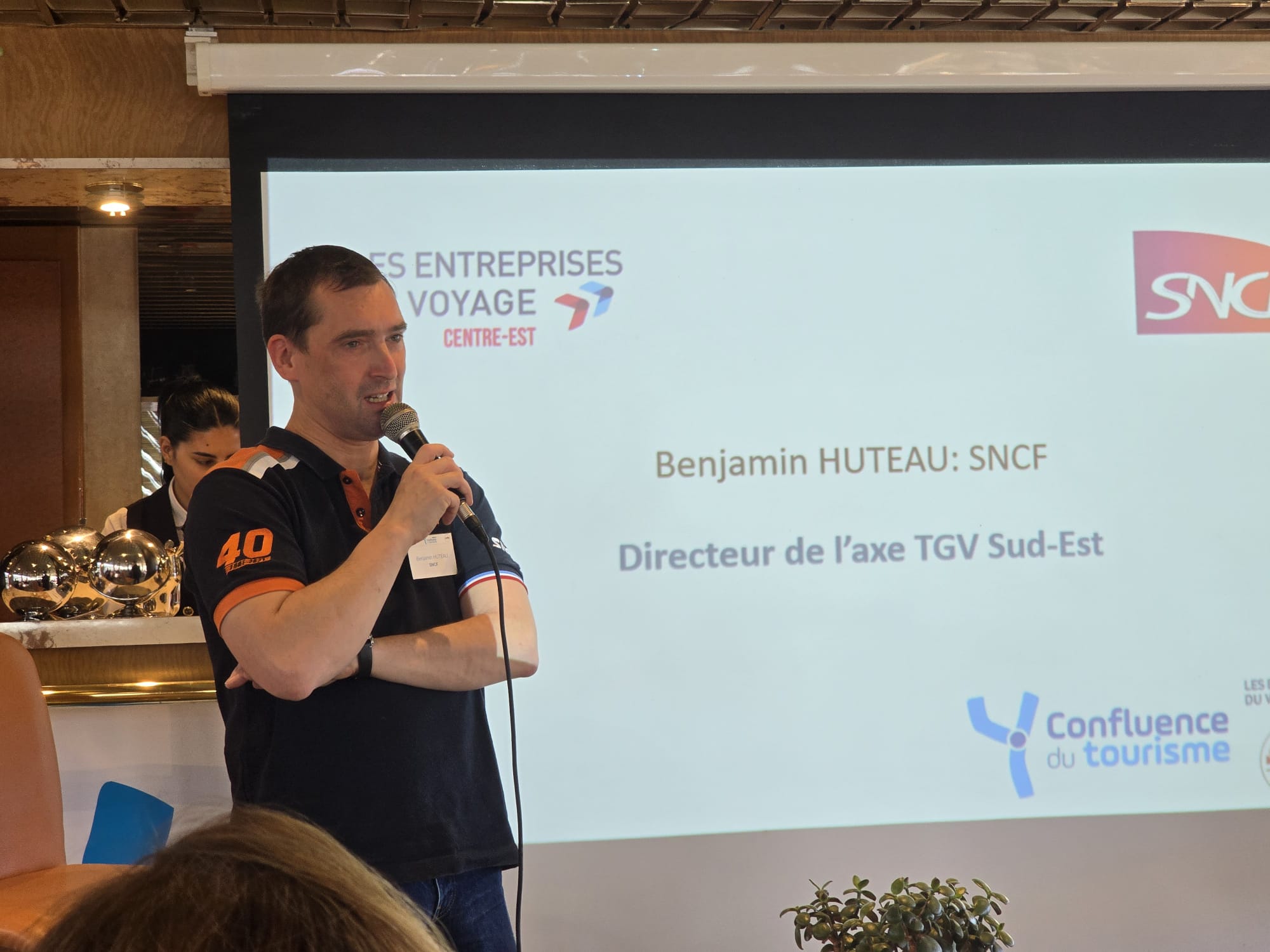
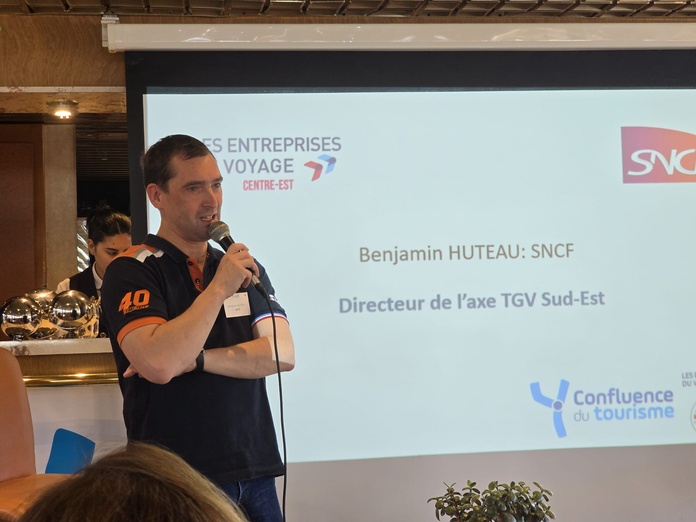
« If you draw a line from Paris-Mulhouse to Paris-Barcelone, you already cover a good portion of the country », summarizes Benjamin Huteau, director of this strategic axis.
Each day, 120,000 travelers ride on 130 TGVs. Behind these figures: a workforce of 5,000 people and an annual turnover of 2.5 billion euros.
« This is the densest axis in Europe in terms of rail traffic. The backbone of the high-speed line that physically lies between Paris and Lyon, indeed, by far the busiest line in Europe because Paris-Marseille and Brussels-Montpellier also pass through it. »
« If you draw a line from Paris-Mulhouse to Paris-Barcelone, you already cover a good portion of the country », summarizes Benjamin Huteau, director of this strategic axis.
Each day, 120,000 travelers ride on 130 TGVs. Behind these figures: a workforce of 5,000 people and an annual turnover of 2.5 billion euros.
« This is the densest axis in Europe in terms of rail traffic. The backbone of the high-speed line that physically lies between Paris and Lyon, indeed, by far the busiest line in Europe because Paris-Marseille and Brussels-Montpellier also pass through it. »
Tolls account for about 40% of a ticket’s price
The general public often doesn’t realize it, but a significant portion of the price of a TGV ticket does not go directly to the operator and is used to finance the use of infrastructure: stations and the rail network.
Managed by SNCF Gares & Connexions and SNCF Réseau, these entities market, on the one hand, calling at stations and, on the other, slots—i.e., time windows for circulation on the rail network—allowing various carriers to run trains from one point to another.
« The track charges paid by TGV activity in France are among the highest in Europe. These fees largely — and often beyond — cover the maintenance costs of the high-speed lines. In France, they contribute significantly not only to the maintenance of the high-speed network but also to that of the entire rail network, including conventional lines » explains Benjamin Huteau.
These charges represent around 40% of a ticket’s price, with notable variations depending on the line. « On the busiest axes like Paris – Lyon, this share can reach nearly 50%. Conversely, on other lines where the cost per kilometer differs, this share can be lower, around 30%, such as on Paris – Mulhouse or Paris – Dijon. »
What is less known is that these tariffs are also set according to a yield-management logic: « On Paris – Lyon, this economic logic dominates: more than 80% of the toll relates to this dynamic pricing. It’s hard to be profitable on Paris – Lyon; tolls have risen by more than 30% since 2020. »
Managed by SNCF Gares & Connexions and SNCF Réseau, these entities market, on the one hand, calling at stations and, on the other, slots—i.e., time windows for circulation on the rail network—allowing various carriers to run trains from one point to another.
« The track charges paid by TGV activity in France are among the highest in Europe. These fees largely — and often beyond — cover the maintenance costs of the high-speed lines. In France, they contribute significantly not only to the maintenance of the high-speed network but also to that of the entire rail network, including conventional lines » explains Benjamin Huteau.
These charges represent around 40% of a ticket’s price, with notable variations depending on the line. « On the busiest axes like Paris – Lyon, this share can reach nearly 50%. Conversely, on other lines where the cost per kilometer differs, this share can be lower, around 30%, such as on Paris – Mulhouse or Paris – Dijon. »
What is less known is that these tariffs are also set according to a yield-management logic: « On Paris – Lyon, this economic logic dominates: more than 80% of the toll relates to this dynamic pricing. It’s hard to be profitable on Paris – Lyon; tolls have risen by more than 30% since 2020. »
SNCF Réseau asks to pre-book track slots three years in advance
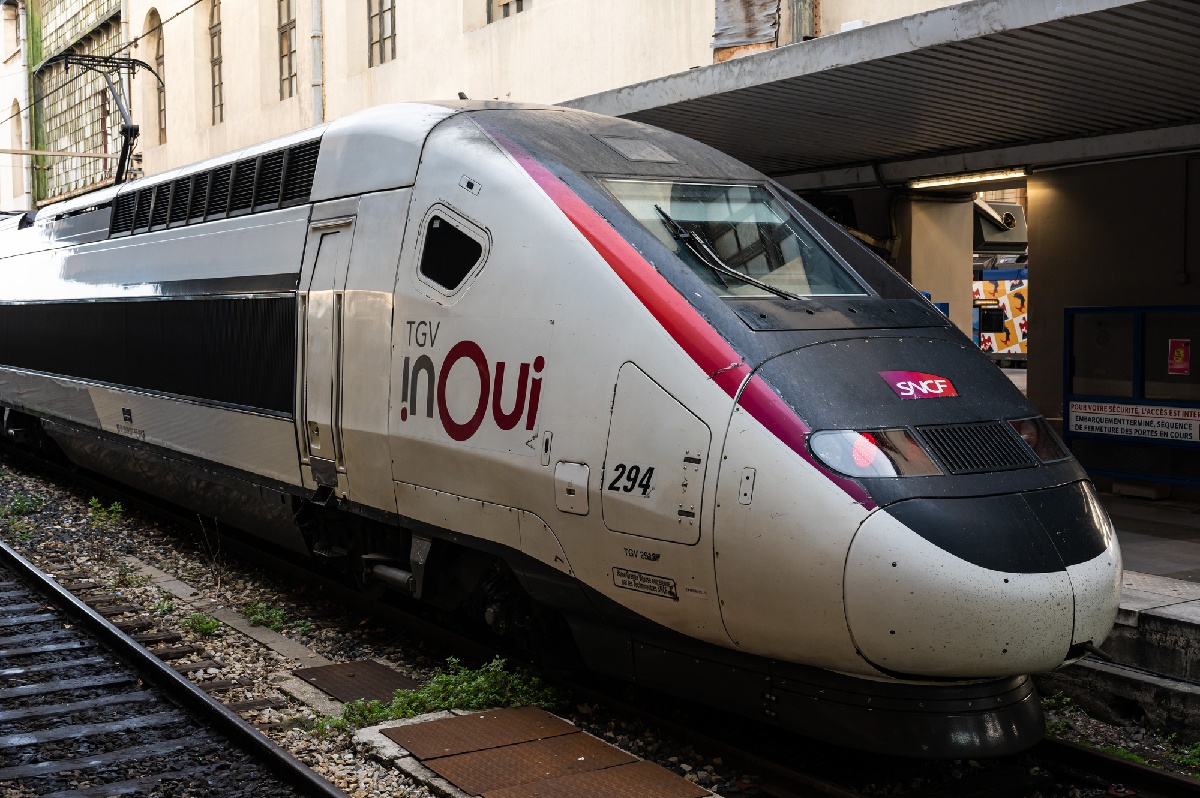
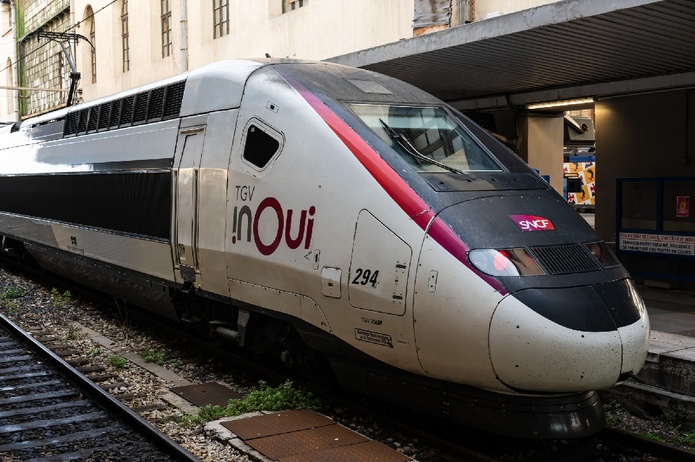
In a context of high tolls, profitability hinges on two essential levers: maximizing load factor and keeping trains running as much as possible.
This requires aligning supply as closely as possible with fluctuating demand, depending on the schedules, days of the week, vacation periods, and holidays.
And it is all the more complex because SNCF Réseau asks to pre-book track slots three years in advance. « There is still a bit of crystal ball involved. We do not pre-book everything. We pre-book the base of our offer and then there are several milestones two years ahead, one year ahead… down to six weeks before. »
« This management allows volumes transported to vary considerably, depending on the day, ranging from about 80,000 to 140,000 travelers. »
This requires aligning supply as closely as possible with fluctuating demand, depending on the schedules, days of the week, vacation periods, and holidays.
And it is all the more complex because SNCF Réseau asks to pre-book track slots three years in advance. « There is still a bit of crystal ball involved. We do not pre-book everything. We pre-book the base of our offer and then there are several milestones two years ahead, one year ahead… down to six weeks before. »
« This management allows volumes transported to vary considerably, depending on the day, ranging from about 80,000 to 140,000 travelers. »
Lyon-Part-Dieu, the Côte-d’Azur, Bourg-Saint-Maurice in winter… some near-saturation zones
Some zones are close to saturation. At the end-of-line stretches toward the alpine stations, such as Bourg-Saint-Maurice during winter and school holidays, or toward the Côte d’Azur, where coexistence with the TER limits capacity, are already heavily saturated.
Similarly for Lyon – Part-Dieu, which has the peculiarity of being a through station with passenger flows close to origin stations.
Unlike an origin station, where trains dwell long enough to allow progressive boarding of several hundred passengers, stops at Part-Dieu are extremely short, often limited to a few minutes.
In this shortened time window, it is necessary to both let many passengers alight and board as many again, under very tight conditions.
« For example, just one traveler with a stroller: out of courtesy we let them pass, but the time to settle in can block boarding. And then everything jams. In these cases, we try to propose boarding last to ease the flow, » cites Benjamin Huteau as an example.
Similarly for Lyon – Part-Dieu, which has the peculiarity of being a through station with passenger flows close to origin stations.
Unlike an origin station, where trains dwell long enough to allow progressive boarding of several hundred passengers, stops at Part-Dieu are extremely short, often limited to a few minutes.
In this shortened time window, it is necessary to both let many passengers alight and board as many again, under very tight conditions.
« For example, just one traveler with a stroller: out of courtesy we let them pass, but the time to settle in can block boarding. And then everything jams. In these cases, we try to propose boarding last to ease the flow, » cites Benjamin Huteau as an example.
A train runs every four minutes and soon every three minutes
On some sections, a train runs every four minutes, and by 2030, nearly every three minutes thanks to signalling improvements.
Even the slightest delay can quickly snowball into a knock-on effect on the punctuality of all following trains. «There isn’t a day without disruptions. The problem with rail is that we are rather sensitive to external disturbances,» admits the director.
Among the most frequent disruptions: sick passengers on board, abandoned baggage, or conflicts between travelers. They occur regularly but typically cause only limited delays.
Other events, more serious and less frequent, such as people being on the tracks, cause much longer interruptions. Add to this climate-related risks, or network or signaling failures.
In these situations, the teams’ role is to reorganize the transport plan to limit the spread of delays.
The main objective is to avoid cascading effects. To achieve this, it is often necessary to adapt the operating plan in real time.
Without adjustment, a morning delay risks lingering all day, especially if the same trains are used for several circulations. Teams revise allocations, reorganize rotations, and adjust operations.
This responsiveness also implies revisiting maintenance planning, itself highly optimized to maximize the availability of the rolling stock. The whole system is highly intertwined, requiring coordination to avoid further malfunctions.
Even the slightest delay can quickly snowball into a knock-on effect on the punctuality of all following trains. «There isn’t a day without disruptions. The problem with rail is that we are rather sensitive to external disturbances,» admits the director.
Among the most frequent disruptions: sick passengers on board, abandoned baggage, or conflicts between travelers. They occur regularly but typically cause only limited delays.
Other events, more serious and less frequent, such as people being on the tracks, cause much longer interruptions. Add to this climate-related risks, or network or signaling failures.
In these situations, the teams’ role is to reorganize the transport plan to limit the spread of delays.
The main objective is to avoid cascading effects. To achieve this, it is often necessary to adapt the operating plan in real time.
Without adjustment, a morning delay risks lingering all day, especially if the same trains are used for several circulations. Teams revise allocations, reorganize rotations, and adjust operations.
This responsiveness also implies revisiting maintenance planning, itself highly optimized to maximize the availability of the rolling stock. The whole system is highly intertwined, requiring coordination to avoid further malfunctions.
The arrival of new TGV rolling stock on the South-East axis, with optimized maintenance
 Published by Céline Eymery Editor-in-Chief – TourMaG.com
 See all articles by Céline Eymery


Add TourMaG to your Google News feed 
Read 8,432 times
Rate
New comment:
In the same section :
<
>
>
Wednesday 8 July 2026 – 18:42 FlixBus integrates Paris-Beauvais Airport shuttles on its platform
|
Friday 3 July 2026 – 09:35 Train: SNCF Connect opens reservations to Germany and Switzerland
|