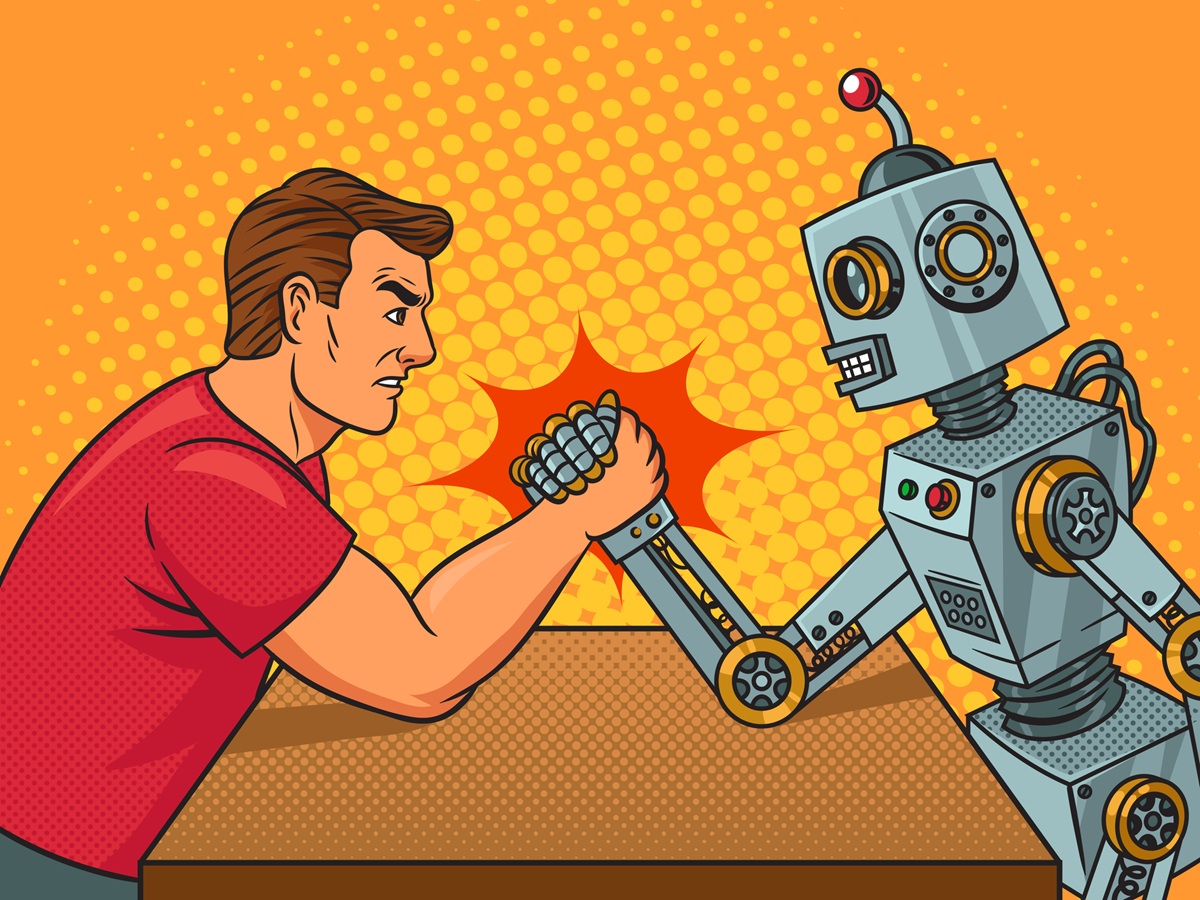


There is not a single tourism industry conference or event that does not feature an intervention dedicated to artificial intelligence.
After the initial exposure and the push to avoid missing this disruptive breakthrough, speakers often go in circles on the subject.
Interventions strive to democratize its use, to alert about disengagement or the “grand replacement,” but few interrogate the changes this could trigger in our societies and in our relationship with others, with the world, with work and with leisure.
“I am a child of possibility; there is progress only if it is shared. The misfortune of some is very bad for the health of others.
How can we not understand, when nature is ailing, that we are ailing? We are in the same boat. Progress only works if we resist the disenchantment of the world.
I work a lot with AI, but at what natural cost does the artificial nature of AI operate? Because water is a key question.
After the initial exposure and the push to avoid missing this disruptive breakthrough, speakers often go in circles on the subject.
Interventions strive to democratize its use, to alert about disengagement or the “grand replacement,” but few interrogate the changes this could trigger in our societies and in our relationship with others, with the world, with work and with leisure.
“I am a child of possibility; there is progress only if it is shared. The misfortune of some is very bad for the health of others.
How can we not understand, when nature is ailing, that we are ailing? We are in the same boat. Progress only works if we resist the disenchantment of the world.
I work a lot with AI, but at what natural cost does the artificial nature of AI operate? Because water is a key question.
Water is at once the engine of our lives and the mirror of our societies
, questioned Erik Orsenna during one of his talks within the Aix-en-Provence Economic Meetings.“A historic rupture, akin to the Renaissance and the fall of the Roman Empire”
And this reflection is far from being incidental.
While France boasts of colossal contracts to build data centers on its soil, a recent American study reveals that a single such facility can consume up to 19 million liters of water per day, the equivalent of the consumption of a city with more than 120,000 inhabitants.
This is not all, because the technological progress brought about by AI also implies potential brutal and fundamental changes in our society.
“AI is great, but it can lead us astray.
I greatly appreciate the minister of Taiwan’s discourse on AI, who emphasizes that there must be engineers, but above all a sense of civic responsibility, a sense of curiosity and collaboration. Not everyone will become an AI engineer, but everyone will use it.
So there are values to develop, because otherwise, yes, jobs can be eliminated, but to do what? The problem is that we face a historic rupture.
It is as powerful as the Renaissance and the fall of the Roman Empire, explained Jean Viard, the sociologist for whom there is no longer any question of speaking about progress in our current world.
This historic moment is triggered by AI, but not only.
To this revolution are added two anthropological ruptures. The first concerns the relationship between humans and nature. Today, it is no longer humans who make history; it is nature. The second concerns the male-female relationship and the explosion of patriarchy.
Contemporary society must therefore invent a new future, a new society, by integrating these three major changes.
And in the face of AI’s development, it is necessary to rewrite a common narrative, but also reintroduce responsibility at all levels—whether among users, political leaders or businesses.
In addition, there is the crisis of information.
While France boasts of colossal contracts to build data centers on its soil, a recent American study reveals that a single such facility can consume up to 19 million liters of water per day, the equivalent of the consumption of a city with more than 120,000 inhabitants.
This is not all, because the technological progress brought about by AI also implies potential brutal and fundamental changes in our society.
“AI is great, but it can lead us astray.
I greatly appreciate the minister of Taiwan’s discourse on AI, who emphasizes that there must be engineers, but above all a sense of civic responsibility, a sense of curiosity and collaboration. Not everyone will become an AI engineer, but everyone will use it.
So there are values to develop, because otherwise, yes, jobs can be eliminated, but to do what? The problem is that we face a historic rupture.
It is as powerful as the Renaissance and the fall of the Roman Empire, explained Jean Viard, the sociologist for whom there is no longer any question of speaking about progress in our current world.
This historic moment is triggered by AI, but not only.
To this revolution are added two anthropological ruptures. The first concerns the relationship between humans and nature. Today, it is no longer humans who make history; it is nature. The second concerns the male-female relationship and the explosion of patriarchy.
Contemporary society must therefore invent a new future, a new society, by integrating these three major changes.
And in the face of AI’s development, it is necessary to rewrite a common narrative, but also reintroduce responsibility at all levels—whether among users, political leaders or businesses.
In addition, there is the crisis of information.
“The social dialogue must quickly engage on the question of AI”
“The real question we must ask is this: Who designs the algorithms and with what intentions?
Because they are neither designed nor regulated in Europe.
Information will survive only if treated as critical infrastructure, on par with water, electricity or telecommunications. The information from a source existing on the cloud must be protected as critical infrastructure, so that no one can stumble upon it,” explained Rajesh Krishnamurthy, CEO of Sopra Steria.
However, for the moment, this does not appear to be the stance of the current government or of the European Union.
Individual initiatives remain, such as that of Le Monde, the only French media to have signed contracts with AI giants.
Its boss, Louis Dreyfus, wants the regulator to take up the subject to prevent only a few newspapers from serving as sources for generative AI models.
Because, for him, the algorithms must reach readers aged 35 and under, thus renewing a readership that is aging rapidly. This is not the only opportunity represented by this technological revolution.
“We are witnessing an acceleration in research, the creation of new professions and the need to generate data in a different way.
This world of terror, in which AI would replace everyone, is not yet there. We are in a transition period, in which we need high-quality data to use AI intelligently and rationally.
We must apply the fundamental principle of responsibility in all that we do, thus asking why we conduct research, for whom and how, while integrating AI“, assessed Yasmine Belkaid, Director General of the Pasteur Institute.
To this, it will be essential to add the development of critical thinking, in a world that increasingly lacks it.
This will enable questioning the responses of AI agents and not accepting them as gospel, especially for next generations who will be born directly into this revolution.
Incidentally, for the current Prime Minister, the time has come to draft a new pact between employees and employers, integrating AI, to prepare the world of work for this rupture.
“I do not see very well how one can discuss artificial intelligence and its impact on labor law if we do not engage in a five-, ten- or fifteen-year reflection.
Other countries around us are doing it.
It is evident that the social dialogue must quickly engage on the question of artificial intelligence and its impact on labor law. And this cannot wait for the presidential election.
There must already be a number of proposals on the table for us to seize and organize the political debate on this,” set the course Sébastien Lecornu.
Because they are neither designed nor regulated in Europe.
Information will survive only if treated as critical infrastructure, on par with water, electricity or telecommunications. The information from a source existing on the cloud must be protected as critical infrastructure, so that no one can stumble upon it,” explained Rajesh Krishnamurthy, CEO of Sopra Steria.
However, for the moment, this does not appear to be the stance of the current government or of the European Union.
Individual initiatives remain, such as that of Le Monde, the only French media to have signed contracts with AI giants.
Its boss, Louis Dreyfus, wants the regulator to take up the subject to prevent only a few newspapers from serving as sources for generative AI models.
Because, for him, the algorithms must reach readers aged 35 and under, thus renewing a readership that is aging rapidly. This is not the only opportunity represented by this technological revolution.
“We are witnessing an acceleration in research, the creation of new professions and the need to generate data in a different way.
This world of terror, in which AI would replace everyone, is not yet there. We are in a transition period, in which we need high-quality data to use AI intelligently and rationally.
We must apply the fundamental principle of responsibility in all that we do, thus asking why we conduct research, for whom and how, while integrating AI“, assessed Yasmine Belkaid, Director General of the Pasteur Institute.
To this, it will be essential to add the development of critical thinking, in a world that increasingly lacks it.
This will enable questioning the responses of AI agents and not accepting them as gospel, especially for next generations who will be born directly into this revolution.
Incidentally, for the current Prime Minister, the time has come to draft a new pact between employees and employers, integrating AI, to prepare the world of work for this rupture.
“I do not see very well how one can discuss artificial intelligence and its impact on labor law if we do not engage in a five-, ten- or fifteen-year reflection.
Other countries around us are doing it.
It is evident that the social dialogue must quickly engage on the question of artificial intelligence and its impact on labor law. And this cannot wait for the presidential election.
There must already be a number of proposals on the table for us to seize and organize the political debate on this,” set the course Sébastien Lecornu.
“AI is a weapon to kill bureaucratic jobs”
And while there have certainly been voices questioning this revolution, few have urged stopping it or slowing down.
Because for the business and political spheres, AI opens a new era, a new lever of economic growth that this disenchanted world needs.
The situation is such that American graduates protest this technology. Unable to find jobs after completing their studies, they would even turn to more manual trades less likely to be displaced by algorithms.
To read: Tourism jobs in the face of AI: technological mutation or new hospitality?
This question obviously arises in the tourism sector.
“Everyone is realizing that we are entering an era of abundance of intelligence, whereas in the past, it was a scarce raw material.
We are in a kind of Spotify of intelligence, we can consume intelligence.
We are witnessing the end of humans performing supervised tasks. White-collar workers will have to immediately position themselves as supervisors to pilot AI agents. This raises the question of learning, because it used to take three to five years to become a supervisor. That step disappears.
In Western societies, we have created a large number of bureaucratic jobs. But AI is a weapon to kill bureaucratic jobs. And European and American educational systems have been designed to train young people for these jobs, whereas they will disappear“, imagined Matthieu Courtecuisse, founder of the Sia consulting firm, based in New York.
A very dark vision, which aligns with the theories of “job apocalypse” that would accompany the deployment of algorithms throughout our lives.
For Myriam El Khomri, the former Minister of Labor in the Valls government, there is currently no visible impact on the job market.
“We don’t know, and that is the conclusion of many studies.
But one thing is certain: it raises questions about technological maturity, managerial and organizational readiness, because it is above all a productivity issue.
In the automobile industry, when a new project took three years to come to fruition, it now takes nine months. This pace and evolution reveal our difficulty in organizing transitions.
Regarding training, it should no longer be viewed as a stock of knowledge acquired at the start of a career. AI must prompt us about our capacity to reorient ourselves“, estimated, less radically, the director of CSR and strategy at Diot-Siaci.
Because for the business and political spheres, AI opens a new era, a new lever of economic growth that this disenchanted world needs.
The situation is such that American graduates protest this technology. Unable to find jobs after completing their studies, they would even turn to more manual trades less likely to be displaced by algorithms.
To read: Tourism jobs in the face of AI: technological mutation or new hospitality?
This question obviously arises in the tourism sector.
“Everyone is realizing that we are entering an era of abundance of intelligence, whereas in the past, it was a scarce raw material.
We are in a kind of Spotify of intelligence, we can consume intelligence.
We are witnessing the end of humans performing supervised tasks. White-collar workers will have to immediately position themselves as supervisors to pilot AI agents. This raises the question of learning, because it used to take three to five years to become a supervisor. That step disappears.
In Western societies, we have created a large number of bureaucratic jobs. But AI is a weapon to kill bureaucratic jobs. And European and American educational systems have been designed to train young people for these jobs, whereas they will disappear“, imagined Matthieu Courtecuisse, founder of the Sia consulting firm, based in New York.
A very dark vision, which aligns with the theories of “job apocalypse” that would accompany the deployment of algorithms throughout our lives.
For Myriam El Khomri, the former Minister of Labor in the Valls government, there is currently no visible impact on the job market.
“We don’t know, and that is the conclusion of many studies.
But one thing is certain: it raises questions about technological maturity, managerial and organizational readiness, because it is above all a productivity issue.
In the automobile industry, when a new project took three years to come to fruition, it now takes nine months. This pace and evolution reveal our difficulty in organizing transitions.
Regarding training, it should no longer be viewed as a stock of knowledge acquired at the start of a career. AI must prompt us about our capacity to reorient ourselves“, estimated, less radically, the director of CSR and strategy at Diot-Siaci.
IA : “a great danger and a tremendous opportunity for growth”
The uncertainties are numerous when we open the imagination around AI.
No one really knows what our future will look like, nor whether today’s jobs will be the same tomorrow. One thing is certain: AI should massively boost human productivity and therefore raise economic growth.
“Europe can be the continent that best applies AI to its real economy.
I come from the United States, where I did a kind of AI trek. I was struck by the speed with which AI models are deployed there. Companies have taken this issue head-on.
And what makes me optimistic about jobs is our ability, with generative AI, to enhance human intelligence.
The challenge for businesses, as Éric, is to ensure that our employees become more productive, more creative and more competitive with AI. Our huge challenge is not to fear job destruction, but to work on transforming jobs and improving the employability of our staff, stated by Éric Maumy, president of April.
To read: Arnaud Vaissié (International SOS), spokesperson for “considerably worried” bosses
The entire current issue in our economies, which are losing vitality, existing bearings and value, is to re-ignite the future through algorithms. They would open a new era of prosperity.
This is also the belief of the most recent Nobel Prize in economics.
“The generative AI revolution reshuffles the labor market and raises the question of the concentration of economic power and wealth, to which one cannot be indifferent.
It can be a great danger, but it is also a tremendous growth opportunity.
AI will enable us to produce goods and services much more easily. It will also make it possible to innovate much more easily.
This force is like a wild horse. It can crash into a wall or lead you where you want to go, if you put in place the right institutions and policies.
We must move from growth by catching up, which characterized the Thirty Glorious Years, to growth through disruptive innovation and high-tech, explained Philippe Aghion.
It remains for Europe to change its mindset, mobilize capital and promote its values without compromising them.
No one really knows what our future will look like, nor whether today’s jobs will be the same tomorrow. One thing is certain: AI should massively boost human productivity and therefore raise economic growth.
“Europe can be the continent that best applies AI to its real economy.
I come from the United States, where I did a kind of AI trek. I was struck by the speed with which AI models are deployed there. Companies have taken this issue head-on.
And what makes me optimistic about jobs is our ability, with generative AI, to enhance human intelligence.
The challenge for businesses, as Éric, is to ensure that our employees become more productive, more creative and more competitive with AI. Our huge challenge is not to fear job destruction, but to work on transforming jobs and improving the employability of our staff, stated by Éric Maumy, president of April.
To read: Arnaud Vaissié (International SOS), spokesperson for “considerably worried” bosses
The entire current issue in our economies, which are losing vitality, existing bearings and value, is to re-ignite the future through algorithms. They would open a new era of prosperity.
This is also the belief of the most recent Nobel Prize in economics.
“The generative AI revolution reshuffles the labor market and raises the question of the concentration of economic power and wealth, to which one cannot be indifferent.
It can be a great danger, but it is also a tremendous growth opportunity.
AI will enable us to produce goods and services much more easily. It will also make it possible to innovate much more easily.
This force is like a wild horse. It can crash into a wall or lead you where you want to go, if you put in place the right institutions and policies.
We must move from growth by catching up, which characterized the Thirty Glorious Years, to growth through disruptive innovation and high-tech, explained Philippe Aghion.
It remains for Europe to change its mindset, mobilize capital and promote its values without compromising them.