What if silence had become one of travel’s new luxuries? Far from megacities, crowded highways, noisy infrastructure, and destinations saturated with visitors, some countries still offer landscapes where human presence seems almost forgotten. A recent ranking by Go2Africa sought to identify places most conducive to this pause, cross-referencing population density, tourist traffic, and infrastructure. The result? The top ten countries in the ranking hold a few surprises and give pride of place to vast wild spaces.
Africa dominates the top spots in the ranking
With six countries among the ten premiers, Africa is by far the best-represented continent in the list. Namibia comes in second, with a tranquility score of 86.69 out of 100. Its vast desert expanse holds only 3.83 inhabitants per square kilometer, while the tourist density stands at just 0.67 visitors per square kilometer. In the Namib Desert, as along the Skeleton Coast, distances and the sparse human presence foster a particularly strong sense of solitude.
Botswana takes third place with 80.86 points. The country has chosen a tourism approach that favors a limited number of visitors and vehicles in certain zones. A strategy that, in particular, makes it possible to observe animals in the Okavango Delta in wide spaces where vehicle gatherings remain limited. Zambia follows closely, with 80.64 points. About 48% of its territory is officially protected, notably in vast wild regions such as South Luangwa and Lower Zambezi. The country has also become known for its walking safaris, a way to explore nature without multiplying vehicles around the animals.
Fifth in the global ranking? Gabon scores 80.61. More than 85% of its territory is covered by equatorial forest, and 13 national parks were created in 2002, covering more than 10% of the country at the time. Among them, Loango National Park is particularly renowned for elephants capable of venturing onto the coastline. Two other African countries also feature in the top 10: Chad, seventh with 79.82 points, and the Central African Republic, eighth with 78.18 points. Their positions are explained largely by a very low density of infrastructure and visitors. Chad has no railway lines, while the Central African Republic counts only 1.56 vehicles per kilometer of road.
Vast spaces across all continents
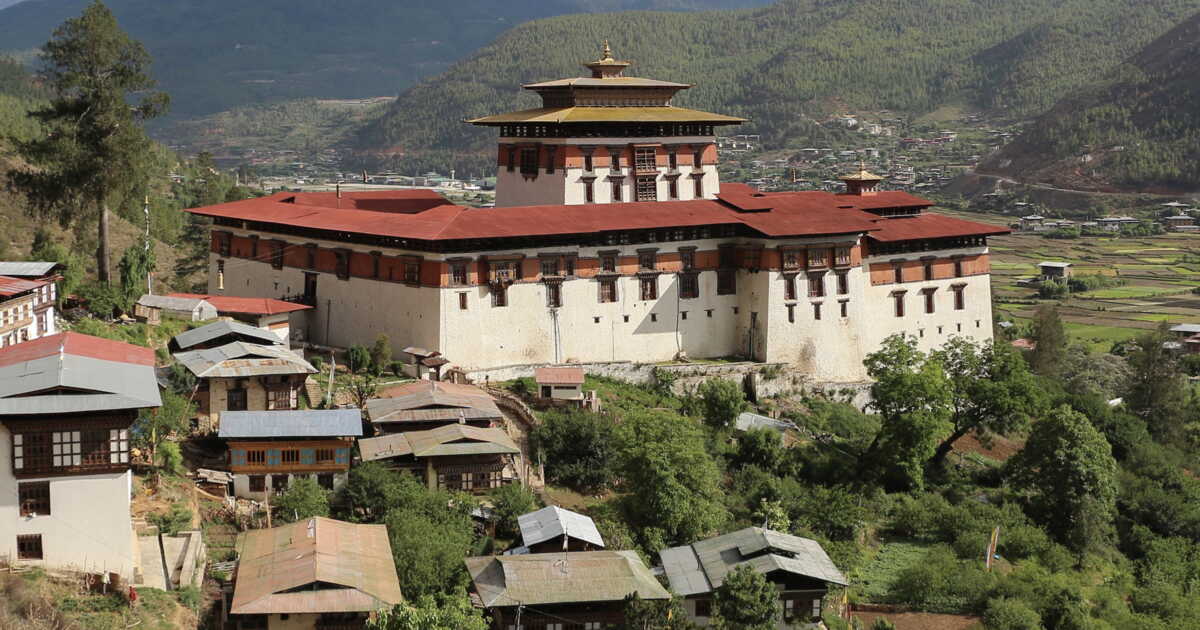
While African countries lead the ranking, the quietest country in the world lies elsewhere. Specifically in Asia. It is Bhutan, at the top with a score of 89.44. Nestled in the eastern Himalayas, the kingdom covers 39,041 square kilometers of forests, mountains, and sparsely populated valleys. Tourist access is also framed, notably through a daily fee intended for sustainable development.
In South America, Venezuela ranks sixth with 80.20 points. More than half of its territory, 54.1%, is under a protected status. The country also receives only 1.4 tourists per square kilometer, leaving vast regions largely untouched by international tourism. Mongolia, ninth with 75.53 points, underscores the weight of scale even more. The country spans roughly 1.5 million square kilometers, but has only 35 airports and 1,810 km of railways. Bolivia, tenth with 75.40 points, shows a population density of just 11.77 inhabitants per square kilometer, despite major cities like La Paz.
The Oceania region appears further down the ranking, with New Zealand in 17th place and Australia in 20th. However, these positions should be viewed with nuance, as several small Pacific island states could not be included in the ranking due to insufficient data. Europe, for its part, remains clearly behind. No European country makes the top 25. Estonia, the European country with the best score, is ranked only 34th, ahead of Finland (39th) and Sweden (40th). A consequence, notably, of population density and the transport networks that characterize the continent.
For Ashley Gerrand, safari specialist at Go2Africa, this search for space corresponds to an evolution in travel expectations: “More and more, our clients are not asking for itineraries that are busier or for more activities. They are looking for more space, where they can avoid the crowds.” And to conclude: “One of the greatest luxuries of travel today is the feeling of having space all to oneself.”.