Contents
-
1. Explore Geothermal Sites
-
2. Discover the Grand Canyon of Yellowstone
-
3. Observe Wildlife in the Valleys
-
4. Hike the Trails
-
5. Join Guided Activities
-
What is the best time to visit Yellowstone?
-
Where is Yellowstone located?
-
Where to fly into to visit Yellowstone?
-
What to do after Yellowstone?
Yellowstone National Park, the world’s first national park, is a vast expanse of preserved nature spanning the states of Wyoming, Montana, and Idaho. Renowned for its natural beauty that blends geothermal landscapes, canyons, rivers, and diverse wildlife, Yellowstone is a popular destination for lovers of wide-open spaces.
1. Explore Geothermal Sites
Old Faithful
Old Faithful, located in the Upper Geyser Basin, is one of North America’s most iconic geothermal phenomena. This famous geyser offers a chance to observe eruptions at regular intervals, roughly every 100 minutes. The erupted water reaches temperatures near 100°C, expelled up to 56 meters high. Around the site, groomed boardwalks enable safe observation while respecting the distance from wildlife in the area.
In winter, Yellowstone offers a unique spectacle with snow creating a striking contrast around Old Faithful. The geyser is easily accessible from the south entrance or the road from Canyon Village, and visitor centers provide practical, step-by-step guidance to plan the visit. The America the Beautiful Pass is recommended for unrestricted access to the site.
Grand Prismatic Spring
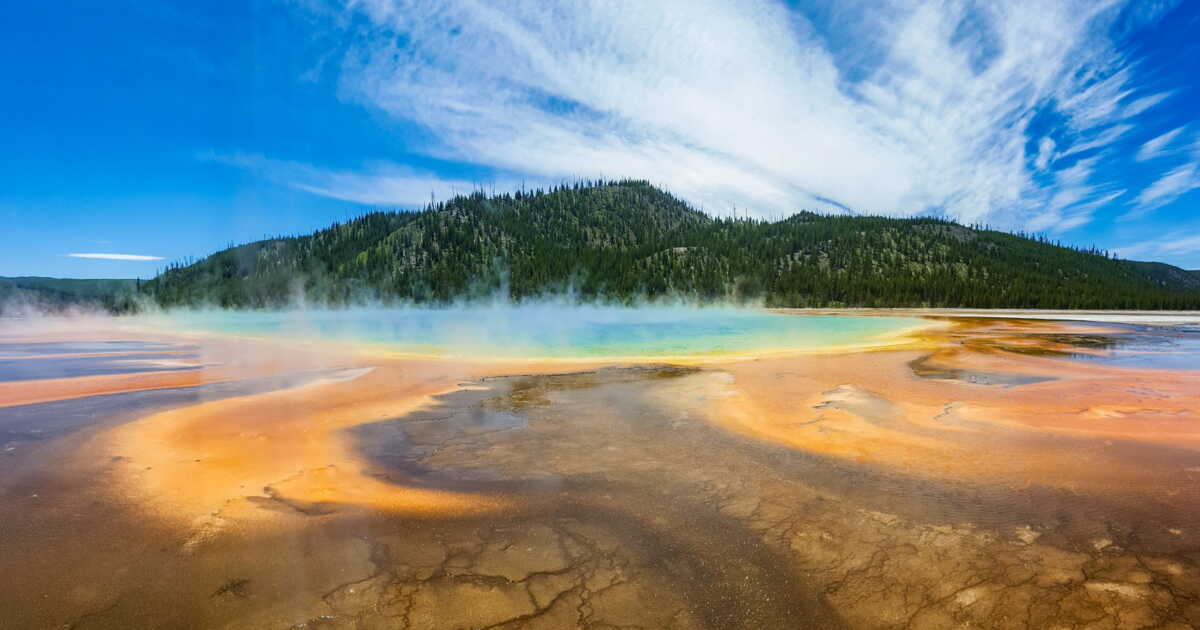
The Grand Prismatic Spring, in the western part of Yellowstone, is a spectacular example of an active geothermal spring, with waters around 70°C and vibrant hues created by thermophilic bacteria. This hot spring, several meters in diameter, features zones of blue, orange, and yellow that vary with the temperature of the sources, forming an almost surreal landscape. The site is accessible on foot via secure boardwalks, and an elevated trail provides a magnificent view of the basin.
By respecting distances from wildlife, visitors can discover a sensitive and active ecosystem. Trail-use guidelines are available at the visitor centers, especially to plan a high-season excursion or a Yellowstone winter visit, when color contrasts with the snow are heightened. A rare chance to observe a unique natural phenomenon located in Midway Geyser Basin.
Mammoth Hot Springs
The Mammoth Hot Springs, accessible from the north side of Yellowstone each year, offer a series of calcium carbonate terraces formed by high-temperature waters, slowly but steadily reshaping the ground. These sections with fragile soils display colors ranging from pure white to reddish-orange, creating a striking visual composition. The Mammoth visitor centers provide guidance on navigating the boardwalks and avoiding sensitive thermal areas.
Buffalo can be seen around Yellowstone, and the presence of elk within the heart of the area highlights the importance of maintaining distance from these animals. Mammoth is also a key stop to discover local wildlife in winter, particularly during a Yellowstone stay, where sighting chances increase in a snowy backdrop. The opening dates for the roads leading there vary by season, except for the route toward Cooke City.
2. Discover the Grand Canyon of Yellowstone
Lower and Upper Falls
The Lower and Upper Falls of the Grand Canyon of Yellowstone illustrate the park’s geological power, with spectacular waterfalls plunging into a canyon about 20 miles long, whose walls are colored by mineral deposits. From developed viewpoints like Artist Point, the stunning view of the cascades reveals the scale of the landscape, situated several hundred meters above the Yellowstone River.
Trails allow access to both falls following practical step-by-step guidance, depending on the level of difficulty and weather conditions. In winter, the site remains accessible only to authorized snow-transport vehicles, via certain roads from Canyon Village or through guided excursions.
The area is conducive to observing local wildlife, including bison in the valley or elk in the park, which should be approached with caution while respecting distance from wildlife. Access to the canyon is recommended via the America the Beautiful Pass, with stops at visitor centers to plan itineraries according to peak season or cold conditions.
3. Observe Wildlife in the Valleys
Lamar Valley and Hayden Valley
The valleys of Lamar Valley and Hayden Valley represent two major areas for observing local wildlife in the park, particularly the Yellowstone bison, elk in the heart, and sometimes wolves. These vast open plains, bathed in the low morning or evening light, offer the best chances to observe wildlife in their natural habitat. By following rangers’ guidance, you can settle along the roadside at strategic spots to maximize your chances while respecting distances to wildlife.
In winter, snow increases the visibility of species and makes them more active at certain times. Access to these valleys can be via Cooke City or from the south entrance, with regular stops for fuel on long distances. The presence of bison in the valley underscores the need for respectful behavior toward iconic local wildlife, while enjoying nearby geothermal phenomena such as the Mud Volcano or the Sulphur Caldron.
4. Emprunter des sentiers de randonnée
Trails and Difficulty Levels
The trails of Yellowstone National Park offer a variety of itineraries suitable for all levels of practice, from easy strolls to the most demanding hikes. Routes such as the one to Mystic Falls or the ascent of Mount Washburn enable exploration of the vast plains, beautiful waterfalls, hot springs, and Yellowstone’s landscapes. The temperatures of these sources can be very high, so precautions should be taken around geothermal phenomena, especially in sections with unstable soils.
In cold periods, snow transforms the trails and can limit access to certain areas. It is recommended to consult the visitor centers for practical step-by-step guidance, check opening dates, and learn about local wildlife, especially the distance to keep from the bisons, elk, or bald eagles. In the Yellowstone center area, around Yellowstone Lake or Canyon Village, each hike can offer a chance to observe nature safely, provided you follow park guidelines.
5. Join Guided Activities
Ranger Programs and Visitor Centers
Ranger programs and the visitor centers of Yellowstone play a key role in scientific and environmental outreach to visitors. Available year-round, including winter, these activities allow exploring the specifics of the local ecosystem, understanding the dynamics of geothermal phenomena, such as at Old Faithful, and obtaining guidance on best visiting practices.
Yellowstone’s visitor centers provide information on the temperature of these plumes, thermophilic bacteria, calcium carbonate deposits, and waters often exceeding 90 °C. They also raise awareness about maintaining distance from wildlife, particularly bison and elk, as well as other iconic American West species. Participating in these guided programs, often recommended by friends, offers a huge opportunity to better understand the environment while benefiting from the best chances of observing wildlife in a safe and informed setting.
Visiting Yellowstone is an immersive experience given the diversity of its landscapes and wildlife. By exploring geothermal sites, canyons, valleys, and hiking trails, you discover a nature full of surprises. Careful planning of your itinerary will help you make the most of your stay, taking into account attractions and activities that match your interests. In addition to park exploration, consider discovering the many natural beauties located nearby to extend your adventure in this fascinating region.
How many days does one need to visit Yellowstone National Park?
It is recommended to dedicate at least three to four days to fully explore Yellowstone, as the park spans thousands of square miles and hosts as many geothermal attractions as wild areas. With this timeframe, you’ll have the opportunity to visit major sites such as Old Faithful, the Grand Prismatic Spring, bison-filled plains, and more remote regions where wildlife viewing chances are higher.
A shorter visit can suffice for an overview, but you may spend most of your time traveling between the vast distances to cover (after all, the roads encircle the park in an eight shape) and the most frequented zones. By planning your itinerary carefully, for example by dividing your lodging between two sectors of the park, you can optimize your days and maximize your chances of wildlife viewing.
Is Yellowstone Worth It?
Yes, visiting Yellowstone offers a tremendous opportunity to discover one of the most spectacular natural landscapes in North America: from hot springs to vast plains populated by bison, to geothermal phenomena such as geysers and multicolored basins, you are at the heart of a unique environment. The fact that Yellowstone attracts millions of visitors each year testifies to its appeal.
Even in winter, when snow blankets the expanses and semi-enclosed areas offer a different ambiance, the experience remains highly valuable. Visitor centers provide usage tips to navigate this vast park, respect the local wildlife, and observe safely, especially bison in the valleys or elk. Provided you carefully plan distances, logistics, and the season, Yellowstone clearly is worth the detour.
What is the best time to visit Yellowstone?
The ideal time to visit Yellowstone is late spring or early autumn, when the weather is mild, road access is complete, and crowds are thinner. In peak season (July–August), while all attractions are accessible, you may face lines at the entrance or congestion near Old Faithful and major zones.
Conversely, in autumn or early June, wildlife viewing opportunities—especially for bisons across the vast plains—are enhanced, and the autumn colors bring a fresh aesthetic to the vibrantly colored soils of the geothermal basins. In winter, the park remains accessible but some roads are closed, limiting itineraries. Choosing the right season helps optimize your visit and enjoy a calmer, more educational atmosphere.
Where is Yellowstone?
Located primarily in the state of Wyoming, with extensions into Montana and Idaho, Yellowstone occupies a central part of the American West and stands as the first protected area of its kind. It sits at the heart of a vast ecosystem, traversed by the Yellowstone River and peppered with sites such as the Grand Canyon of Yellowstone.
As a flagship national park in North America, it welcomes visitors from around the world each year and offers a range of experiences from geysers like Old Faithful to hot springs containing thermophilic bacteria, to wildlife zones. It is important to respect wildlife, monitor distances to these animals, and plan your trip in advance.
Where to fly into to visit Yellowstone?
To visit Yellowstone, it is recommended to fly into a nearby airport, for example West Yellowstone or Bozeman (Montana), then reach the park’s north or west entrance. One advantage of this choice is to minimize driving time before entering the park, which is crucial to maximize the chance of observing key features such as Old Faithful, the valley’s bisons, or the Grand Prismatic. Once inside the park, having a vehicle facilitates exploration along the famous Grand Loop Road. The visitor centers at the entrances provide information on opening dates, road conditions, and offer practical advice to structure your stay.
Que faire après Yellowstone ?
After your visit to Yellowstone, several options are available to extend the experience: you can consider extending to the Grand Teton National Park or further exploring the regions of Montana or Idaho along the park’s border. You can also opt for itineraries more focused on wildlife, photography, or local culture.
Another approach is to devote one or two additional days to revisiting less-visited areas of Yellowstone, which increases your chances of spotting wildlife and lets you observe animals in calmer conditions. In all cases, plan the route, prepare fuel stops, check access via the visitor centers, and follow the advice of friends or local guides to ensure a structured and rewarding transition.
This article was written with the help of artificial intelligence, then revised, expanded, and validated by the newsroom journalists.