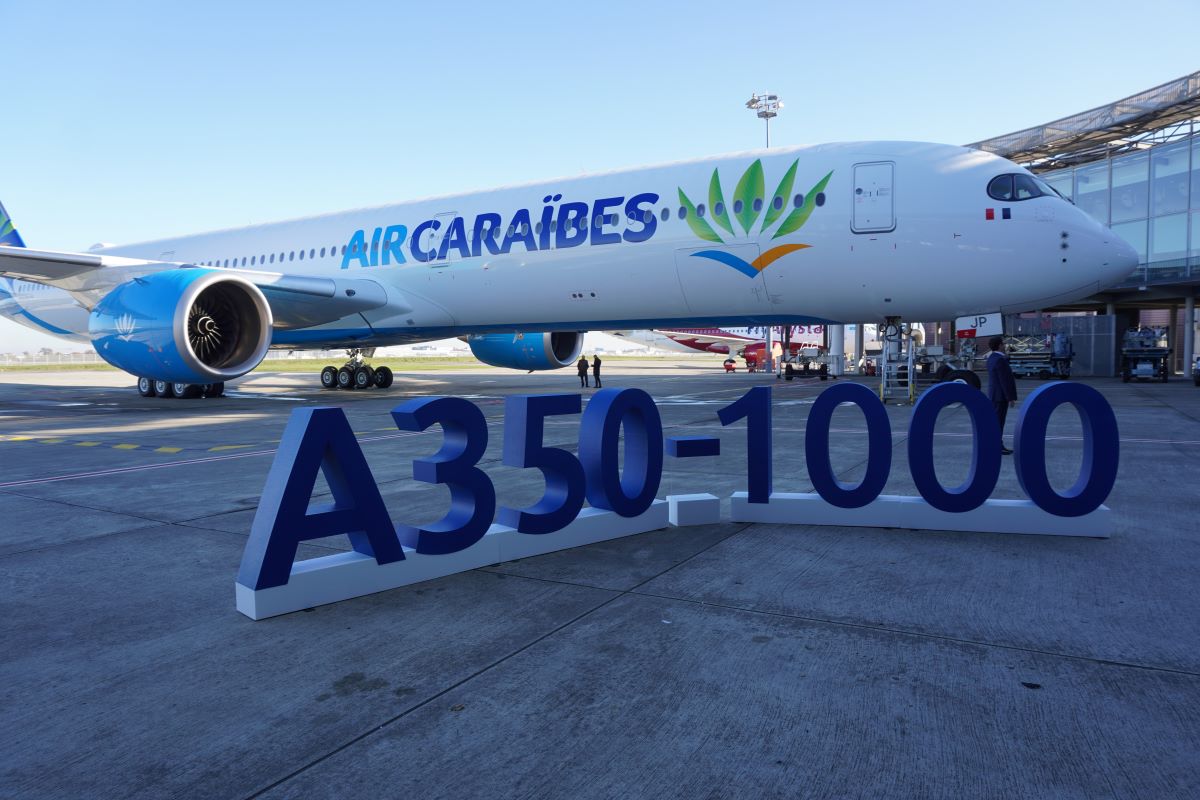
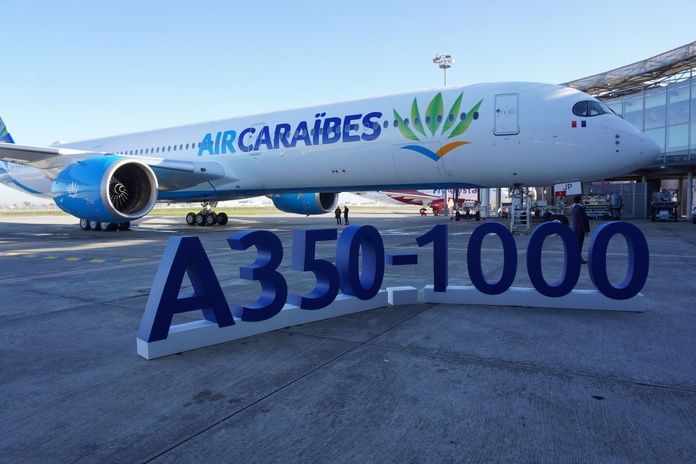


Until the early 2020s, Air Caraïbes and the Dubreuil Aéro group as a whole were held up as a model in France.
It must be said that, at the same time, Air France regularly made headlines due to recurring labor conflicts and results not always matching those of its rivals.
Corsair continuously sought shareholders to avert a feared catastrophe, at the time, following the aborted takeover attempt by Air Caraïbes’ former management.
Then, slowly, the good pupil’s aura began to fade. The ascent of Paul-Henri Dubreuil to the head of the holding company that oversees the two firms in the family group was deemed necessary to preserve the father‑son relationship, according to the whispers we gathered, but also to give a direction to the family empire.
For now three years, a wind of instability has blown over a group that, since its creation and up to Marc Rochet’s departure, had known only one leader.
“The operational results of the Dubreuil Aéro Group have only declined since 2022, while Corsair has moved out of the red. There was a kind of reverse movement.
Strategic errors were made and you can start to see it, even if overall the entity is well managed,” a well‑informed observer of the group tells us.
It must be said that, at the same time, Air France regularly made headlines due to recurring labor conflicts and results not always matching those of its rivals.
Corsair continuously sought shareholders to avert a feared catastrophe, at the time, following the aborted takeover attempt by Air Caraïbes’ former management.
Then, slowly, the good pupil’s aura began to fade. The ascent of Paul-Henri Dubreuil to the head of the holding company that oversees the two firms in the family group was deemed necessary to preserve the father‑son relationship, according to the whispers we gathered, but also to give a direction to the family empire.
For now three years, a wind of instability has blown over a group that, since its creation and up to Marc Rochet’s departure, had known only one leader.
“The operational results of the Dubreuil Aéro Group have only declined since 2022, while Corsair has moved out of the red. There was a kind of reverse movement.
Strategic errors were made and you can start to see it, even if overall the entity is well managed,” a well‑informed observer of the group tells us.
Paul-Henri Dubreuil and Christine Ourmières-Widener, a year and then they’re gone…

Since the end of the health crisis, Corsair has shown it can adapt very quickly, but also push its higher-end positioning, while the Dubreuil group would, on its side, have perhaps lost some of its momentum.
This back-and-forth movement is not hard to trace. One must look back to the induction of Paul-Henri Dubreuil at the head of the holding company that oversees the two firms of the family group.
On July 1, 2023, Marc Rochet was compelled to relinquish the general management of Air Caraïbes, while accompanying the new general manager, Christine Ourmières-Widener, as she took office.
The son of Jean-Paul Dubreuil thus ends a duo that had enjoyed great successes for twenty years.
A way, as we wrote at the time, for Jean‑Paul Dubreuil’s son to assert his takeover by forming a new duo, in the image of what his father and Marc Rochet had successfully done.
The entourage of the historic leader thus packs its bags and Christine Ourmières-Widener arrives with her close circle. Methods that disrupted the habits of the family business, while Sophie Jean-Victor, the sister of Paul-Henri Dubreuil, who was then responsible for communications and marketing, was also sidelined.
“Fundamental things were then broken. The company’s identity withered.
Overhead costs rose, substantial salaries were granted to newcomers, then it had to be paid back when parting with them.
Today, some managers are no longer reachable, because processes have been put in place, a bit like a major such as Air France. The contact has become somewhat dehumanized“, we are told.
When you scrutinize Air Caraïbes’ social accounts, personnel costs rose from €24.57 million in 2022 to €30.56 million two years later, an increase of 24.3%. An increase that may seem significant. Yet, in volume, these costs are roughly similar to those of 2019.
The Christine Ourmières-Widener era was ultimately rather welcomed by some unions, who highlighted a more humane and close management approach.
Moreover, the processes have allowed for the professionalization of the organization and the improvement of the teams’ work. “She sounded the end of the recreation“, comments a former member of her close circle.
Was the challenge to bring the group up to European airline standards to better sell it? It is a rumor that circulated at the time.
Grégory Jamet imagined taking the helm of Dubreuil Aéro and then…
Yet, in December 2024, Christine Ourmières-Widener literally vanished. In the same vein as their commercial director, Brannon Winn, who would never return from summer holidays, without an explanation.
Thus, in January 2025, the sanction falls. Christine Ourmières-Widener and her faithful right-hand are removed. The separation is formalized.
Without knowing the exact reasons, even if we are told—in one account, a major clash, and, on the other, two letters from management in the Caribbean critiquing the CEO—one thing is certain: the link between the shareholder and the former leader would have grown distant over time.
Without a CEO, Paul-Henri Dubreuil would then personally take the reins of the holding, that he had previously resisted aviation, wary of Covid and the industry’s astronomical losses.
He does not yet imagine that the post requires a clear vision, sharpened knowledge, and a great deal of networking with officials to steer the two airlines.
At the head of the group, he looks at the sector, without pretense, all the more so since it remains highly strategic for the family business thanks to its substantial cash position.
Ultimately, the mission is not as easy as expected; he struggles to legitimize his position as airline boss, causing the business’s momentum to falter, and then a new leadership candidate shows up.
At the head of the group, he takes an interest in the sector, without pretense, all the more so as it remains highly strategic for the family business thanks to its significant cash reserves. Ultimately, the mission proves not as easy. Then another leadership contender emerges.
In October 2025, Grégory Jamet was appointed Chief Executive Officer of Groupe Dubreuil Aéro Services, a subsidiary that brings together the support functions for the aviation pole. The man thus imagines himself quite capable of leading the airlines.
The former CEO of COHOR, the association responsible for coordinating schedules at French airports, has been in the fold for several months, but seems to have the boss’s ear.
Paul-Henri Dubreuil extols his CV, speaks of him with high praise, and has him sit at his right during the Comex… until his downfall.
Thus, in January 2025, the sanction falls. Christine Ourmières-Widener and her faithful right-hand are removed. The separation is formalized.
Without knowing the exact reasons, even if we are told—in one account, a major clash, and, on the other, two letters from management in the Caribbean critiquing the CEO—one thing is certain: the link between the shareholder and the former leader would have grown distant over time.
Without a CEO, Paul-Henri Dubreuil would then personally take the reins of the holding, that he had previously resisted aviation, wary of Covid and the industry’s astronomical losses.
He does not yet imagine that the post requires a clear vision, sharpened knowledge, and a great deal of networking with officials to steer the two airlines.
At the head of the group, he looks at the sector, without pretense, all the more so since it remains highly strategic for the family business thanks to its substantial cash position.
Ultimately, the mission is not as easy as expected; he struggles to legitimize his position as airline boss, causing the business’s momentum to falter, and then a new leadership candidate shows up.
At the head of the group, he takes an interest in the sector, without pretense, all the more so as it remains highly strategic for the family business thanks to its significant cash reserves. Ultimately, the mission proves not as easy. Then another leadership contender emerges.
In October 2025, Grégory Jamet was appointed Chief Executive Officer of Groupe Dubreuil Aéro Services, a subsidiary that brings together the support functions for the aviation pole. The man thus imagines himself quite capable of leading the airlines.
The former CEO of COHOR, the association responsible for coordinating schedules at French airports, has been in the fold for several months, but seems to have the boss’s ear.
Paul-Henri Dubreuil extols his CV, speaks of him with high praise, and has him sit at his right during the Comex… until his downfall.
An unsettling instability for the employees
But already, in spring, the tensions flare. Grégory Jamet is sidelined, he does not intervene, or very little, during meetings. His word no longer carries the same weight.
In June last year, in front of many employees, the appointment of Géry Mortreux as general manager of the Air division of the Dubreuil Group is announced, without the former COHOR DG being informed. His departure becomes inevitable.
And while the teams are not yet aware, his ouster is not even mentioned in the press release announcing his… replacement last week.
Now, it is the turn of the former Deputy General Manager Engineering & Maintenance of Air France to bring stability and discipline to a group that seems to be navigating by sight.
Géry Mortreux did not follow the classic path of a future airline executive. He mainly managed maintenance and operations, whether at Corsair or Air France. The new leader will therefore need to add depth.
With a good reputation, he arrives with the ambition to repair the accounts of the two airlines, while internal governance instability begins to weigh on the inside. Continuous leadership changes are not well regarded.
Remember that the group is also going through a delicate social period. The latest strike by PNC at French bee showed that internal dialogue was completely closed.
Within the teams and externally, these last three years are seen more as a period of economic regression, in terms of image and strategic vision.
In addition, the group is going through a delicate social period. The latest PNC strike at French bee demonstrated that internal dialogue was completely closed.
The situation seems more tempered at its tarmac neighbor. “The low-cost exists thanks to the good financial results of Air Caraïbes, but also because it bears certain costs, such as spare aircraft and other charges.
De plus, nous ne comprenons pas pourquoi elle multiplie les ouvertures de lignes qui ne sont pas toujours rentables, deplores a salariée.
Afterwards, the company has never been very transparent. One cannot say there has been a grand revolution; the main change is the instability at the leadership“.
In June last year, in front of many employees, the appointment of Géry Mortreux as general manager of the Air division of the Dubreuil Group is announced, without the former COHOR DG being informed. His departure becomes inevitable.
And while the teams are not yet aware, his ouster is not even mentioned in the press release announcing his… replacement last week.
Now, it is the turn of the former Deputy General Manager Engineering & Maintenance of Air France to bring stability and discipline to a group that seems to be navigating by sight.
Géry Mortreux did not follow the classic path of a future airline executive. He mainly managed maintenance and operations, whether at Corsair or Air France. The new leader will therefore need to add depth.
With a good reputation, he arrives with the ambition to repair the accounts of the two airlines, while internal governance instability begins to weigh on the inside. Continuous leadership changes are not well regarded.
Remember that the group is also going through a delicate social period. The latest strike by PNC at French bee showed that internal dialogue was completely closed.
Within the teams and externally, these last three years are seen more as a period of economic regression, in terms of image and strategic vision.
In addition, the group is going through a delicate social period. The latest PNC strike at French bee demonstrated that internal dialogue was completely closed.
The situation seems more tempered at its tarmac neighbor. “The low-cost exists thanks to the good financial results of Air Caraïbes, but also because it bears certain costs, such as spare aircraft and other charges.
De plus, nous ne comprenons pas pourquoi elle multiplie les ouvertures de lignes qui ne sont pas toujours rentables, deplores a salariée.
Afterwards, the company has never been very transparent. One cannot say there has been a grand revolution; the main change is the instability at the leadership“.