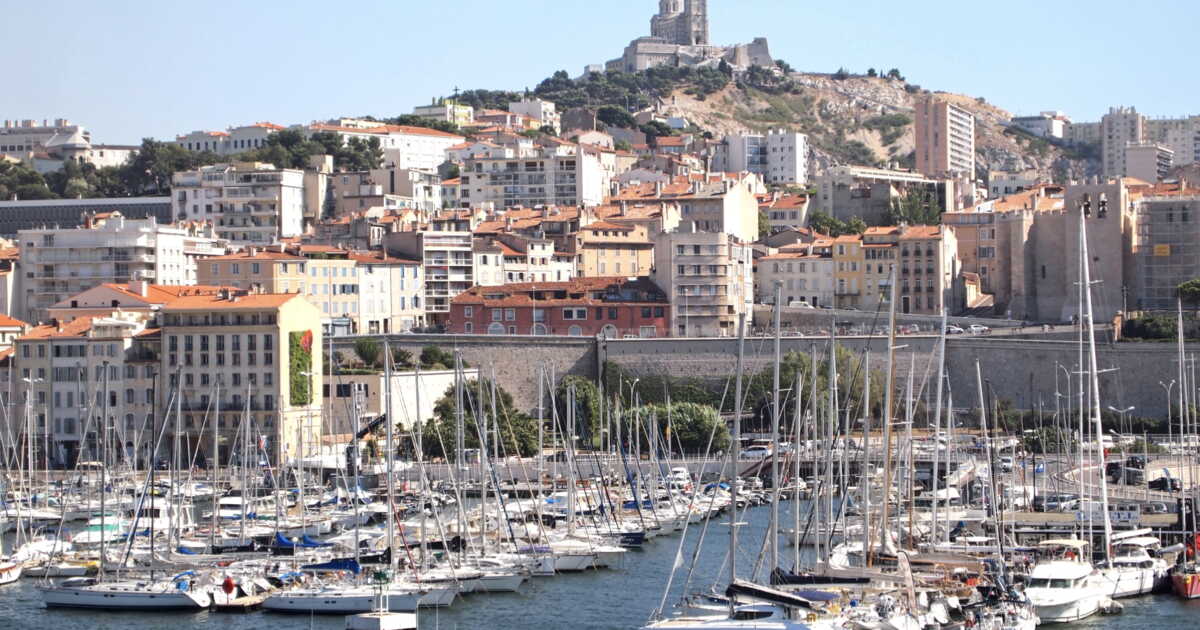
The city of Marseille claimed on Wednesday some early successes in its battle against the “Airbnb drift” with a slight decline in the number of tourist furnished rentals following a series of measures to limit seasonal lettings.
Between 2024 and 2025, the supply of tourist furnished rentals in the second-largest city in France fell by 16%, dropping from 13,000 to 11,000, Audrey Garino, the deputy mayor for housing, said to the press. In the only tourist district of Panier, this drop reached 35%. Marseille had experienced “an explosion of Airbnb with a 73% increase in listings between 2020 and 2023”, she recalled.
À Marseille, la mairie durcit les règles pour freiner les locations touristiques
The city is combatting the excessive supply of tourist furnished rentals because the “Airbnb phenomenon” has “considerably reduced” Marseille’s housing stock “where the housing crisis is very acute (…) with 54,000 social housing applications overdue, with a prevalence of substandard housing”, Ms. Garino noted.
Among the city’s flagship measures: capping the rental of primary residences at 90 days per year and obliging owners of tourist furnished rentals wishing to operate a property to offer in return another dwelling for long-term rental.
The city has also stepped up legal proceedings: by the end of September, a multi-owner who had transformed, without authorization, a small residential building in Panier and a downtown apartment into short-term rentals was fined 440,000 euros.
“More than 70% of the landlords who do Airbnb are not from Marseille and are not even from Bouches-du-Rhône or from Provence-Alpes-Câte d’Azur”, Ms. Garino stressed, noting that “around twenty legal procedures” are still ongoing.
Dans le Panier, la mairie veut éviter un quartier transformé en “Disneyland-sur-Mer”
Wednesday morning on a picturesque square in Panier, municipal workers were breaking large key boxes, hung on barriers and encroaching on public space.
Mayor of the 2nd and 3rd arrondissements, where this neighborhood is located, Anthony Krehmeier laments an “Airbnb drift”, fallen into “pure business” and used by investors coming “to make money off the backs of Marseille residents”.
“Where I used to have shops, today I have stalls selling postcards and Made in China soap, I no longer have a bakery. And ultimately I have a district that is dying”, he adds, deploring the development of a “Disneyland-sur-Mer”.
The Airbnb group said on Wednesday in a statement that it shares with the city of Marseille “the objective of preserving a balance between access to housing and the development of a tourism that fully benefits residents”.
It thus states that it is “favorable to proportionate and targeted local rules, in the image of quotas by neighborhood, particularly in the most strained areas”. While asserting that “80% of the accommodations offered on Airbnb in Marseille are temporarily rented by Marseille residents and are therefore not intended to return to the long-term rental market”.