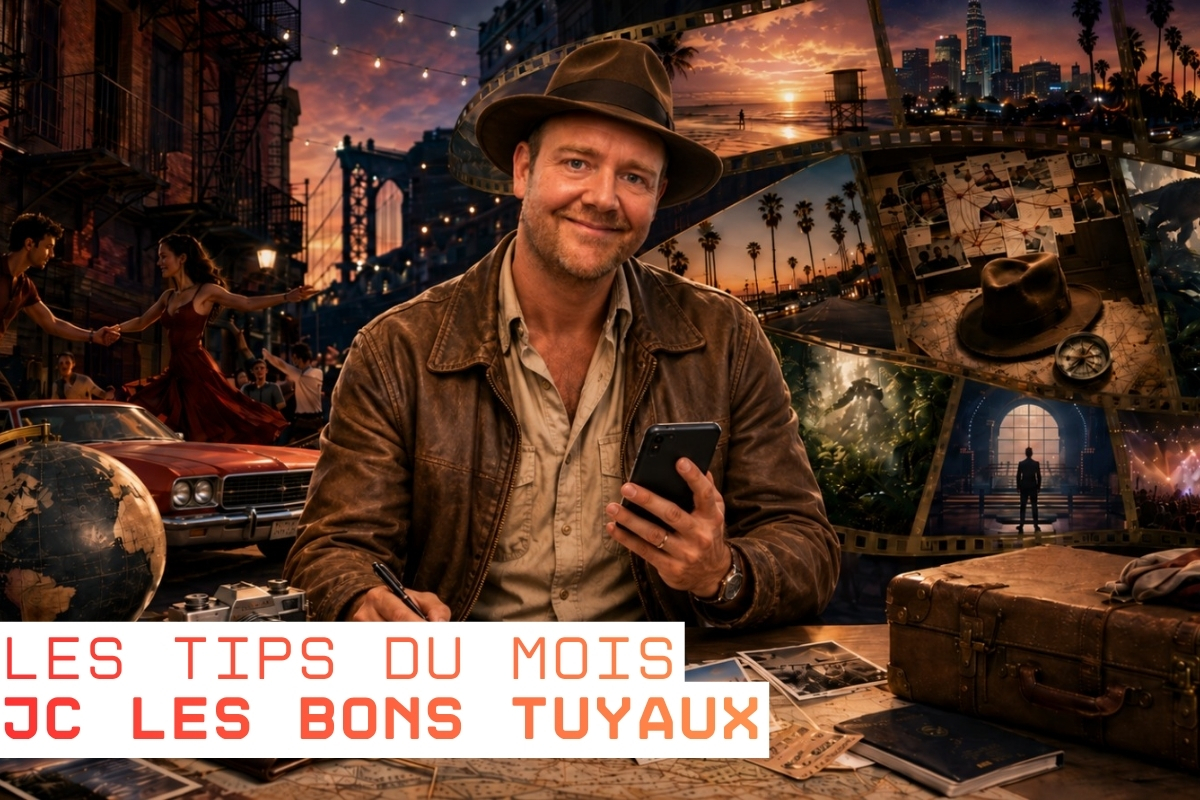

In this summer saga, I want to discuss two notions that have become indispensable in our profession: personal branding and storytelling.
Two buzzwords, very much in vogue, sometimes used indiscriminately, but they deserve attention. Because in a world where image, influence, proximity, and trust carry increasing weight, ignoring them would be a mistake.
In the great films of the 80s and 90s, from Top Gun to Pretty Woman, the story often begins with strong characters, a clear identity, and a hook. Without that, audiences disengage.
Personal branding is the image you leave in the minds of your clients and your audience. It’s what people remember about you: your expertise, your tone, your values, your way of advising, your style, and your difference.
Storytelling, on the other hand, is the way you tell that image. It’s the art of turning a simple message into a narrative, an offer into an experience, advice into content that resonates, leaves a mark, and makes people want to follow you.
The difference is simple: personal branding answers the question: “what image do you want to leave?”
Storytelling answers the question: “how will you tell this image so that it invites people to trust you?”
Today, the traveler no longer chooses only an agency, a brand, or an offer. They also choose a person, a voice, a look, a way of guiding.
Personal branding builds your credibility.
Storytelling creates the emotional connection.
And in our profession, where trust remains the primary currency, perhaps that’s where it all begins.
Two buzzwords, very much in vogue, sometimes used indiscriminately, but they deserve attention. Because in a world where image, influence, proximity, and trust carry increasing weight, ignoring them would be a mistake.
In the great films of the 80s and 90s, from Top Gun to Pretty Woman, the story often begins with strong characters, a clear identity, and a hook. Without that, audiences disengage.
Personal branding is the image you leave in the minds of your clients and your audience. It’s what people remember about you: your expertise, your tone, your values, your way of advising, your style, and your difference.
Storytelling, on the other hand, is the way you tell that image. It’s the art of turning a simple message into a narrative, an offer into an experience, advice into content that resonates, leaves a mark, and makes people want to follow you.
The difference is simple: personal branding answers the question: “what image do you want to leave?”
Storytelling answers the question: “how will you tell this image so that it invites people to trust you?”
Today, the traveler no longer chooses only an agency, a brand, or an offer. They also choose a person, a voice, a look, a way of guiding.
Personal branding builds your credibility.
Storytelling creates the emotional connection.
And in our profession, where trust remains the primary currency, perhaps that’s where it all begins.
The traveler no longer seeks merely an agency; they seek a face
For a long time, a travel agency presented itself through its storefront, its sign, its brochures, its posters, its catalogs, or its offers.
Today, all of that still matters. Of course.
But that is no longer enough.
The traveler wants to know who they are talking to. They want to understand who will listen, who will grasp their project, who will advise, who will accompany them if something doesn’t go as planned, and who will be there before, during, and even after the trip.
A reference, as in Beverly Hills 90210: if the series left a mark on a generation, it wasn’t just for its California setting, but because each character had an identity, a role, a style, and a story.
In this context, the travel agent can no longer remain invisible behind an offer. They must embody their craft. Not to become an influencer in the caricatured sense, but to show what they truly bring: their experience, their perspective, their advice, their alerts, their favorites, their sense of service, and their ability to secure a project.
That is what personal branding is. It isn’t about “speaking about oneself” for the sake of self-promotion. It’s about enabling the client to understand why they can trust you.
Today, all of that still matters. Of course.
But that is no longer enough.
The traveler wants to know who they are talking to. They want to understand who will listen, who will grasp their project, who will advise, who will accompany them if something doesn’t go as planned, and who will be there before, during, and even after the trip.
A reference, as in Beverly Hills 90210: if the series left a mark on a generation, it wasn’t just for its California setting, but because each character had an identity, a role, a style, and a story.
In this context, the travel agent can no longer remain invisible behind an offer. They must embody their craft. Not to become an influencer in the caricatured sense, but to show what they truly bring: their experience, their perspective, their advice, their alerts, their favorites, their sense of service, and their ability to secure a project.
That is what personal branding is. It isn’t about “speaking about oneself” for the sake of self-promotion. It’s about enabling the client to understand why they can trust you.
Discover all JC’s best tips by clicking here
Personal branding isn’t reserved for influencers
This is probably one of the biggest mistakes.
People sometimes imagine that personal branding concerns only content creators, public figures, speakers, or influencers.
False.
Every travel agent already possesses a personal image. The real question is: is it a chosen image or one that is imposed?
When a client thinks of you, what goes through their mind? Do they think you are responsive, reassuring, an expert on certain destinations, excellent at tailor-made itineraries, strong with groups, detail-oriented, or capable of finding solutions when things get tricky?
All of that is already personal branding.
The point isn’t to craft an artificial character like a 90s boy band member or a Loft Story contestant. The goal is to identify what you truly bring, then make it visible, legible, and coherent.
In the style of a hit song by Goldman, Indochine, or Daft Punk, a strong identity is quickly recognizable. For a tourism professional, it’s the same: it isn’t about playing a role, but being recognized for what you actually offer.
People sometimes imagine that personal branding concerns only content creators, public figures, speakers, or influencers.
False.
Every travel agent already possesses a personal image. The real question is: is it a chosen image or one that is imposed?
When a client thinks of you, what goes through their mind? Do they think you are responsive, reassuring, an expert on certain destinations, excellent at tailor-made itineraries, strong with groups, detail-oriented, or capable of finding solutions when things get tricky?
All of that is already personal branding.
The point isn’t to craft an artificial character like a 90s boy band member or a Loft Story contestant. The goal is to identify what you truly bring, then make it visible, legible, and coherent.
In the style of a hit song by Goldman, Indochine, or Daft Punk, a strong identity is quickly recognizable. For a tourism professional, it’s the same: it isn’t about playing a role, but being recognized for what you actually offer.
concretely, how to develop your personal branding?
The first step is to clarify your positioning.
A travel agent cannot be perceived merely as someone who “sells trips.” That’s too broad, too vague, too interchangeable.
You must be able to answer simply a few questions: what is your specialty, what is your difference, what type of clients trust you, what do you want travelers to remember about you, and what professional promise can you embody on a daily basis?
An advisor who is an expert in honeymoon travel won’t have the same personal branding as a CSE specialist, as a guided-tour expert, as a creator of tailor-made trips, or as an agent focused on families, cruises, city breaks, or premium travel.
There is no right or wrong positioning. There is, above all, a need for coherence.
Like Top Gun, even the best pilot needs a clear course before takeoff. For your personal branding, it’s the same: if you don’t know where you want to go, it’s hard to take the right travelers with you.
A travel agent cannot be perceived merely as someone who “sells trips.” That’s too broad, too vague, too interchangeable.
You must be able to answer simply a few questions: what is your specialty, what is your difference, what type of clients trust you, what do you want travelers to remember about you, and what professional promise can you embody on a daily basis?
An advisor who is an expert in honeymoon travel won’t have the same personal branding as a CSE specialist, as a guided-tour expert, as a creator of tailor-made trips, or as an agent focused on families, cruises, city breaks, or premium travel.
There is no right or wrong positioning. There is, above all, a need for coherence.
Like Top Gun, even the best pilot needs a clear course before takeoff. For your personal branding, it’s the same: if you don’t know where you want to go, it’s hard to take the right travelers with you.
The field, our best proof
Turning your daily life into useful content
Many agents say: “I have nothing to tell.” In reality, that’s not true.
The daily life of a travel agent overflows with topics. A client question can become a pedagogical post. An avoided mistake can become advice. A destination poorly understood can become a decryption. A complex quote can become an explanation of the value of advice. A client’s feedback can become a testament of trust. A well-handled contingency can become a demonstration of professionalism.
The secret is to shift your perspective. Instead of asking: “What can I sell today?”
Ask yourself instead: “What did I explain to a client today that could be useful to others?”
It’s often there that the best content lies. The musical comparison works well: you don’t need to release a hit every day like Michael Jackson, Madonna, Goldman, Nirvana, Oasis, or Daft Punk. You must mainly build a recognizable identity, piece by piece. And sometimes, it’s the simplest pieces that stay in the head the longest.
Concrete, very concrete examples?
The daily life of a travel agent overflows with topics. A client question can become a pedagogical post. An avoided mistake can become advice. A destination poorly understood can become a decryption. A complex quote can become an explanation of the value of advice. A client’s feedback can become a testament of trust. A well-handled contingency can become a demonstration of professionalism.
The secret is to shift your perspective. Instead of asking: “What can I sell today?”
Ask yourself instead: “What did I explain to a client today that could be useful to others?”
It’s often there that the best content lies. The musical comparison works well: you don’t need to release a hit every day like Michael Jackson, Madonna, Goldman, Nirvana, Oasis, or Daft Punk. You must mainly build a recognizable identity, piece by piece. And sometimes, it’s the simplest pieces that stay in the head the longest.
Concrete, very concrete examples?
- A client asks why go through an agency when they can book online? You can turn this into content about the difference between paying a price and benefiting from personalized support.
- A client is torn between two hotels? You can explain why the cheaper option isn’t always best suited.
- A group asks for a destination with a tight budget? You can reveal the behind-the-scenes of balancing price, quality, accessibility, and program coherence.
- A client returns thrilled from a trip? You can feature their testimonial, with their consent, not just to say “satisfied client,” but to explain what made the project successful.
- A destination is subject to common misconceptions? You can share your professional, nuanced, concrete perspective, far from clichés.
- Some news unsettles travelers? You can step in to reassure, explain, and contextualize.
Each situation is an opportunity to reinforce your image as an expert. The Dinner Game offers a good lesson: it’s all about angle and outlook. A mundane situation can become powerful content if it reveals your expertise, your good sense, or your ability to avert surprises.
Consistency matters more than perfection
Personal branding isn’t built with a single post. It’s built over time.
In small doses, with regular public speaking, a distinctive tone, recurring advice, constant values, and a way of explaining things that feels like you.
It isn’t about publishing every day at all costs. It’s about being consistently present, useful, and recognizable. Better to have two relevant pieces per week than an avalanche of posts with no guiding thread. The aim isn’t to fill space.
The aim is to imprint an image. The same logic applies to a catchy chorus by Céline Dion, Britney Spears, or Destiny’s Child: you should be recognizable from the first note.
Be careful, though, not to confuse visibility with credibility!
Being visible is fine. Being credible is better.
In tourism, personal branding should never become a mere race to stage-ability. You don’t build your value only with pretty photos, dynamic videos, or inspirational phrases.
You build your value with substance. With sound advice, reliable information, tailored recommendations, on-the-ground knowledge, and the ability to say when a destination, a hotel, or a package doesn’t fit the client.
Credibility also comes from nuance. Knowing how to say “that isn’t for you” is sometimes more powerful than trying to sell at all costs. That’s where the professional stands out from a mere publisher of offers.
In the spirit of The Truman Show, there is sometimes a gap between what is shown and what is truly perceived. Visibility can grab attention, but only credibility builds trust. And in our trade, trust is worth more than a pretty video montage.
In small doses, with regular public speaking, a distinctive tone, recurring advice, constant values, and a way of explaining things that feels like you.
It isn’t about publishing every day at all costs. It’s about being consistently present, useful, and recognizable. Better to have two relevant pieces per week than an avalanche of posts with no guiding thread. The aim isn’t to fill space.
The aim is to imprint an image. The same logic applies to a catchy chorus by Céline Dion, Britney Spears, or Destiny’s Child: you should be recognizable from the first note.
Be careful, though, not to confuse visibility with credibility!
Being visible is fine. Being credible is better.
In tourism, personal branding should never become a mere race to stage-ability. You don’t build your value only with pretty photos, dynamic videos, or inspirational phrases.
You build your value with substance. With sound advice, reliable information, tailored recommendations, on-the-ground knowledge, and the ability to say when a destination, a hotel, or a package doesn’t fit the client.
Credibility also comes from nuance. Knowing how to say “that isn’t for you” is sometimes more powerful than trying to sell at all costs. That’s where the professional stands out from a mere publisher of offers.
In the spirit of The Truman Show, there is sometimes a gap between what is shown and what is truly perceived. Visibility can grab attention, but only credibility builds trust. And in our trade, trust is worth more than a pretty video montage.
Personal branding in service of the entire profession
There is also a collective stake. For too long, our industry has sometimes been reduced to clichés. Agencies would be behind the times, the Internet would necessarily be cheaper, the travel agent would only book, brochures would be useless, and anyone could arrange a trip.
We know that’s not true. But we must prove it.
Professional organizations take action. Collectives as well. Trade media give a voice. But on the ground, day to day, in front of travelers and preconceived ideas, the first medium of our profession is us.
Every agent who explains their craft clearly helps to elevate the entire profession.
Every agent who reveals the behind-the-scenes of their expertise reminds that our role isn’t limited to just clicking a button.
Every agent who speaks out with sincerity restores meaning to our added value.
The reference to The Choristers works perfectly here: it’s the sum of voices that ultimately creates harmony. And in the spirit of a U2 concert, collective energy can carry a message much further than expected.
We know that’s not true. But we must prove it.
Professional organizations take action. Collectives as well. Trade media give a voice. But on the ground, day to day, in front of travelers and preconceived ideas, the first medium of our profession is us.
Every agent who explains their craft clearly helps to elevate the entire profession.
Every agent who reveals the behind-the-scenes of their expertise reminds that our role isn’t limited to just clicking a button.
Every agent who speaks out with sincerity restores meaning to our added value.
The reference to The Choristers works perfectly here: it’s the sum of voices that ultimately creates harmony. And in the spirit of a U2 concert, collective energy can carry a message much further than expected.
Storytelling: don’t let others summarize your story for you
The real question is simple: who tells our story?
Because if we don’t tell it ourselves, others will. With their shortcuts, their approximations… and sometimes their interests.
The Usual Suspects offers a good reading: the one who controls the narrative often shapes perception. In our business, if we don’t tell our value, others will summarize it for us.
So it’s your turn. No need for an Hollywood screenplay, blockbuster budget, or a world tour media plan. The most beautiful showcase of our profession isn’t just a campaign, a logo, or an advertisement.
It’s you. Your experience, your perspective, your personality, your way of advising, reassuring, and guiding your travelers.
And above all, remember one thing: You don’t need to spend thousands of dollars: you already have all the tools and assets to be your own personal agency. Don’t be ashamed, don’t be self-conscious, as long as it looks like you and fits your travelers.
Ultimately, storytelling isn’t about fabricating a story. It’s about telling yours, with sincerity, coherence, and personality.
And in our profession, it’s often this very story that makes people want to trust you. In the next episode of this summer saga, we’ll see how to turn this image into a narrative through storytelling: how to tell your trade, your travels, your clients, your advice, and your convictions to forge an even stronger bond with your audience.
Because if we don’t tell it ourselves, others will. With their shortcuts, their approximations… and sometimes their interests.
The Usual Suspects offers a good reading: the one who controls the narrative often shapes perception. In our business, if we don’t tell our value, others will summarize it for us.
So it’s your turn. No need for an Hollywood screenplay, blockbuster budget, or a world tour media plan. The most beautiful showcase of our profession isn’t just a campaign, a logo, or an advertisement.
It’s you. Your experience, your perspective, your personality, your way of advising, reassuring, and guiding your travelers.
And above all, remember one thing: You don’t need to spend thousands of dollars: you already have all the tools and assets to be your own personal agency. Don’t be ashamed, don’t be self-conscious, as long as it looks like you and fits your travelers.
Ultimately, storytelling isn’t about fabricating a story. It’s about telling yours, with sincerity, coherence, and personality.
And in our profession, it’s often this very story that makes people want to trust you. In the next episode of this summer saga, we’ll see how to turn this image into a narrative through storytelling: how to tell your trade, your travels, your clients, your advice, and your convictions to forge an even stronger bond with your audience.
Célia Tichadelle, founder of Maison Kaona and Holaqueya
This article resonates strongly with my journey and my convictions. After ten years leading Travel-Insight, I founded Maison Kaona in September 2025 to continue supporting tourism players in their strategies. And if there is one thing I’ve learned, it’s that personal branding isn’t a trend: it’s a real accelerator of business.
When I launched Holaqueya, my receptive in the Dominican Republic, success came immediately. Why? Because I had already built, well before the launch, a strong presence around this destination. By embodying my expertise and my attachment to this island, I won the trust of travelers, agencies, but also the media. The teams of 50 Minutes Inside and TF1’s JT did not come for a logo: they came for a face, a story, and authentic expertise.
Today, despite very limited time between my two ventures, I refuse to sacrifice this visibility. Tourism remains a profoundly human industry, composed of emotion, lived experience, and trust. Clients no longer buy only a catalog offer: they choose the person who will imagine, advise, and secure their experience.
At a time when artificial intelligence enables compiling information and creating an itinerary in a few clicks, personal branding becomes even more essential. Algorithms can organize data, but they will never possess the field knowledge, sensitivity, or the passion of a professional who truly knows a destination.
Promoting yourself isn’t about flattering your ego. It’s about humanizing your business, asserting your added value, and reminding that behind every successful trip there is, above all, human expertise that no robot can replace.
When I launched Holaqueya, my receptive in the Dominican Republic, success came immediately. Why? Because I had already built, well before the launch, a strong presence around this destination. By embodying my expertise and my attachment to this island, I won the trust of travelers, agencies, but also the media. The teams of 50 Minutes Inside and TF1’s JT did not come for a logo: they came for a face, a story, and authentic expertise.
Today, despite very limited time between my two ventures, I refuse to sacrifice this visibility. Tourism remains a profoundly human industry, composed of emotion, lived experience, and trust. Clients no longer buy only a catalog offer: they choose the person who will imagine, advise, and secure their experience.
At a time when artificial intelligence enables compiling information and creating an itinerary in a few clicks, personal branding becomes even more essential. Algorithms can organize data, but they will never possess the field knowledge, sensitivity, or the passion of a professional who truly knows a destination.
Promoting yourself isn’t about flattering your ego. It’s about humanizing your business, asserting your added value, and reminding that behind every successful trip there is, above all, human expertise that no robot can replace.
JC, whose real name is Jean-Charles Franchomme, has been active in tourism for more than 20 years.
Since 2024, he has been a sales and web executive for groups at Steam Evasion, where he leverages his dual on-site and digital expertise.
He is also the founder of the Facebook community “100% great travel deals and expertise” that brings together 3,800 travelers.
An entrepreneur at heart, he also co-founded two influential Facebook groups in the sector: CDMV (Collective for the Defense of Travel Professions) and Helpdesk for Tourism Pros, which have become essential spaces for professionals.
Since 2024, he has been a sales and web executive for groups at Steam Evasion, where he leverages his dual on-site and digital expertise.
He is also the founder of the Facebook community “100% great travel deals and expertise” that brings together 3,800 travelers.
An entrepreneur at heart, he also co-founded two influential Facebook groups in the sector: CDMV (Collective for the Defense of Travel Professions) and Helpdesk for Tourism Pros, which have become essential spaces for professionals.