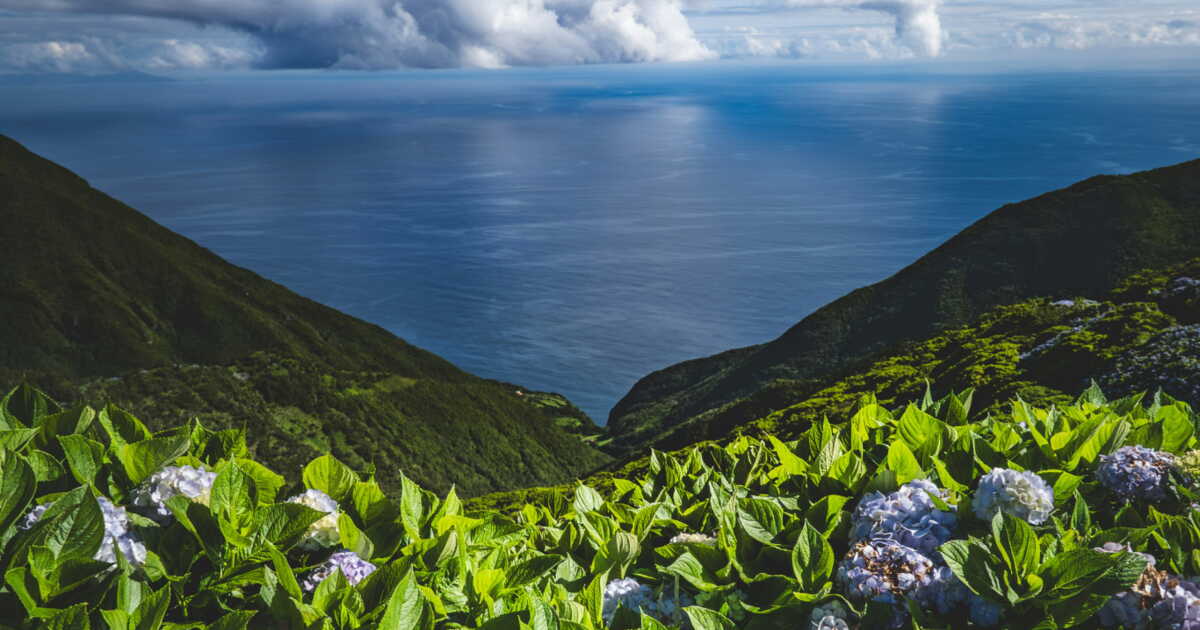
With its endless waterfalls, crater lakes painted in fairy-tale hues, and cliffs that are as sheer as they are foamy, this island of 143 km2 (home to about 3,500 residents), the westernmost in the archipelago, epitomizes Eden on earth. The climate, very humid, has fostered a lush vegetation and a unique flora: roughly fifty plant species are endemic, including varieties of cedar, laurel, and heather. Hence Flores was designated a UNESCO Biosphere Reserve in 2009.
What to See and Do?
Admire basalt organ pipes
It is at dawn or dusk that Rocha dos Bordões should be contemplated, when the interplay of light elevates these twenty-meter-tall columns, lined up like the pipes of a giant organ. Built along the road linking Mosteiro and Lajedo, a lookout offers a sweeping view of this monumental geological curiosity, born from a lava flow 570,000 years ago.
Chase the blue hydrangeas
Visiting the Azores in summer, and Flores in particular—nicknamed “the island of flowers”—is not possible without being dazzled by walls of hydrangeas: thanks to the volcanic soils, their petals take on a deep blue. The height of bloom? July.
With whom to travel?
The travel agency Les Maisons du Voyage, which helped us assemble this dossier, offers its intimate knowledge of the Azores at your service, to trace the footsteps of our reporters in 12 days (from 2,650 euros, including flights, accommodations, and a car). From São Miguel to Pico, via São Jorge and Faial, the islands successively unfold and never resemble one another: calderas engulfed by vegetation, cliffs battered by the Atlantic, fishing villages bearing unaltered Portuguese influences… This archipelago remains a distinctive destination, wild, warm, and deeply alive. maisonsduvoyage.com and 0156813830.
➤ Article published in GEO magazine no. 572, “The Azores, nine islands, nine worlds to explore,” October 2026.
➤ Do you love GEO? Then to miss nothing, discover our subscription plans to receive GEO every month at your home with ease.